Check out the biggest trends of the season and our expert take on them.
Why Do You Need a Tile Grouting Powder?
When installing tile or stone, you’ll need grout, and a suitable grout, not any other grout. Allow no one to persuade you otherwise. Grout is an important component of your tile installation, and selecting an appropriate grout can make a big difference between a tile installation that appears and functions brilliantly with time and one that quickly degrades into a terrible eyesore.
Before going into the details of why one should use grout powder for tiles, let’s first understand what grout is.
What is Tile Grouting Powder?
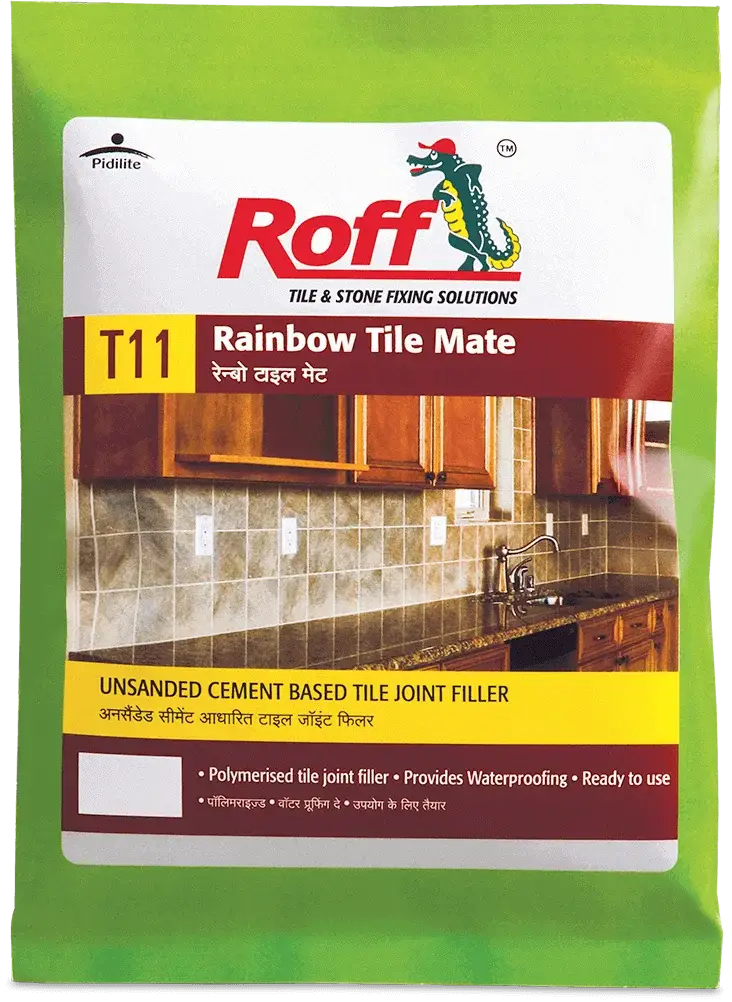
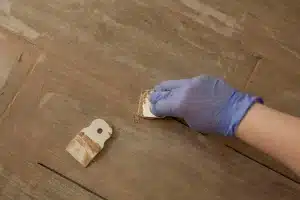
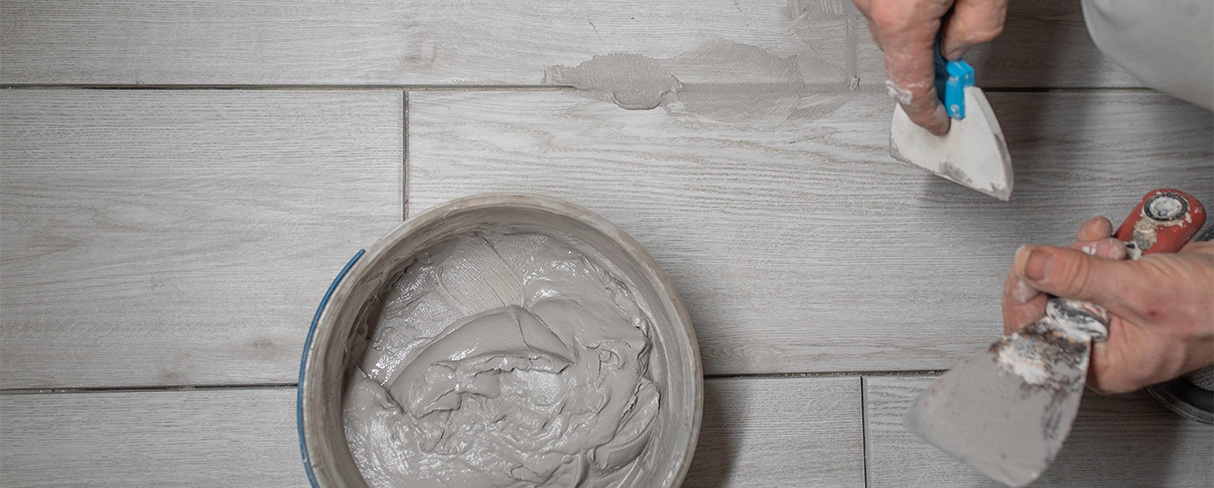
Grout is a filler material used to seal the joints/gaps between tiles after they have been installed.
Grout can offer several benefits, some of which are:
It offers your floor or wall a clean, completed look.
Improves the aesthetic appeal of the floor with the right shades used to complement the tiles or stone
It prevents dirt & grime from getting between and beneath your tiles.
It increases the hardness and durability of the tile installation.
Why is Tile Grouting Powder Important?
Grout doesn’t usually get much attention. People notice tiles, patterns, and finishes. Not the lines in between. But those lines are doing more work than you’d think. You can stay on top of tile cleaning all you want, but if the grout isn’t solid, the whole surface slowly starts to fall apart.
1. Keeps Tiles Firm and Secure
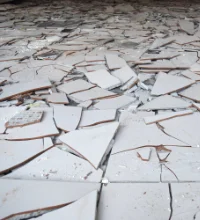
Tiles need a long-term solution to hold them in place. That’s where tile grout powder plays a crucial role. Once it sets, it fills those gaps and keeps everything locked together. Without it, tiles shift. Sometimes slightly, sometimes enough to crack. And once that starts, fixing it isn’t exactly quick or cheap.
2. Prevents Water Seepage
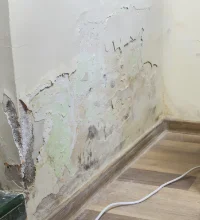
Water finds its way into the smallest gaps. Properly applied tile grout acts like a seal, blocking that path before it becomes a problem. This matters a lot in spaces like bathrooms and kitchens. Constant moisture, spills, and humidity. If grout is weak or missing, water gets underneath, and then you’re dealing with damage you can’t even see at first.
3. Improves Overall Appearance
Even expensive tiles can look off if the grout lines are messy. Uneven gaps, discolouration, and cracks. It all shows. Good grouting pulls everything together visually. Clean lines, consistent spacing, and when paired with regular tile cleaning, it keeps that fresh, finished look going instead of fading out after a few months.
4. Reduces Risk of Powdery Grout
Ever seen grout that looks dusty or starts breaking apart when you touch it? That’s powdery grout. Usually happens when the mix is off, or the material isn’t great to begin with. Using the right grout powder makes a difference here. It sets properly, holds its structure, and doesn’t crumble over time. Saves you from having to redo the whole thing sooner than expected.
5. Supports Long-Term Durability
Grout absorbs a lot of stress, such as foot traffic, temperature changes, and daily wear. It helps distribute that pressure so the tiles don’t take the full hit.
Keeps tiles aligned
Reduces edge damage
Works alongside tile cleaning to maintain the surface
It’s one of those things you don’t think about until it starts failing. And when it does, you realise how much it was doing all along.
Types of Tile Grouting Powder
Cement Grout
Portland cement is by far the most popular type of cement, made from clay and chalk that solidifies when exposed to water and takes on the colour of Portland stone when hardened. Cement grout comprises a variety of filler particles and a water-retention agent. For its numerous qualities, cement grout has been widely used in both home and office applications.
It comes in a variety of shades so that users can match it to the tile colour. Cement grout is applied to the surface by mixing it with water, then applying it with a floater. The presence of a specialised polymer allows the cement grout to cure and dry gradually, achieving optimum hardness, compared to using just cement as a grouting option.
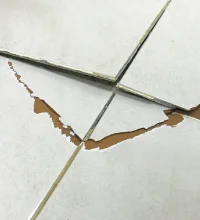
One of the biggest reasons people dislike cement grout is that it cracks with wear and tear (2-3 years), is not resistant to cleaners, and requires a lot of effort to clean stains and other marks after application.
Epoxy Grout
Epoxy grout is a tile joint filler powder that does not require water or Portland cement during mixing. It usually comprises a hardener, epoxy resin, and pigmented (coloured) silica fillers. When compared to cementitious grout, epoxy grout is less permeable.
Furthermore, epoxy grouts perform best in locations prone to grease and acid, such as kitchens. Epoxy grouts are also used in bathrooms and swimming pools since they are water-resistant due to their non-porous nature. Besides, it is stain-resistant, making it a popular choice among contractors and homeowners. However, combining it with cement grout is not recommended because it can lead to reduced stain resistance.
Cement Grout vs Epoxy Grout: Which One Should You Choose?
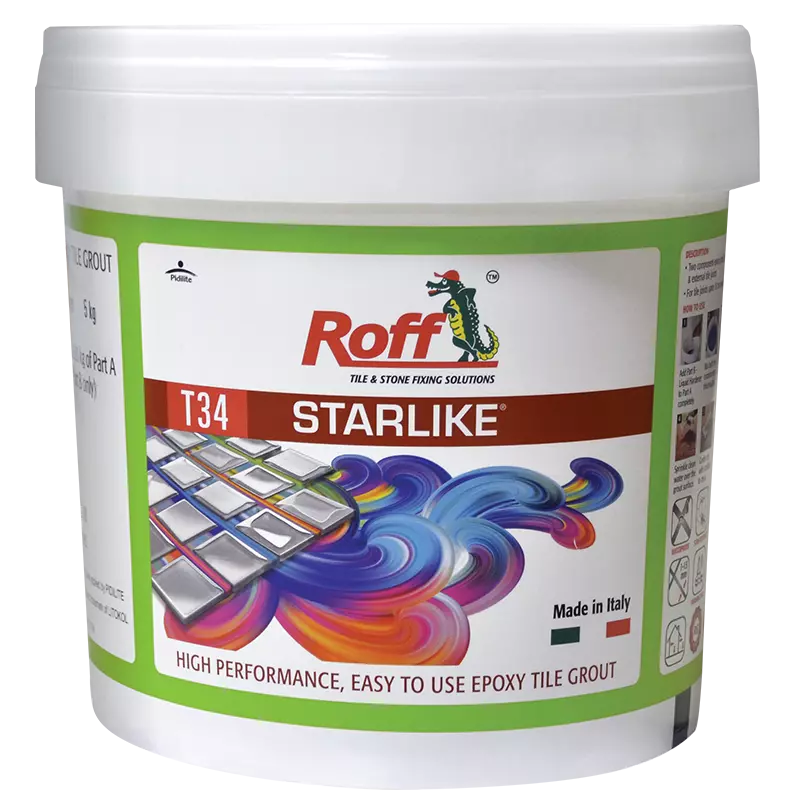
The industry is moving away from traditional cement-based grout fillers toward epoxy fillers due to their crack-free, stain-free, and water-resistant properties. It is also advantageous for its durability and strength in keeping the tiles in place. Hiccups such as discolouration due to UV exposure are being addressed with newer, upgraded epoxy grouts like Roff Starlike.
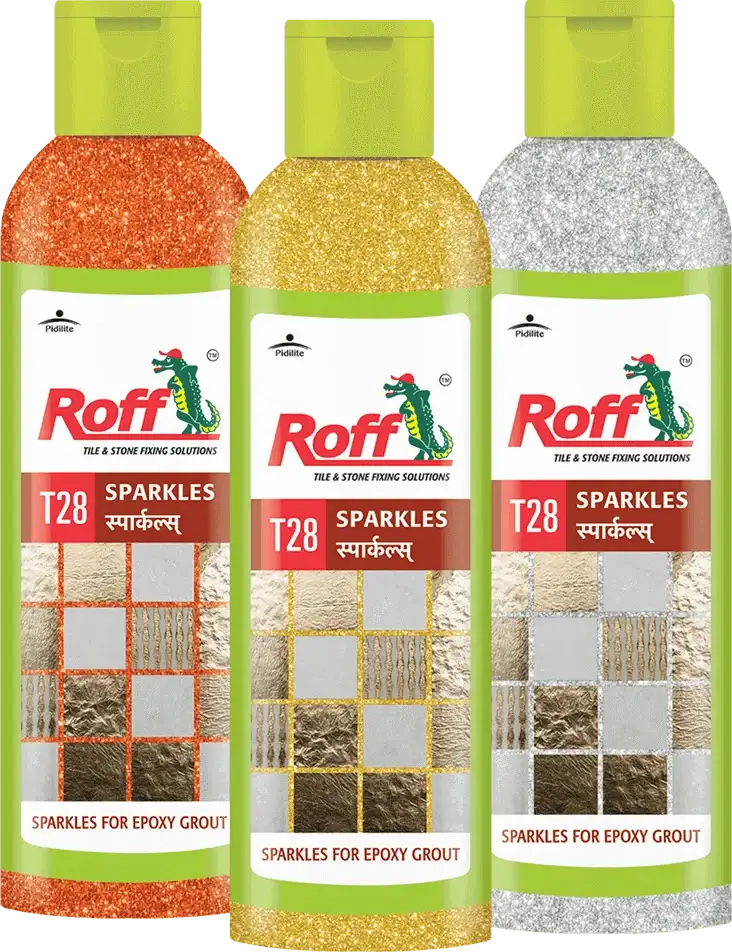
Grouts are also available in a wide range of shades and finishes, enhancing the room’s aesthetic appeal. Additional products like Sparkles add the glitter to the epoxy grouts, especially in Pooja rooms.
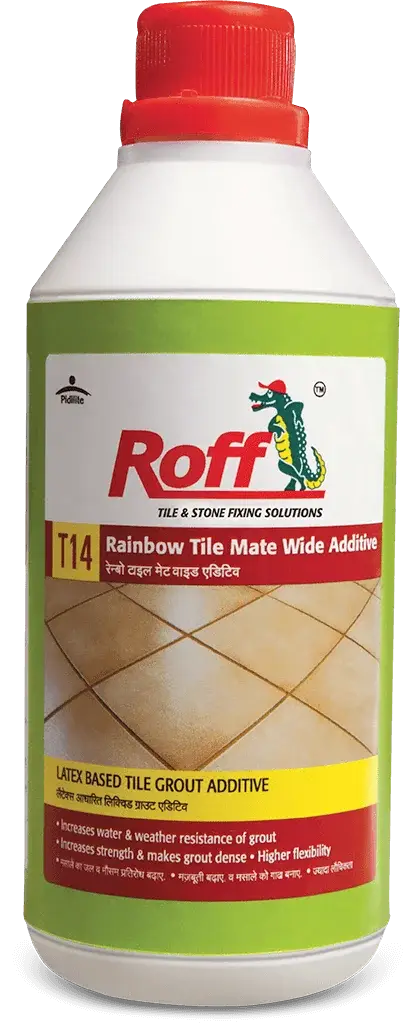
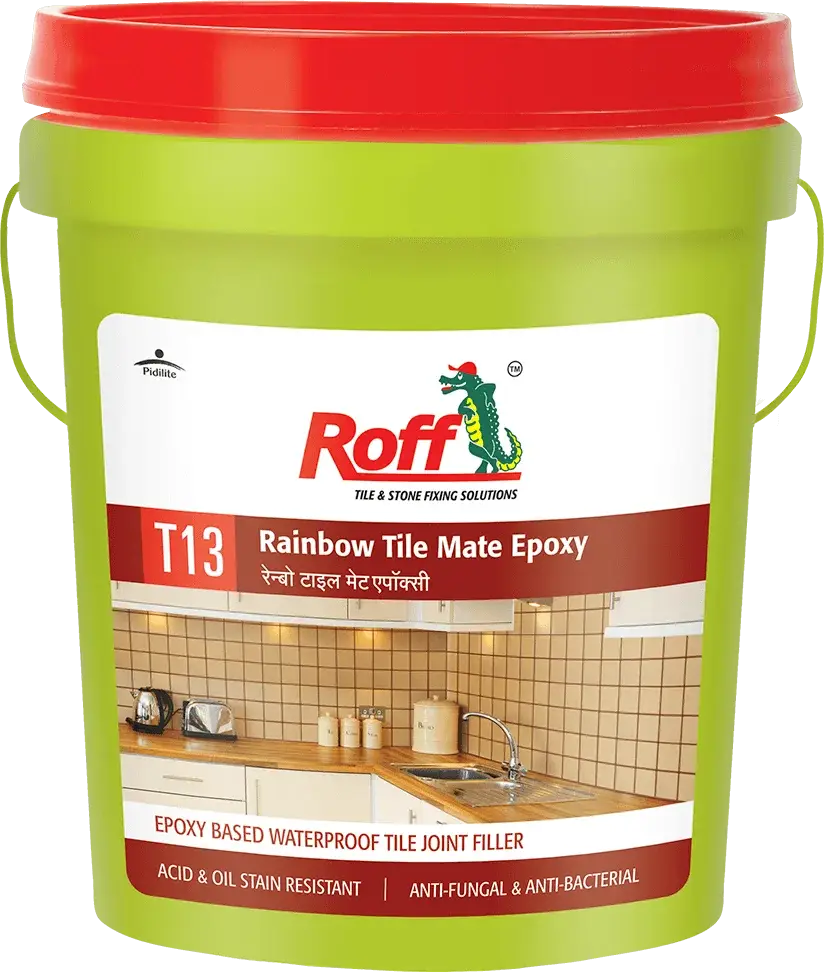
For a high-performance epoxy tile grout powder, you can check out Roff Rainbow Tile Mate Epoxy. It is a three-component epoxy tile joint filler that is crack-free and highly suitable for internal floors and walls.
Tips for Choosing the Right Tile Grouting Powder
Here’s how you can find the right powder:
1) Match the Grout to the Tile Type
Not every tile behaves the same. Ceramic, porcelain, and natural stone each react differently to moisture and pressure. The tile grout powder you pick should suit the material, not just the colour. If the match is off, the grout may not bond properly, leaving you with loose or uneven joints way too soon.
2) Check Water and Stain Resistance
Some areas don’t get a break from moisture, such as bathrooms, kitchens, and balconies. In these spaces, basic tile grout won’t always cut it. Look for options that offer better resistance to water and stains. It helps prevent discolouration and reduces the frequency of deep tile cleaning later on.
3) Avoid Low-Quality Mixes
Cheap grout can look fine at first. Then it starts to fade, crack, or, worse, turn into powdery grout. That chalky texture is a sign something’s off, either in quality or mixing. A reliable grout powder holds its structure after setting. It shouldn’t flake or break down with normal use.
4) Pick the Right Colour (It Matters More Than You Think)
Colour isn’t just aesthetic. It affects how clean or messy your tiles look over time. Lighter grout can brighten a space but shows dirt faster. Darker shades hide stains but may fade unevenly if the fabric is of poor quality. Think about maintenance, too. If you’re not planning frequent tile cleaning, a practical colour choice can save you effort.
5) Consider Application and Maintenance
Some grout types are easier to apply than others. Pre-mixed options are convenient, while powdered versions give more control. Your choice depends on how comfortable you are with the process. Also, think long-term. A good grout should be easy to maintain without constant repairs. If it needs fixing every few months, it’s not really doing its job.
Conclusion
Grouting might not be the first thing people think about when working with tiles, but it defines how everything holds up over time. From understanding its meaning to knowing why it matters, each step plays a role in keeping your tiled surface durable and clean.
Different types of tile grout powders bring different strengths. Cement grout works well for standard use, while epoxy offers better resistance to moisture and stains. The right choice depends on where and how the tiles are used, not just what looks good at first glance.
For any assistance or support, contact Roff at 1800 2255 02 or write to us at info@roff.in. Roff’s team will get in touch with you and find the best solution for your grouting needs.
FAQs
What is tile grouting powder used for?
Tile grouting powder is used to fill the gaps between tiles, locking them in place and preventing movement. It also seals joints to stop water, dirt, and debris from entering, helping maintain both the structure and appearance of tiled surfaces over time.
Is grouting necessary for tiles?
Yes, grouting is essential. Without it, tiles can shift, edges may chip, and moisture can seep underneath. Grout adds stability, protects the base layer, and gives tiles a clean, finished look, preventing visible gaps.
How long does tile grout powder last?
Unopened tile grout powder can last around 6 to 12 months if stored in a dry, sealed condition. Once mixed with water, it must be used within a few hours. Proper storage is key to maintaining its quality and performance.
What happens when you don’t put grout on tiles?
Without grout, tiles are more likely to move, crack, or become uneven over time. Water and dirt can easily enter the gaps, leading to damage beneath the surface. It also leaves the installation looking incomplete and less durable overall.