Check out the biggest trends of the season and our expert take on them.
Why you need to choose epoxy grout over cement grout
Modern tile installations are, in many ways, a product of careful engineering. Premium large-format tiles, high-bond adhesives, and sophisticated substrate preparation have made high-performance tile systems genuinely dependable. And yet, even in the most meticulously specified projects, the grout joints are where things start to go wrong first.
This isn’t a coincidence. It’s a specification gap that has existed for years and continues to catch out even experienced professionals, particularly when cement grout is used.
What is grout in tiles and why does it matter more than people think?
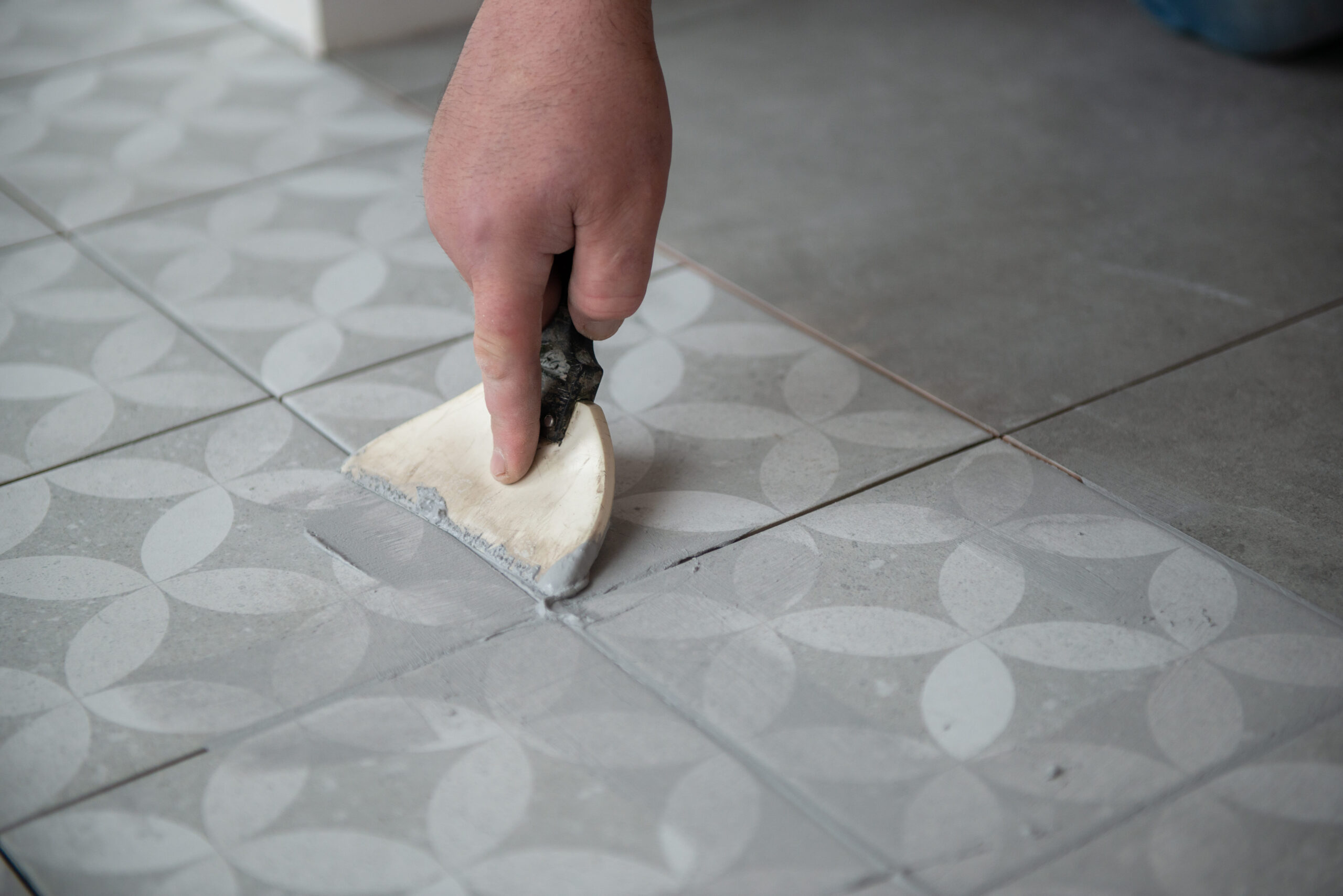
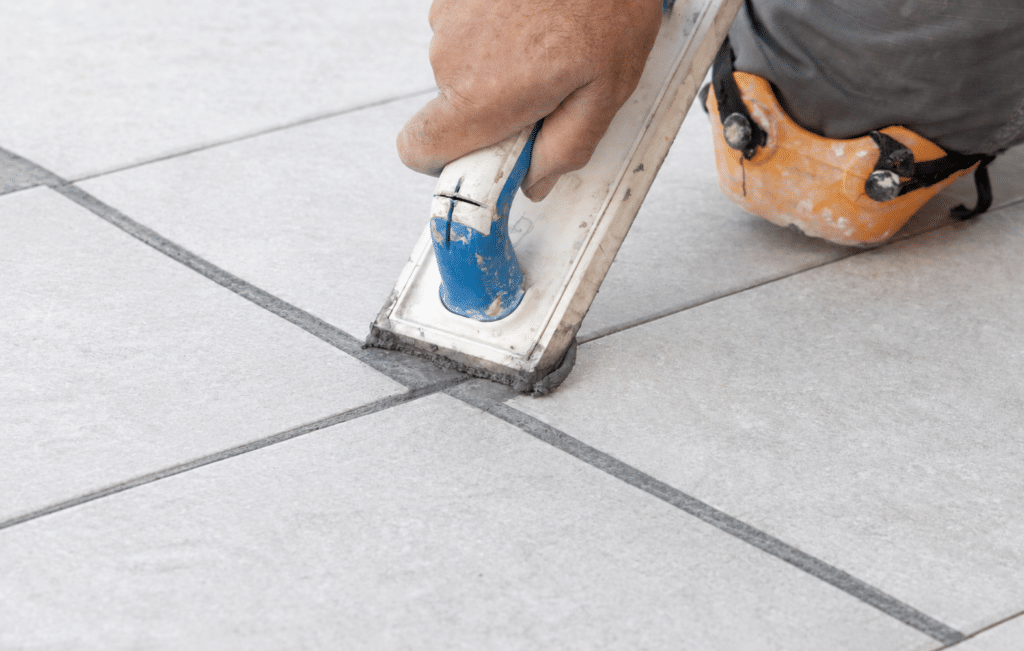
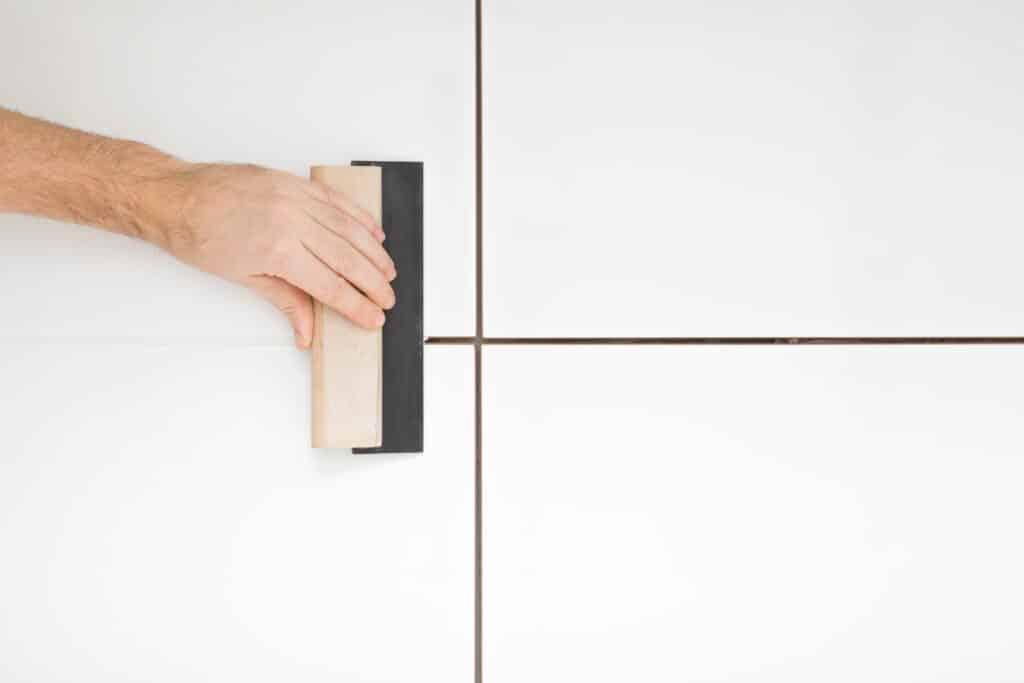
Tile grout is the material that fills the joints between individual tiles. Its job is to seal gaps, accommodate minor movement, protect tile edges, and complete the visual surface of an installation. But that description undersells how load-bearing its role really is.
Grout joints are constantly exposed to various stressors, such as:
Foot traffic
Moisture
Cleaning agents
Thermal fluctuations
Subtle structural movement
In a well-specified tile system, the tiles are strong and stable, and the adhesive bond beneath them is robust. The grout joints are the only parts of the surface without rigid backing. They flex, compress, and expand with every change in temperature and load. They sit in direct contact with water and chemicals every single day.
When architects and interior designers specify a tile system for long-lasting tiles, they often spend significant effort on tile grade, adhesive type, and substrate preparation. The grout is selected at the end, often as a formality.That’s where performance expectations start to diverge from reality.
What are the structural limitations of cement grout?
Cement grout has been the industry default for decades, and it does a reasonable job in low-demand environments. But its chemistry imposes fundamental limitations that become significant in any installation with high performance expectations.
Here’s what happens to cement grout over time:
Shrinkage during curing
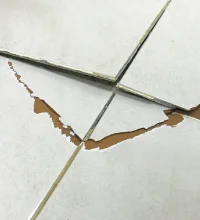
When cement grout cures, it loses moisture and contracts. Even properly mixed and applied cement grout shrinks slightly as it sets. In narrow joints, this often leads to small surface cracks that are barely visible at installation but grow with use.
High porosity
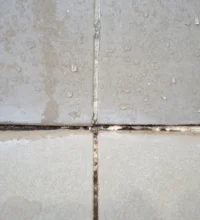
Cement grout is not a dense material. Its open-pore structure readily absorbs water, creating two problems: it stains easily and provides a pathway for moisture to travel beneath the tile surface. Moreover, porosity also leads to the blackening of cement grout, which hampers the look of your tiles, and in turn ruins the aesthetics of your entire room.
Limited movement tolerance
Cement grout isa rigid material. It cannot flex. When the substrate or tile assembly moves, even fractionally, the cement grout either cracks or debonds at the tile edge. In larger format tiles and underfloor heating systems, this is almost inevitable.
Poor chemical resistance
Acidic cleaners, steam, and even some household detergents degrade cement grout over time. The surface becomes rough and porous, which accelerates staining and microbial growth.
None of these is a manufacturing or installation defect. However, these are all properties of the material itself that have made it outdated as newer grouting materials have developed.
Why does cement grout deteriorate before the tiles or adhesive do?
This is the central problem: in a modern tile system, the tiles are designed for decades of use, and the adhesive is formulated to maintainbond strength even in the presence of moisture and movement. But the cement grout in the joints is often working at or beyond its performance limits from relatively early on.
Consider what a typical grout joint experiences in a busy bathroom or a residential kitchen:
Daily exposure to water and cleaning chemicals
Thermal cycling from hot water, steam, or underfloor heating
Micro-movement from foot traffic and building settlement
Accumulation of soap residue, grease, and mineral deposits in its porous surface
Cement grout is not built to handle all of this consistently over the years. The result is a material that looks compromised long before the tiles themselves show any sign of wear.
The problem compounds once you consider secondary damage:
Water that would have been kept at the surface is now travelling below the tile
Tile edges are no longer supported by intact grout and start to chip under point loads
Staining becomes deep and structural rather than superficial
Cement grout is also prone to blackening, which worsens the aesthetics of your entire tile installation
What are the cascading effects of grout failure?
Grout failure rarely stays contained. When cement grout starts to break down, it creates a chain of problems:
Staining
Porous cement grout absorbs contaminants permanently. In commercial kitchens or toilets, this becomes a hygiene issue, not just an aesthetic one.
Edge damage
Unsupported tile edges are vulnerable. Chipping at grout-line intersections is one of the earliest visible signs that grout integrity has been lost.
Water ingress
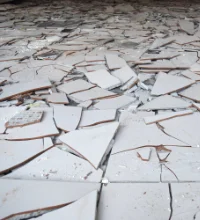
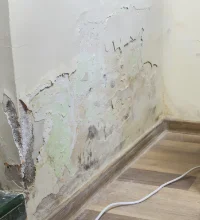
Once cement grout cracks or debonds, moisture travels freely. In wet areas, this can mean water sitting beneath tiles, which can degrade both the adhesive and the substrate.
Microbial growth
The porous, damp environment of failed cement grout is ideal for mould and bacterial colonisation. This is particularly significant in healthcare, hospitality, and food-service settings.
Complete system failure
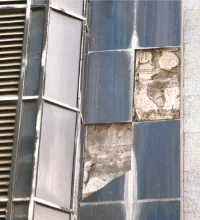
In advanced cases, water ingress beneath tiles leads to hollow spots, debonding, and tile lift. The result is a full remediation, not a grout top-up.
Each of these outcomes is avoidable. But avoiding them requires treating grout as a performance component rather than a finishing detail.
How can grout performance be aligned with the rest of the system?
If you want long-lasting tiles and a high-performance adhesive system, the grout should meet the same standard. The logic is simple: a tile system can only perform as well as its weakest component.
This is where two-component epoxy grout fundamentally changes the picture.
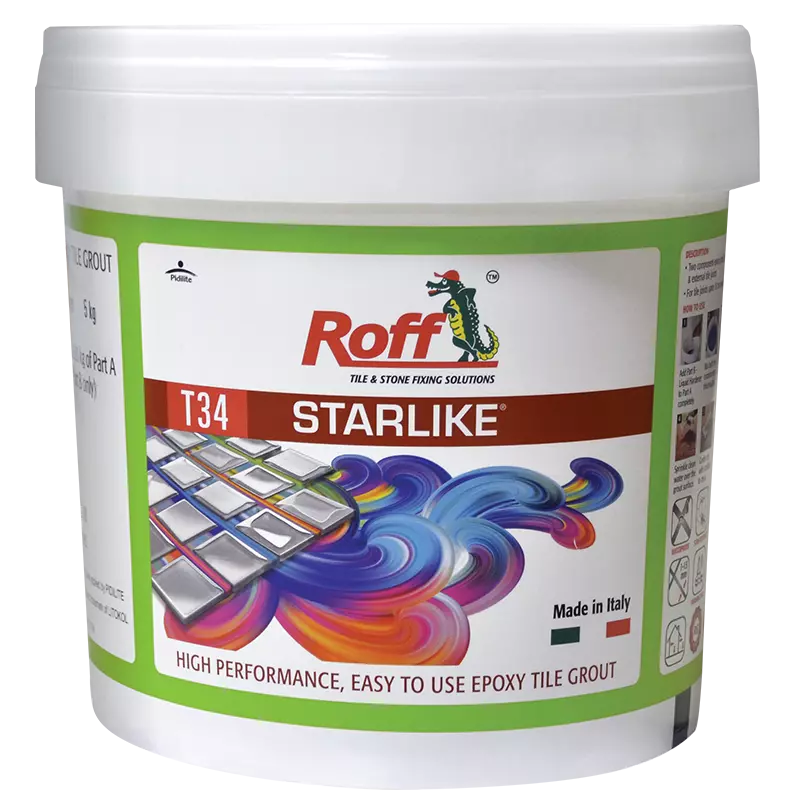
Roff Starlike is a two-component epoxy tile grout designed to match the performance expectations of the rest of a high-specification tile system. Its formulation addresses each of the structural limitations of cement grout directly:
No shrinkage
The epoxy reaction produces a dimensionally stable grout that does not contract during curing. Joint integrity is consistent from day one.
Near-zero porosity
Unlike cement grout, Roff Starlike does not absorb water, oils, or cleaning chemicals. The surface remains dense and impermeable throughoutthe life of the installation.
Chemical resistance
Roff Starlike resists acids, alkalis, and aggressive cleaning agents. In commercial kitchens, hospitals, pools, and laboratories, this is not a luxury but a requirement.
Durability under movement
The epoxy matrix provides a degree of flexibility that cement grout simply cannot. It accommodates micro-movement without cracking or debonding.
Colour stability
Because the surface is non-porous, pigment is locked in. The grout colour you specify is the colour that remains visible years later.
Specifying Roff Starlike does not change the installation process in a way that creates difficulties on site. It does, however, significantly change the outcome, particularly in wet areas, high-traffic zones, and installations where the tile specification itself signals that long-term performance is the priority.
When the grout stays strong, the tile system holds
A tile system is only as durable as its most vulnerable component. When premium tiles and high-performance adhesives are paired with standard cement grout, that vulnerability sits right at the joint line, visible and worsening with every passing season.
Specifying the right grout at the outset is far simpler than managing remediation later. For installations where performance is non-negotiable, explore Roff Starlike to choose a grout that keeps pace with the rest of your system.
FAQs
1) Why does cement grout crack so quickly in newly tiled areas?
Cracking in newcement grout is usually caused by its inherent shrinkage during curing, combined with minor substrate movement. Even properly installedcement grout contracts as it sets, and if the substrate flexes even slightly, the joints crack. This is a material limitation, not necessarily an installation error.
In high-performance tile systems, switching to an epoxy tile grouteliminates curing shrinkage entirely.
2) Is epoxy grout difficult to work with on large commercial projects?
Two-component epoxy grouts are easy to mix but have a defined working time, which means on-site discipline is important. However, products like Roff Starlike are formulated for professional application and are well within the skill set of experienced tilers working on commercial projects. The additional handling requirements are offset considerably by the grout’s lifespan and performance.
3)How can you choose a grout for specialised installations like pools or food-prep areas?
In these environments, tile grout has a critical functional role beyond aesthetics. It must resist constant water exposure, harsh chemical cleaning, and microbial growth. Standard cement grout fails on all three counts over time.
For pools, food service, healthcare, and industrial tile installations, an epoxy tile grout like Roff Starlike is the appropriate specification because its non-porous, chemically resistant surface maintains hygiene and joint integrity under conditions that would degrade cement grout within months.