Check out the biggest trends of the season and our expert take on them.
How the right stone adhesive or glue prevents costly failures on staircases
When it comes to staircases, most people focus on choosing the best natural stone. And while selecting the right colour, texture, and finish is important, the correct adhesive is often overlooked.
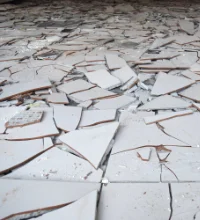
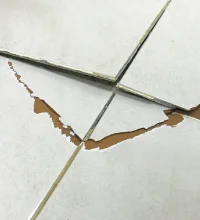
Stone installations require safety, durability, and structural stability. They constantly deal with movement and concentrated loads, which is why choosing the right stone adhesiveor glue becomes imperative. Using the correct stone adhesive or glue is critical to prevent long-term failures, such as stone slippage, hollow spots, or debonding.
Why are stone installations more challenging?
Natural stones like marble, granite, quartzite, and engineered stone are significantly heavier than regular tiles. They also vary in porosity, density, and bonding behaviour.
For example:
Marble is relatively porous/light coloured, and hence needs white cement-based adhesives
Granite is denser and heavier
Engineered stones may have resin-based surfaces
This means different stones require different grades of stone fixing adhesives for reliable performance.
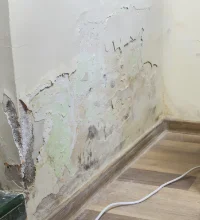
Using the wrong adhesive can result in poor bonding strength and long-term failure of the installation
Why do staircases need stronger adhesion?
Staircases are constantly exposed to:
Shear forces during movement and usage
Point loads at staircase edges and risers
Repeated impact from foot traffic
Vibration caused by continuous movement on the staircase
Thermal expansion and contraction, especially on external staircases
Most times, staircases are made of metal which require special raisin-based adhesives
This creates far greater stress on the adhesive layer than standard flooring.
In such applications, ordinary adhesives often fail to provide adequate grip and support.Stone adhesive glues are specifically designed to provide the bondstrength required to support heavy stones like granite or marble.
Why do staircases need stronger adhesion?
Many standard tile adhesives are designed for lightweight ceramic tiles on horizontal surfaces. When used for stone staircases, they may lead to:
Tile or stone slippage during installation
Weak bonding over time
Hollow areas beneath stones
Lack of flexibility, as staircases are constantly under stress
Not choosing the right adhesive as per the surface type (metal or concrete)
This is especially risky on staircases, where even minor movement can lead to long-term structural and safety concerns.
What makes a high-performance stone fixing adhesive different?
For staircase applications, the following adhesive properties become non-negotiable:
1. Non-sag behaviour: The adhesive must hold the stone in position immediately upon application, without any slippage or creep before it cures. Standard adhesives lack this property and can allow heavy stone to slide during setting.
2. Flexibility: Staircases experience constant vibrations and minor structural shifts due to foot traffic. An adhesive must absorb these stresses without debonding. Adhesive flexibility is essential to achieve this requirement. Flexibility also helps protect against the expansion/contraction of marble caused by temperature changes.
3. High bond strength: The cured adhesive must withstand sustained shear loads, impact forces, and thermal cycling over decades, not just the first few years.
4. Compatibility with the substrate: Different surfaces, like cement, concrete, metal, or complex composites, require stone fixing adhesives specifically formulated to bond to that surface.
Choosing the right Roff adhesive for the surface
Different substrates require different adhesive systems.
For cement-based internal surfaces
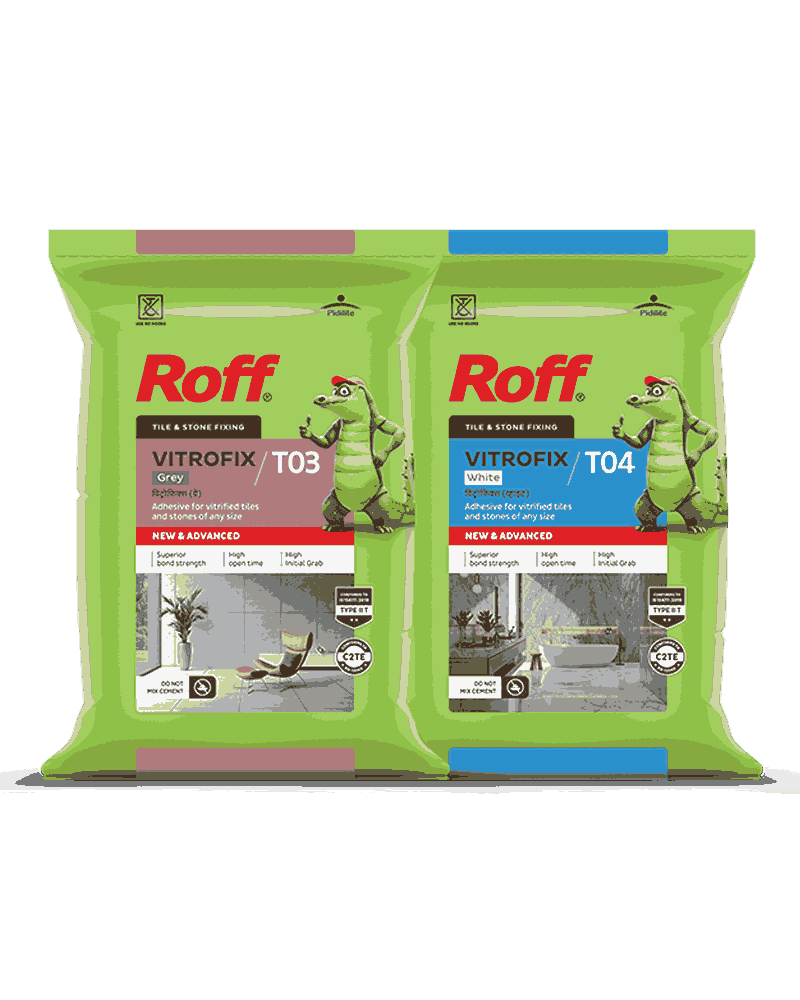
Use Roff Vitrofix, designed for interior stone and tile installations.
For exterior applications
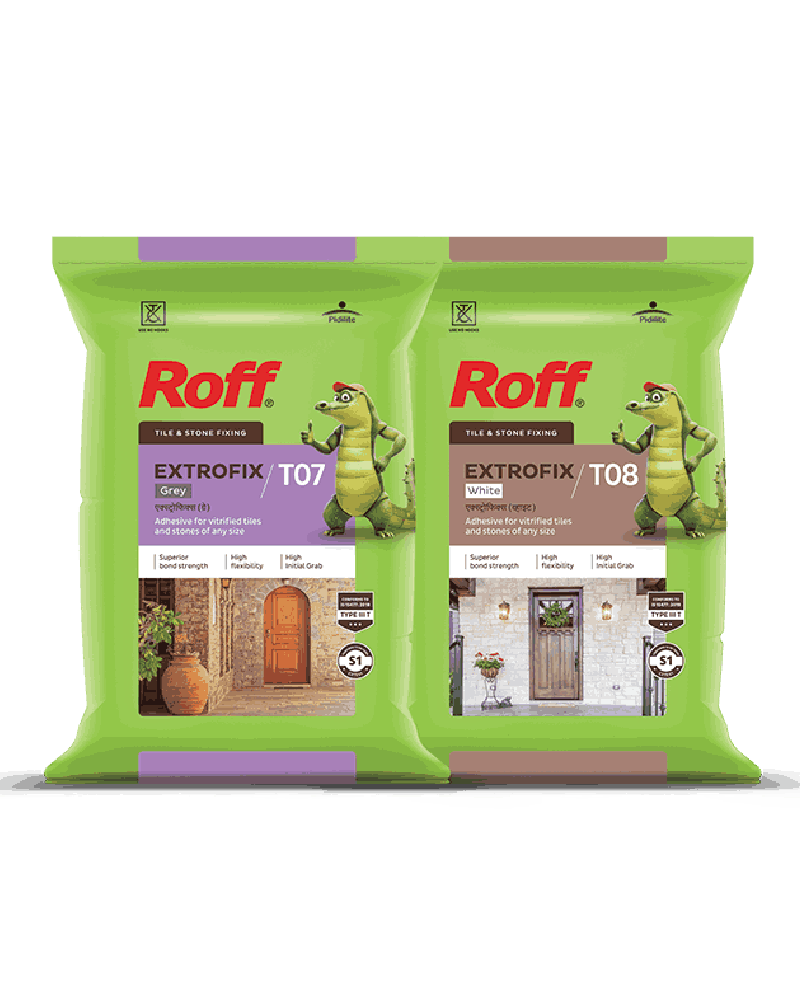
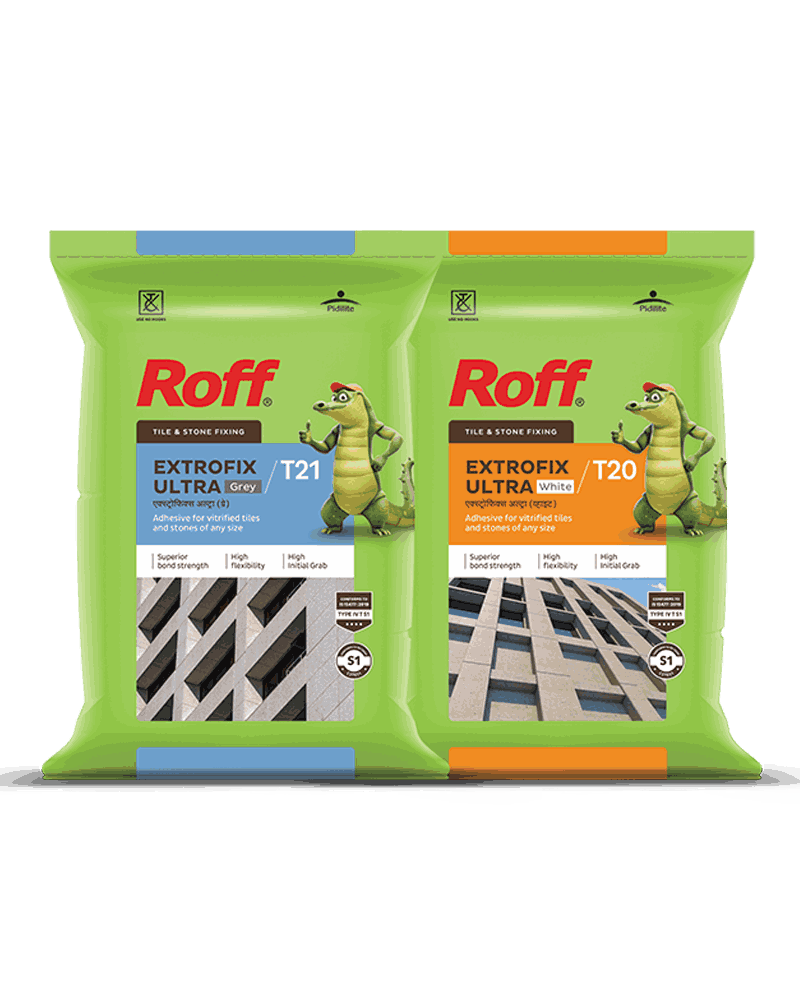
Use Roff Extrofix, engineered to withstand weather exposure and external stress.
For critical surfaces like metal
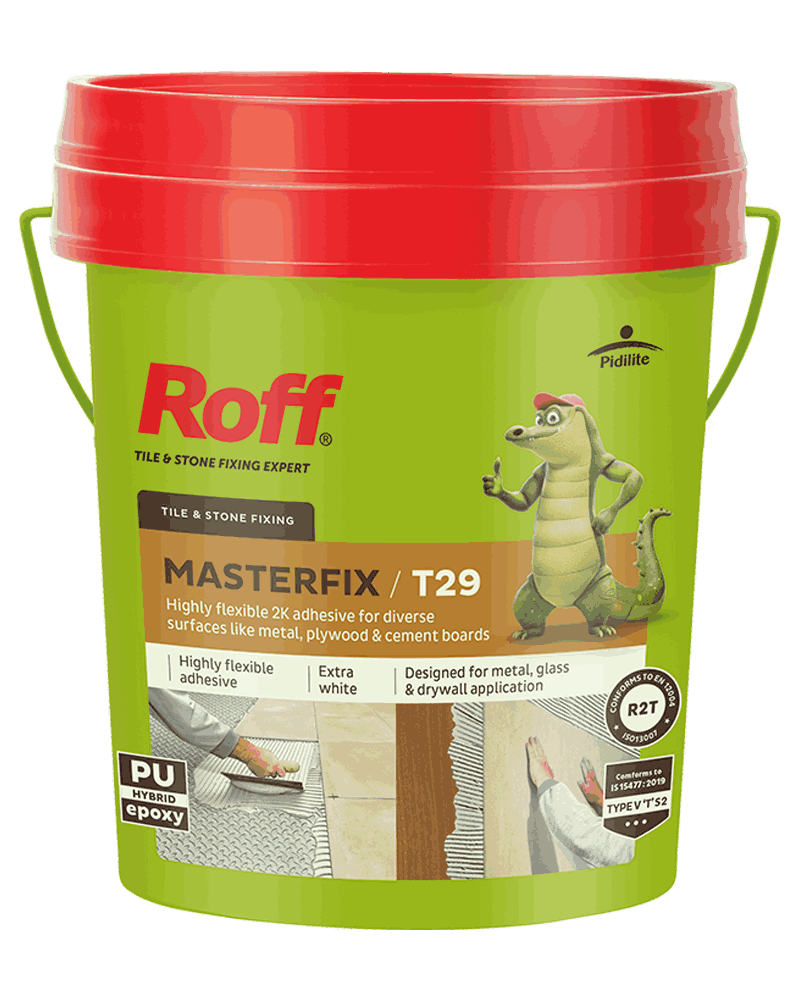
Use Roff Master Fix, which offers superior bonding on challenging substrates like metal or quartz stone.
Choosing the right adhesives for stones based on the substrate and application area ensures optimal performance.
Key takeaway
Selecting a high-performance stone adhesive glue is one of the most consequential decisions to make while constructing a stone staircase. The safety of the people who use the staircase depends on it.
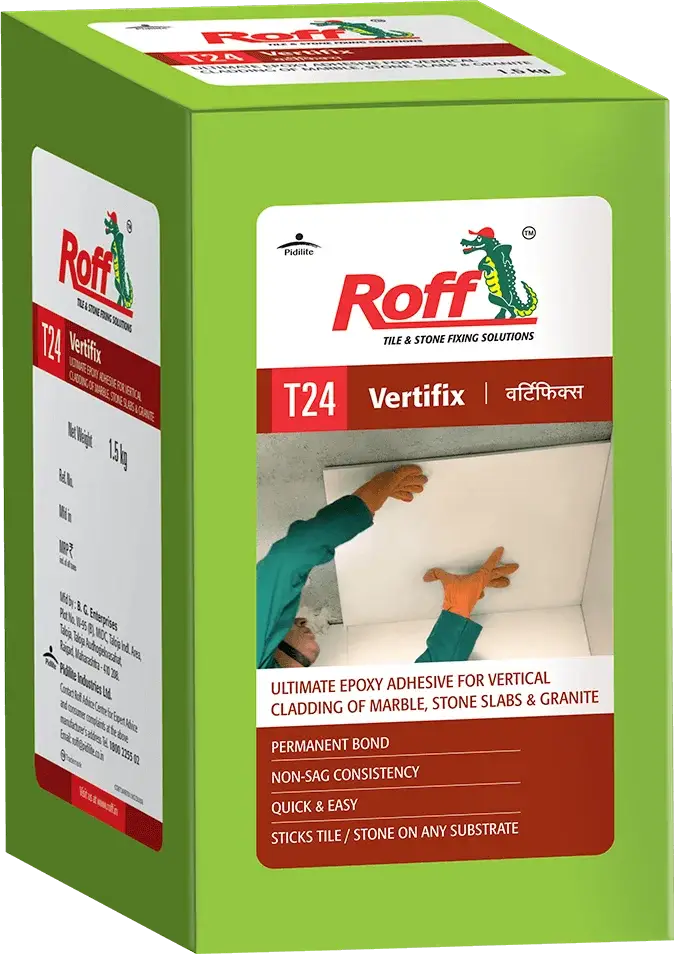
Using specialised stone glue systems like Roff Vitrofix, Roff Extrofix, and Roff Master Fix ensures strong bonding, reduced slippage, and long-lasting durability across different stone types and substrates.
Frequently asked questions (FAQs)
1) Why is stone adhesive glue important for staircases?
Staircases experience movement, thermal expansion and contraction (especially outdoors), and concentrated loads, requiring stronger bonding compared to standard flooring.
2) Can regular tile adhesive be used for stone staircases?
Standard tile adhesives may not provide sufficient grip or bond strength for heavy stone applications.
3)Which adhesive is suitable for external stone applications?
Roff Extrofix is recommended for exterior stone installations exposed to weather and moisture.