Check out the biggest trends of the season and our expert take on them.
How to select tiles for the living room and why you shouldn’t rely on tile cement
The living room is where style meets function – it’s a space that sets the tone for your home. But when thinking about how to select tiles for the living room, many homeowners only focus on looks and overlook the installation method, especially the role of fixing materials. While tiles can transform your living space into something elegant and timeless, choosing the wrong fixing medium, like traditional tile cement, can compromise both performance and longevity.
How to select the right tiles for your living room
When deciding what type of tiles are best for your living room, consider these three main aspects:
Colour and finish: Lighter tones make rooms feel spacious, while darker shades add warmth and intimacy. Glossy finishes reflect light, whereas matte ones hide dust better.
Tile size: Larger tiles reduce visible joints, creating a sleek, expansive feel. Smaller tiles, however, allow for more design flexibility.
Material choice: Ceramic tiles are cost-effective and versatile, while vitrified tiles offer durability and stain resistance, making them suitable for high-traffic areas like living rooms.
The importance of correct material selection
Learning how to select tiles for living room spaces goes beyond choosing the right size, colour, or material. The next crucial step is ensuring they’re fixed with the right supporting materials for lasting performance. Many homeowners still believe cement for tiles is the standard method for fixing, but this approach has serious drawbacks:
Weak adhesion: Ordinary tilecement installations often pop out over time due to poor bonding.
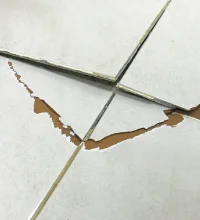
Cracks and hollow sounds: Shrinkage and uneven application can cause tiles to crack or make that dreaded hollow sound underfoot.
Aesthetic issues: Cement is inconsistent and can lead to uneven surfaces and visible joint problems.
Poor impact resistance:Cement fixing is a loose-bed system that lacks a solid base and proper bonding, making tiles more likely to crack or break under impact or movement.
Put simply, while cement is cheap upfront, it often leads to costly rework later.
Why tile adhesives are better
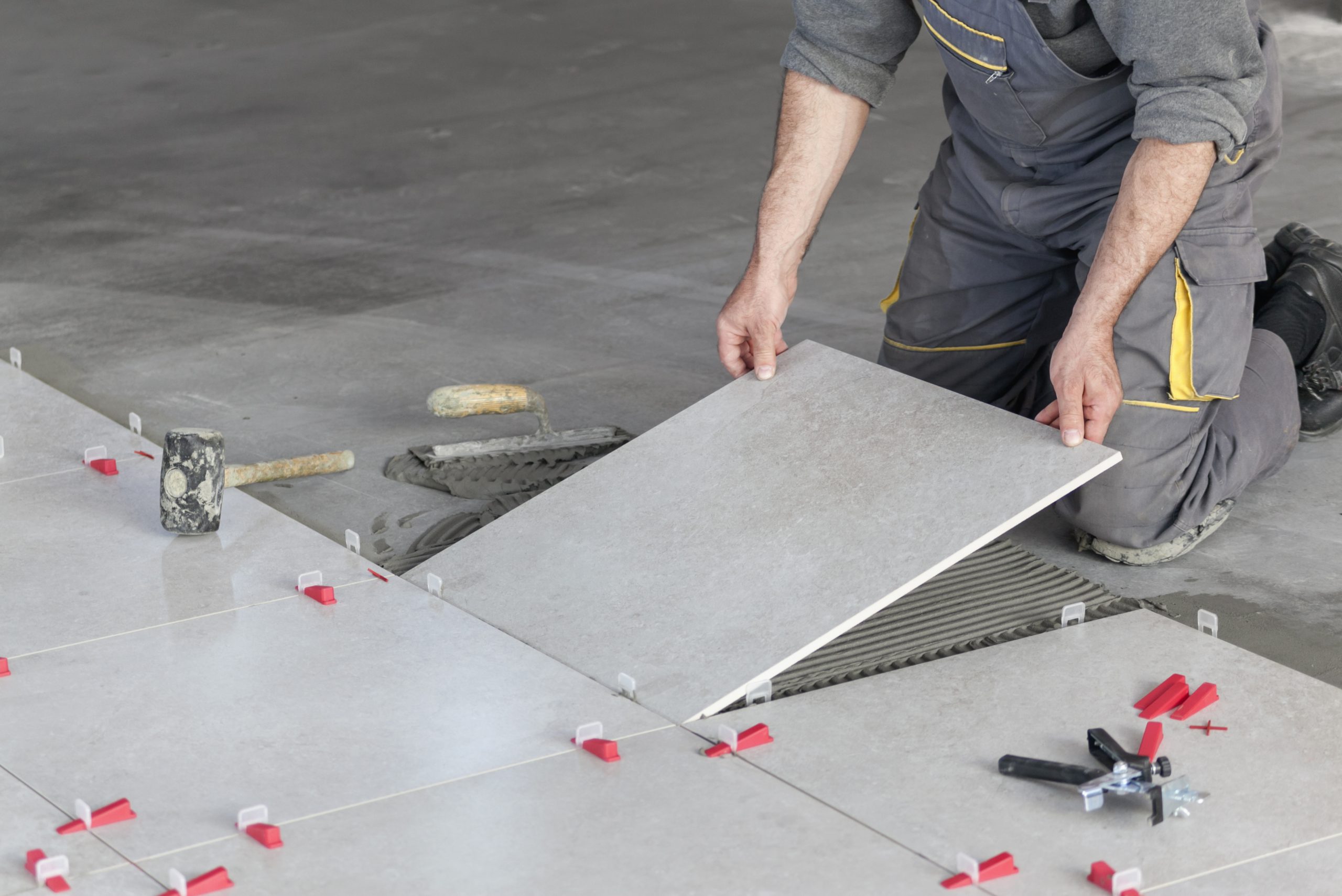
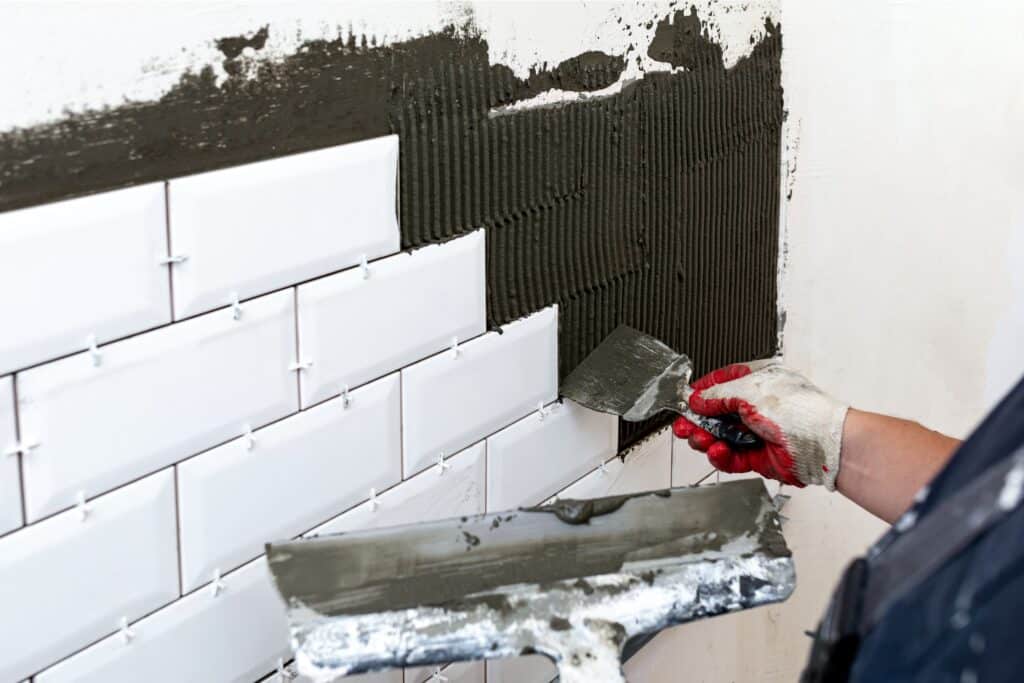
When understanding how to select tiles for living room areas, choosing the right fixing material is just as vital as selecting the tiles themselves. Modern tile adhesives are engineered for strength, flexibility, and precision. Compared to tile cement, adhesives:
Provide superior bonding strength, even on low-absorption vitrified tiles.
Allow thinner, uniform layers that prevent shrinkage and cracking.
Ensure faster and cleaner installation with longer open times.
Adhesives are used on hard/solid bed, which avoid hollow sounds/cracking.
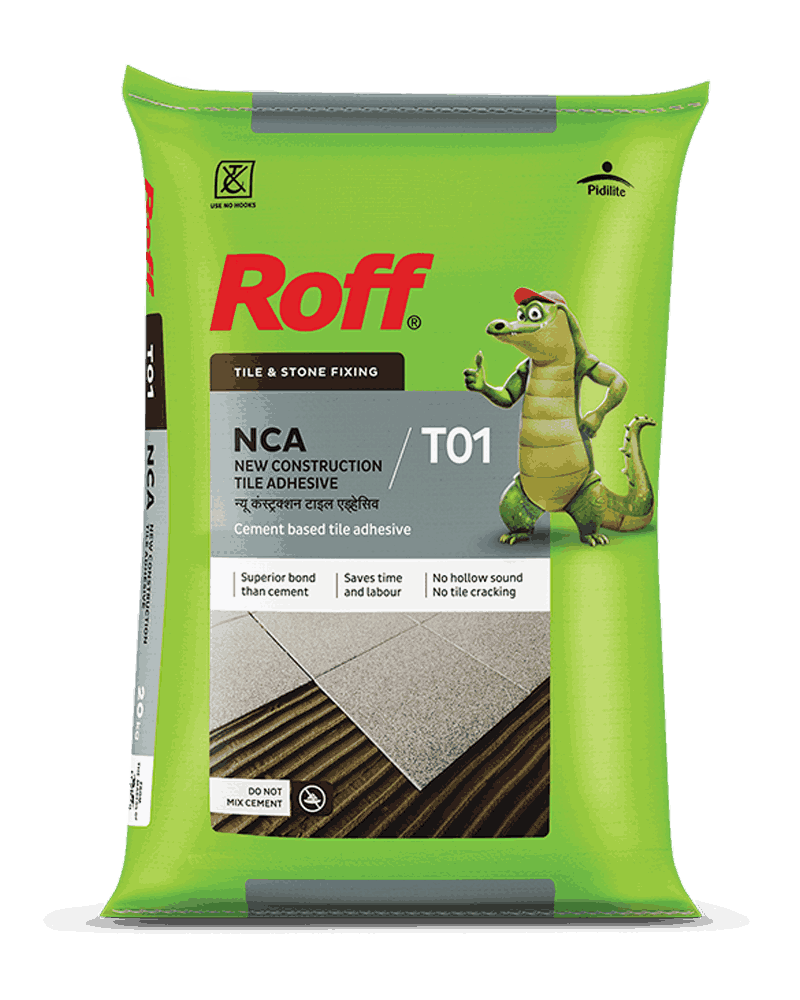
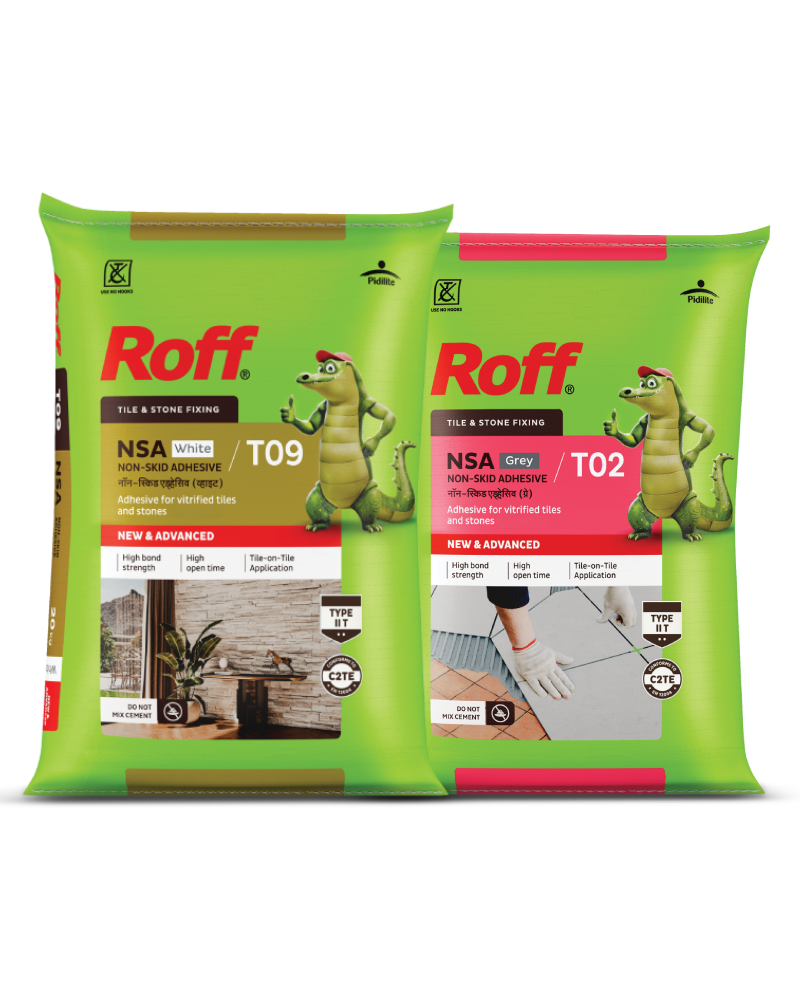
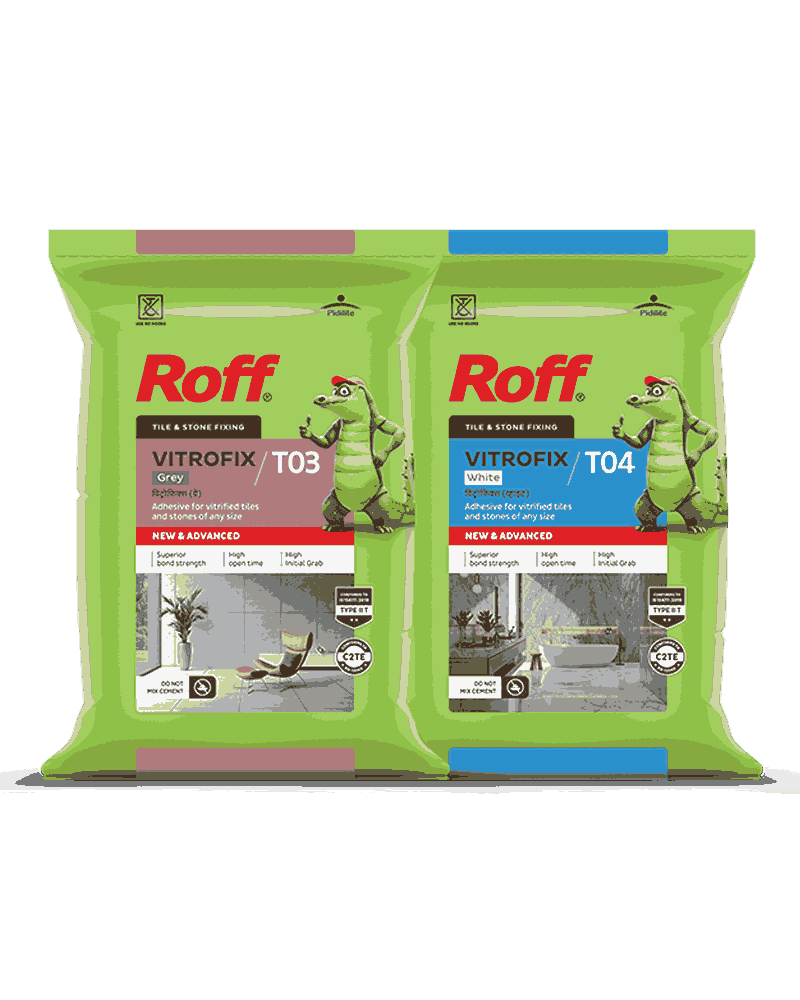
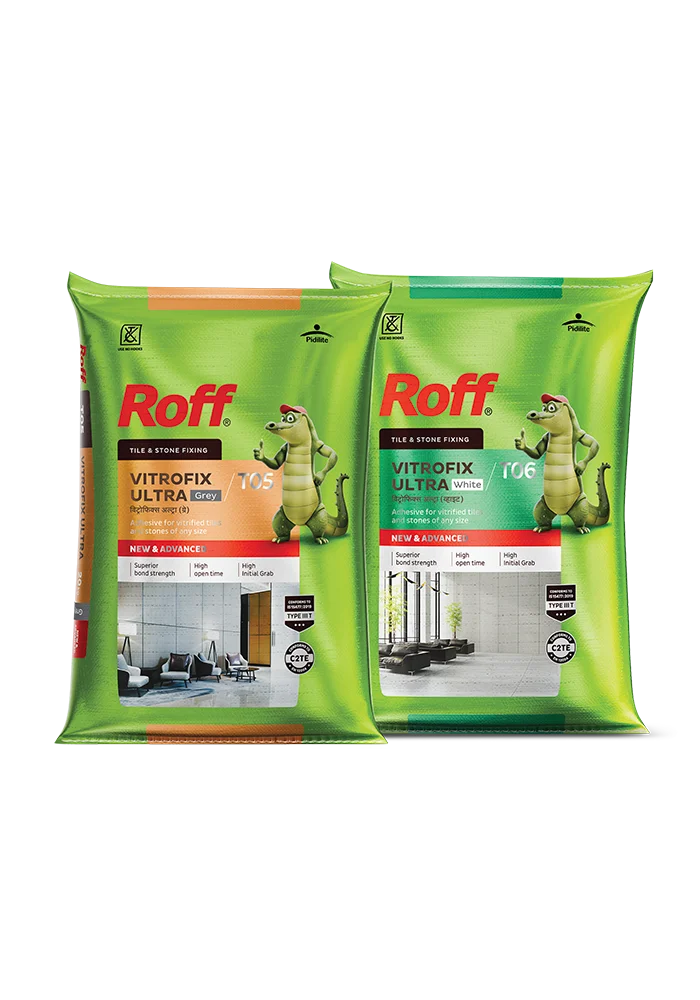
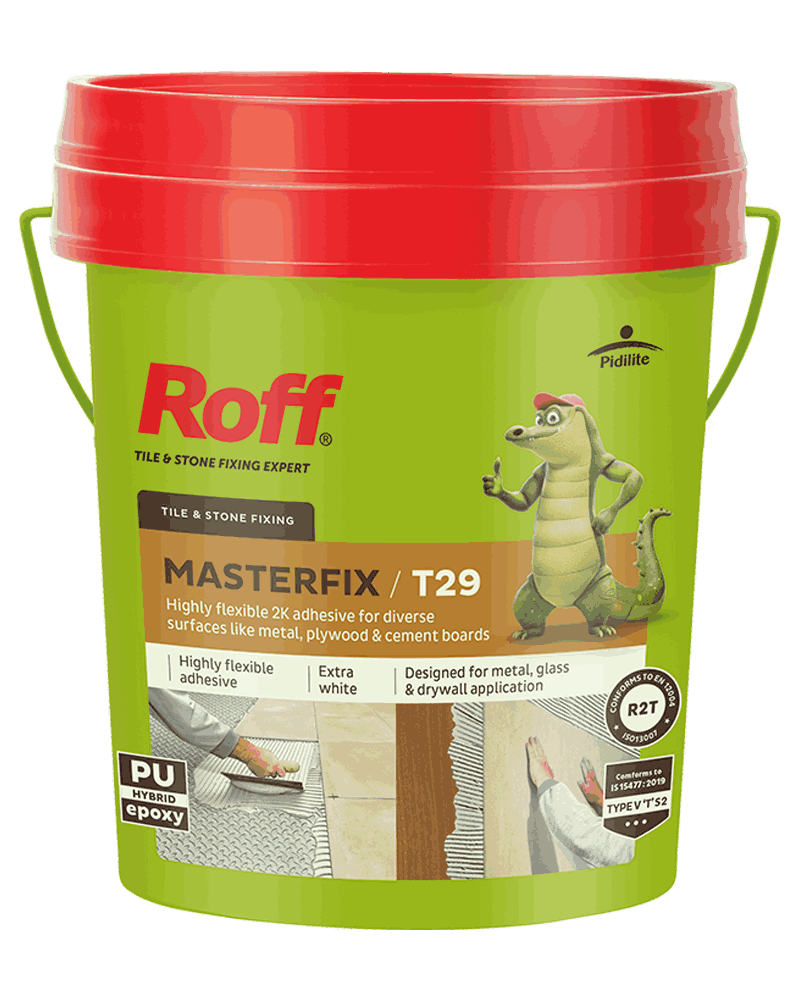
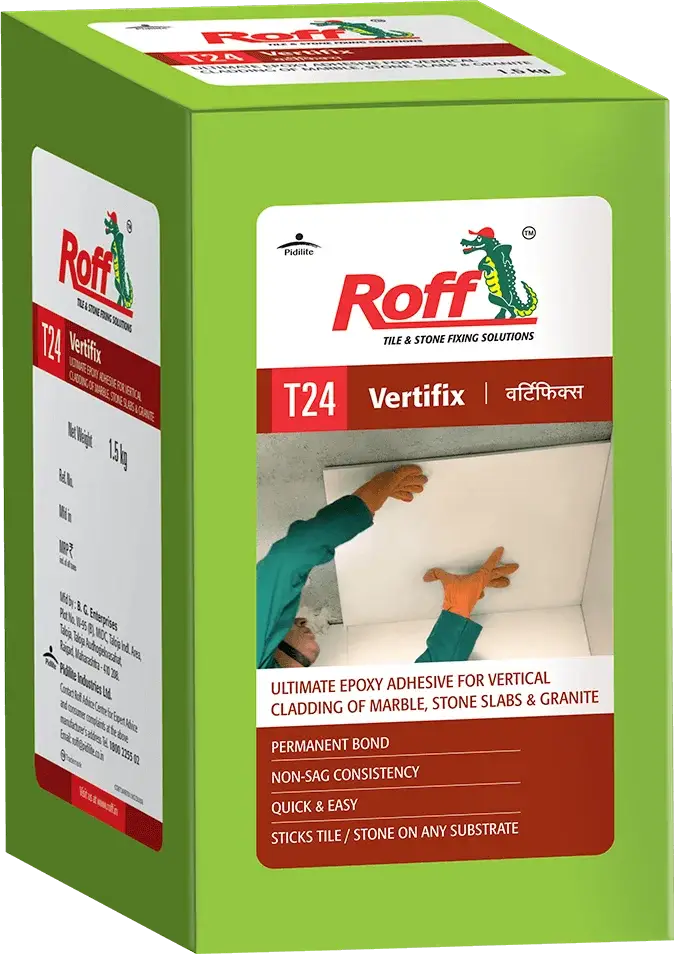
For living rooms specifically, Roff offers high-performance solutions like:
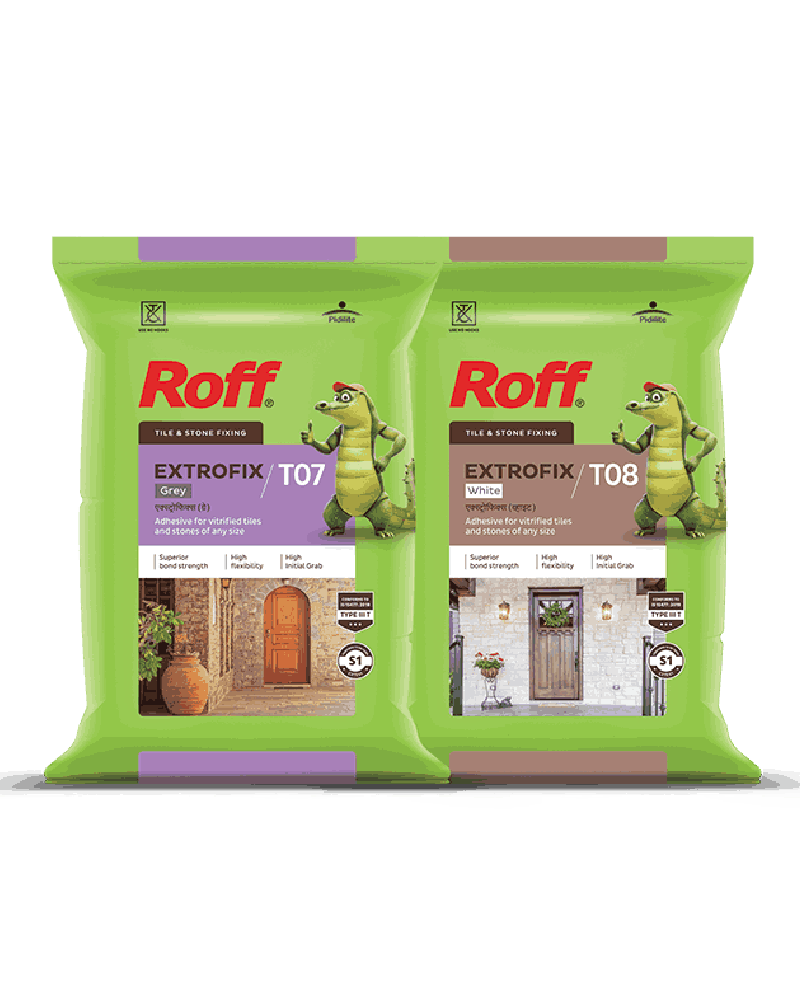
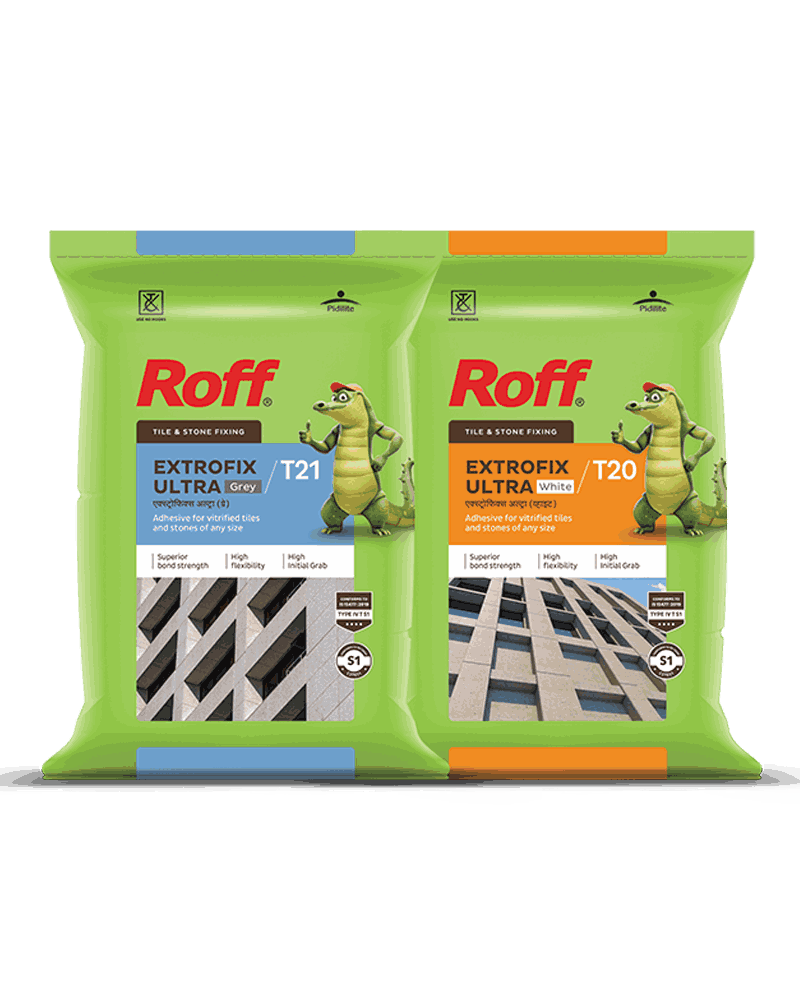
Roff Non-Skid Adhesive (NSA): Ideal for fixing ceramic and vitrified (large format) tiles on internal floors and walls.
Roff Vitrofix: Designed for very large format/heavyvitrified tiles/natural stones; it ensures lasting adhesion and durability.
Why epoxy grout completes the installation
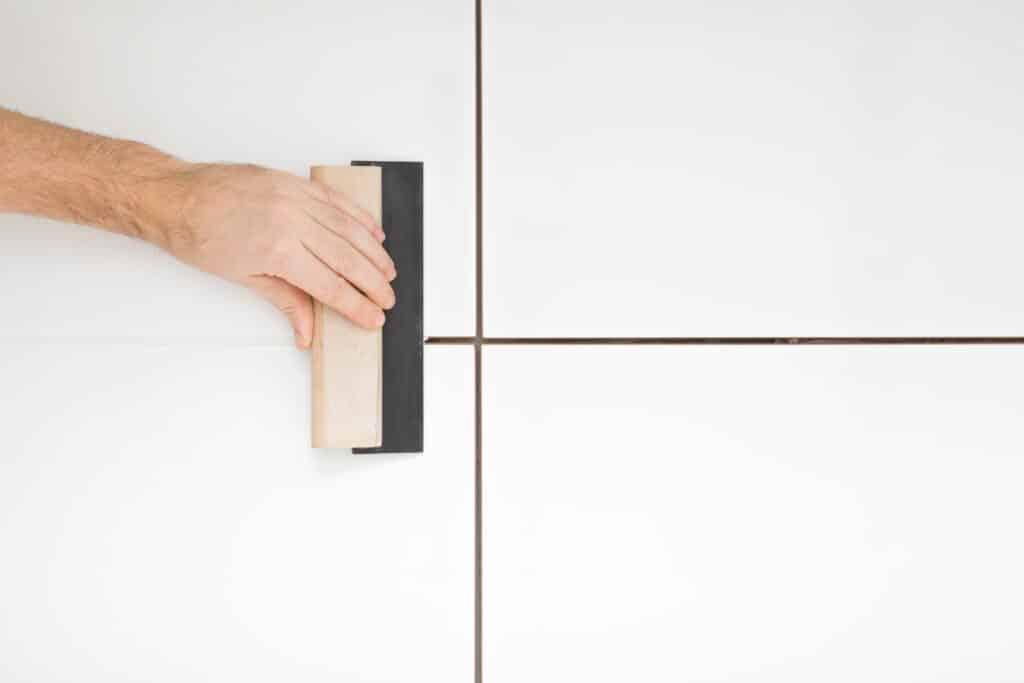
Selecting the right adhesive is only part of building a durable living room floor; the grout plays an equally important role. Epoxy grout helps lock tiles in place, protects joints from wear, and preserves the overall finish of the floor, especially in high-traffic living spaces.
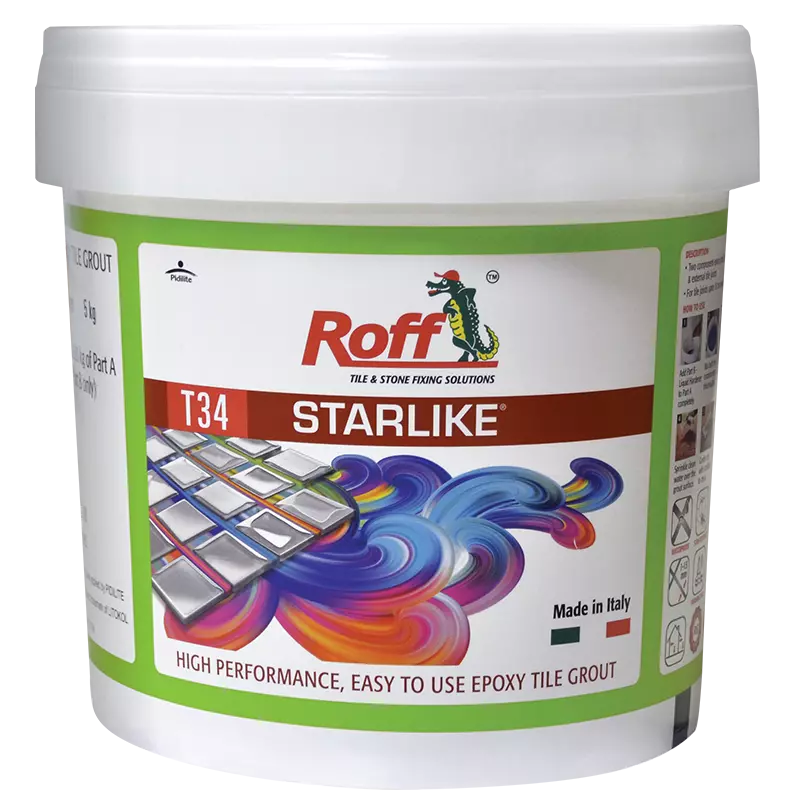
Unlike traditional cement-based grouts, epoxy grout resists moisture, stains, and cracking, ensuring long-term integrity. Roff Starlike is an ideal epoxy grout solution that enhances both performance and aesthetics, delivering strength without compromising on design.
Key features of Roff Starlike include:
Waterproof and stain-resistant for long-lasting, easy-to-maintain joints
High mechanical strength and chemical resistance for lasting durability
UV-resistant to prevent colour fade in sunlit areas
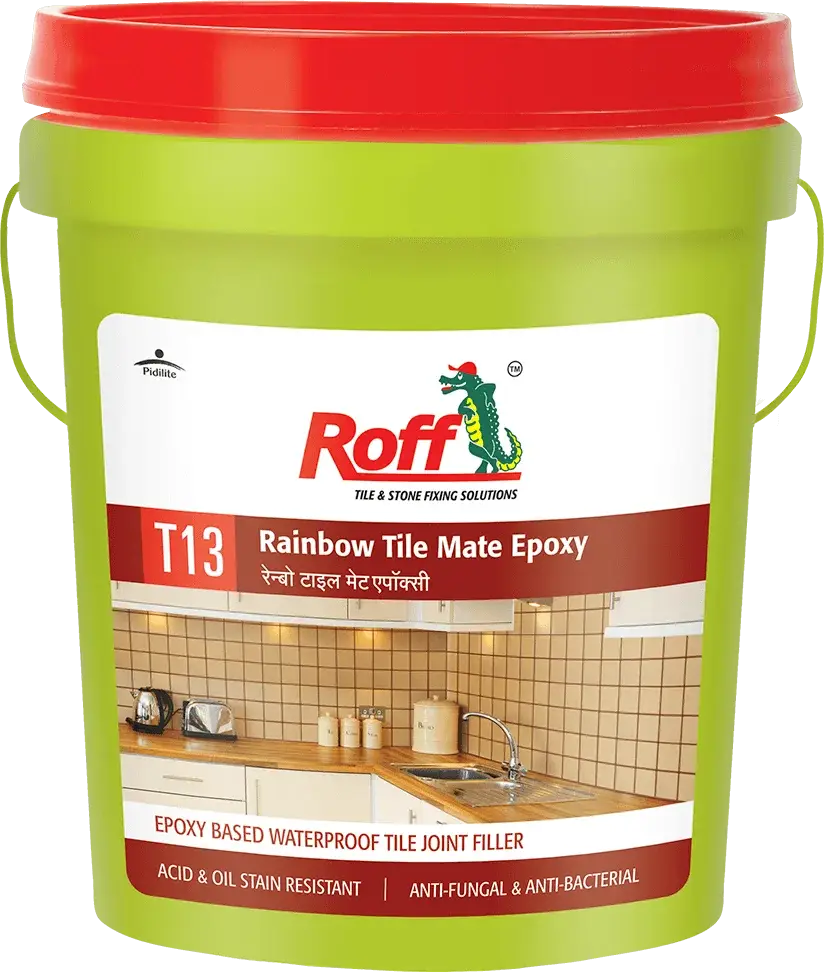
Available in 27 attractive shades to match tile designs
Suitable for internal and external use on floors and walls
Easy to apply and clean, with zero shrinkage after setting
Long-term benefits: Beauty meets security
Once you’ve found the right adhesive, you’ll notice the difference every day: tiles that stay put, floors that feel solid, and a finish that still looks new years later. That’s the real secret behind how to select tiles for the living room that last. The right fixing material doesn’t just hold your tiles together; it protects your design, your investment, and the look you worked so hard to create.
Even the best tiles and adhesives need proper care to retain their charm. Regular cleaning with pH-neutral solutions helps prevent stains, while avoiding harsh chemicals preserves both finish and joints. With the right upkeep, your living room tiles remain as impressive years later as they did on day one.
Don’t let cement be the weak link
Cement for tiles may seem like the “default,” but for modern homes, it’s outdated. When understanding how to select and install tiles for the living room, opting for Roff’s range of specialised adhesivesensures your space looks beautiful and performs flawlessly for years.
FAQs
FAQ #1: Can I still use cement for tiles in my living room?
While possible, it’s not recommended. Cement fixing is a loose-bed system, meaning tiles rest on a thick mortar layer rather than bonding chemically to the surface. This often results in weak adhesion, hollow spots, cracking, and long-term aesthetic issues. Tile adhesives form a strong bonded layer, making installations more durable, stable, and long-lasting.
FAQ #2: What type of tiles are best for the living room if I want durability?
Vitrified tiles are highly durable and resistant to stains, making them an excellent choice. Pair them with the right adhesive for the best results.
FAQ #3: How do tile adhesives compare in cost to cement?
While adhesives cost more upfront than cement, they save money in the long run by reducing rework, tile failure, and maintenance issues, while also cutting installation time thanks to faster, more efficient application.