Check out the biggest trends of the season and our expert take on them.
Adhesive for Wall Tiles: Picking the Right Bond for Vertical Surfaces
Wall tiles not only improve the look of a space but also protect walls from moisture and add lasting value to your home. Unlike floors, walls have to support the weight of tiles against gravity. So, no matter how premium your tiles are, they can only perform well when fixed with the right adhesive. This makes choosing the correct adhesive tiles for walls much more important.
Let’s explore the different types of adhesive tiles for walls, how to choose the right one, and the best practices for long-lasting wall tile installation.
Understanding Adhesive Options for Wall Tiles
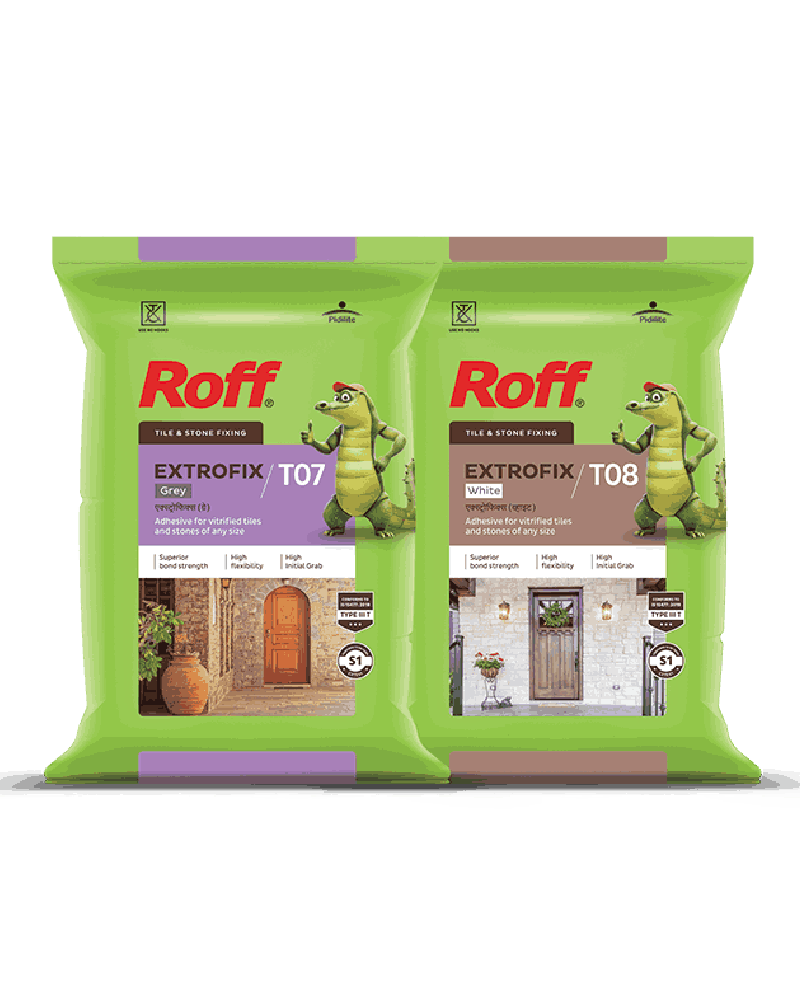
When installing tiles on a wall, you need a material engineered specifically for vertical holds. Traditional cement mortar lacks the initial grab and flexibility required for modern applications. This is one of the key reasonswhy tile adhesives are gaining popularity.
Adhesive tiles for walls keep your installation level, secure, and visually flawless. They contain polymers that create a powerful grip, which allows the tiles to remain where you place them without slumping during curing.
What Makes Wall Tile Adhesion Different from Floor Applications
Floor tiles depend on downward pressure and a solid bedding layer to absorb foot traffic. Vertical tiling, on the other hand, fights a constant battle against gravity. When you install wall tiles, the adhesive must support the weight of the tile immediately upon placement.
This requires a high initial grab, anti-slip properties, and excellent tensile strength. A specialised tile adhesive for vertical surfaces prevents heavy tiles from sliding down while the mixture cures, giving installers the exact control they need for clean, straight grout lines.
So,are self-adhesive tiles worth it?The answer depends on your project; they can be a practical option for low-traffic, dry indoor spaces, but for bathrooms, kitchens, or long-term installations, professionally applied tile adhesives offer far better durability and performance.
Types of Adhesive Tiles for Walls and Bonding Materials
When you’re shopping for the right product, you will find the following types of adhesive tiles for walls:
Cement-Based Tile Adhesives
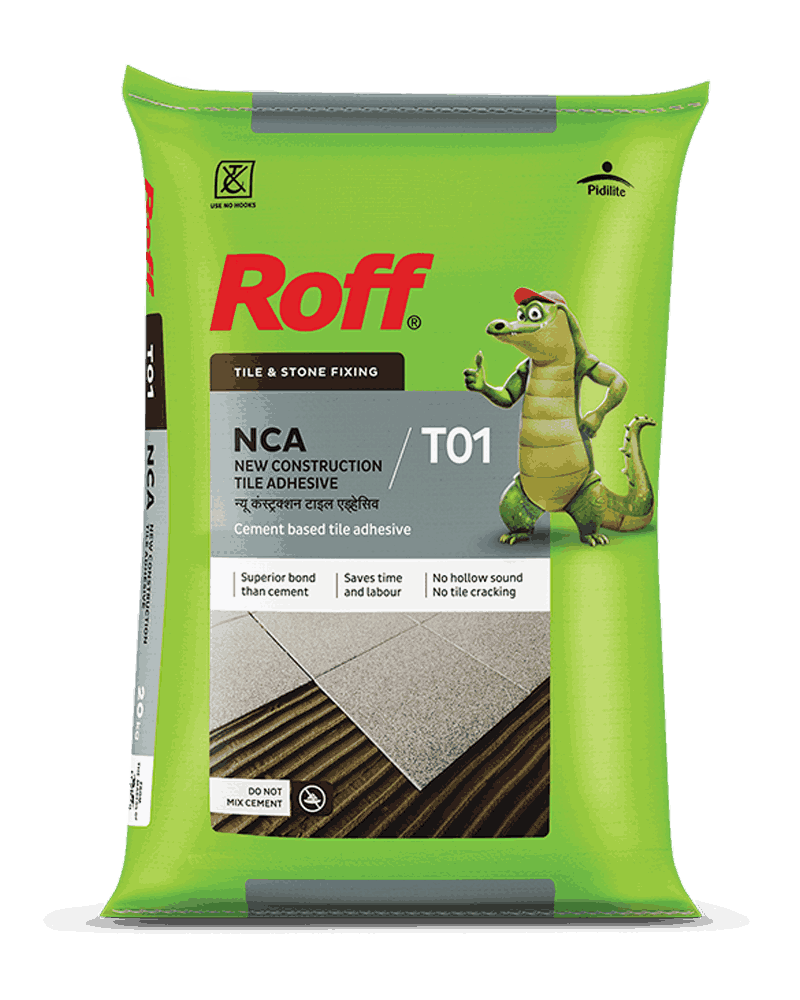
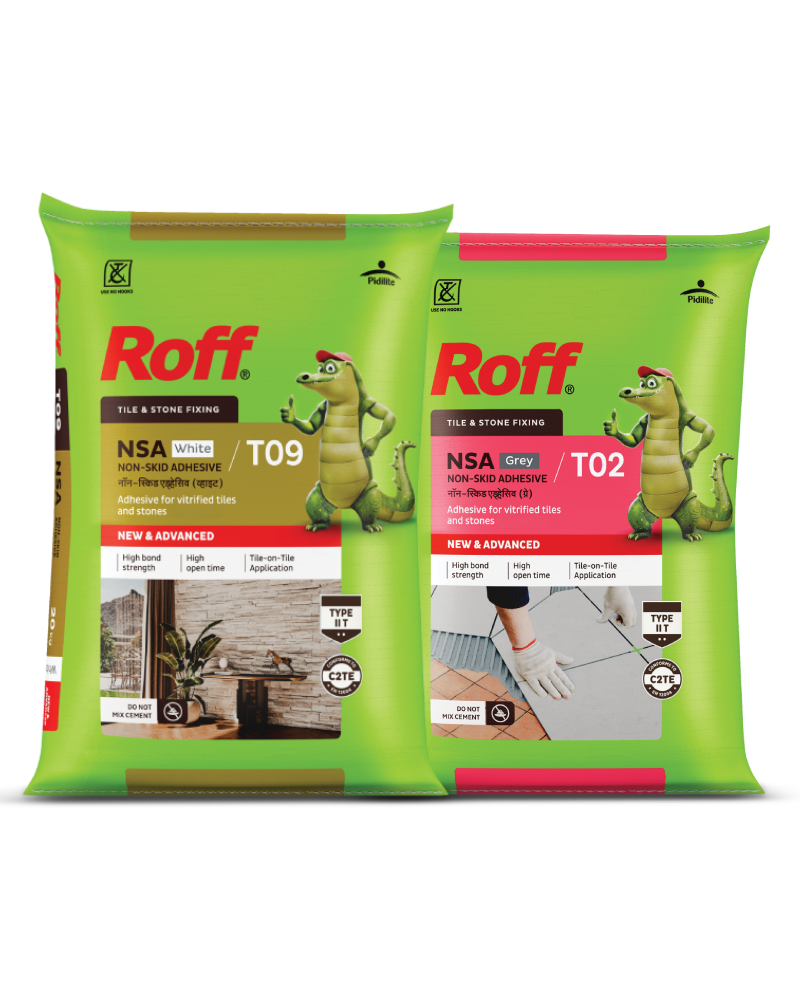
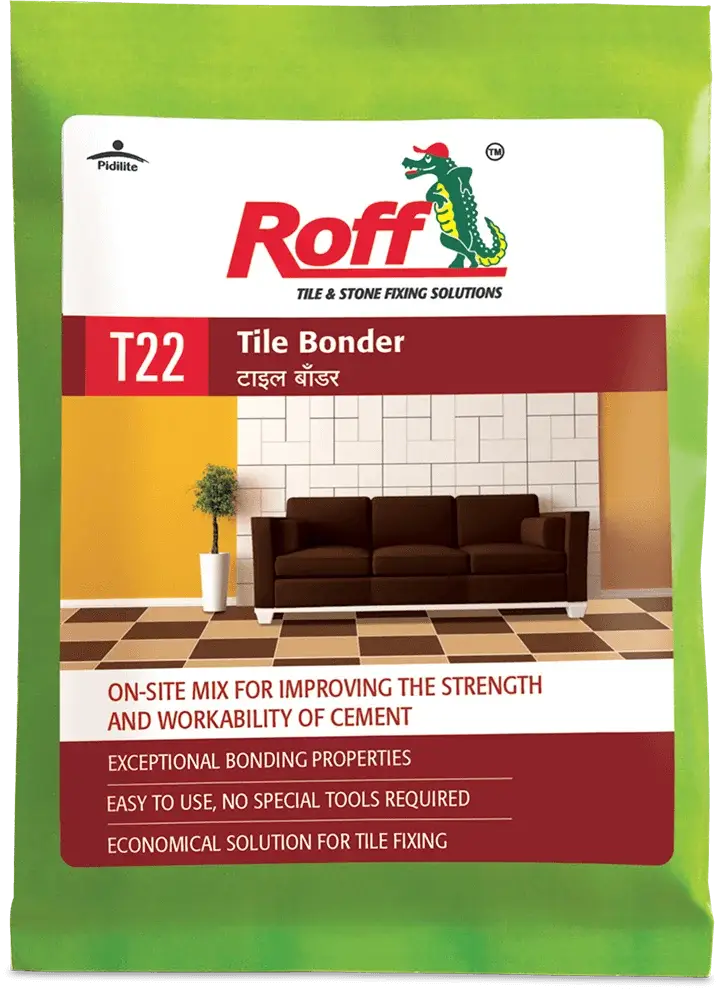
These are polymer-modified cement mixes designed for ceramic, vitrified, and porcelain tiles. They offer excellent bonding strength and are cost-effective. As a result, they have become the industry standard for most residential projects. Brands like Roff offer ranges such as the Non-Skid Adhesive (NSA), which is engineered for vertical applications like kitchens and bathrooms.
Epoxy Adhesives for High-Performance Applications
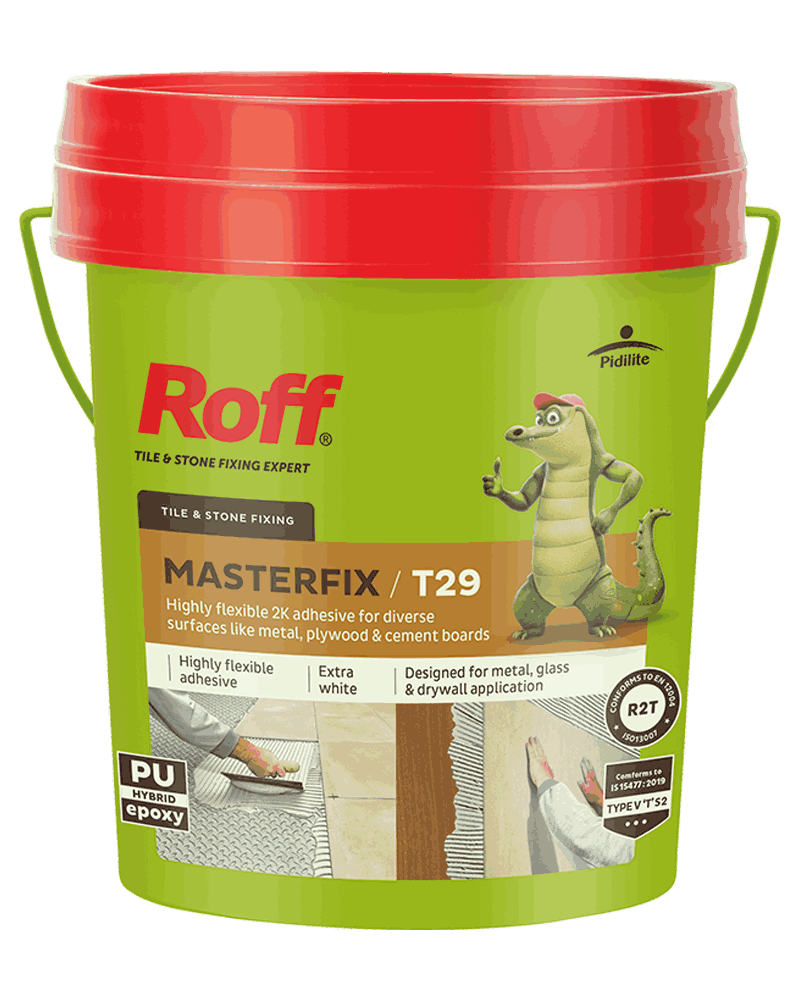
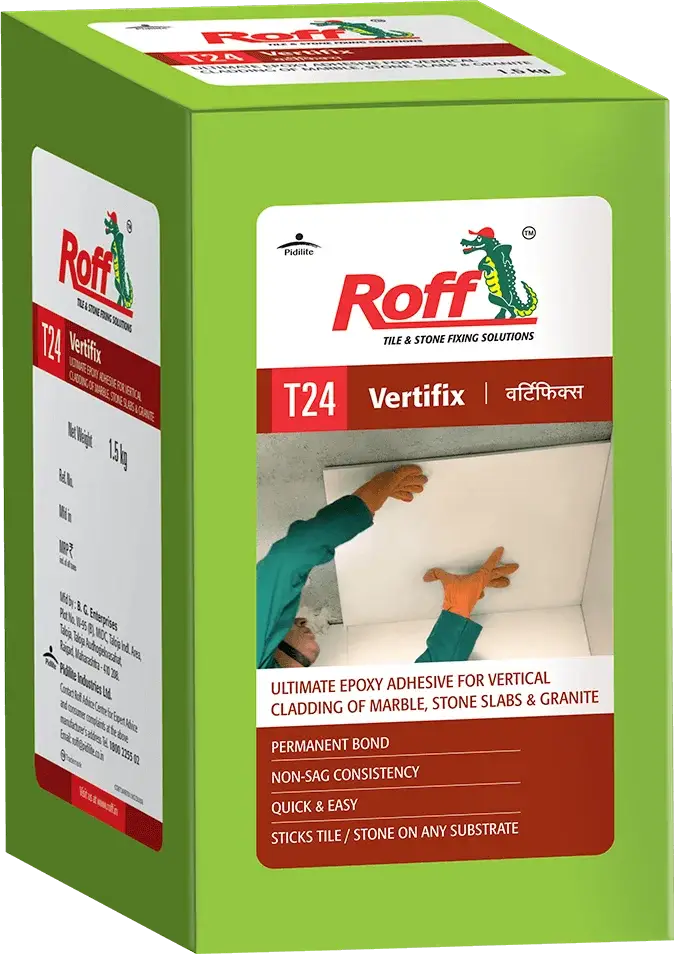
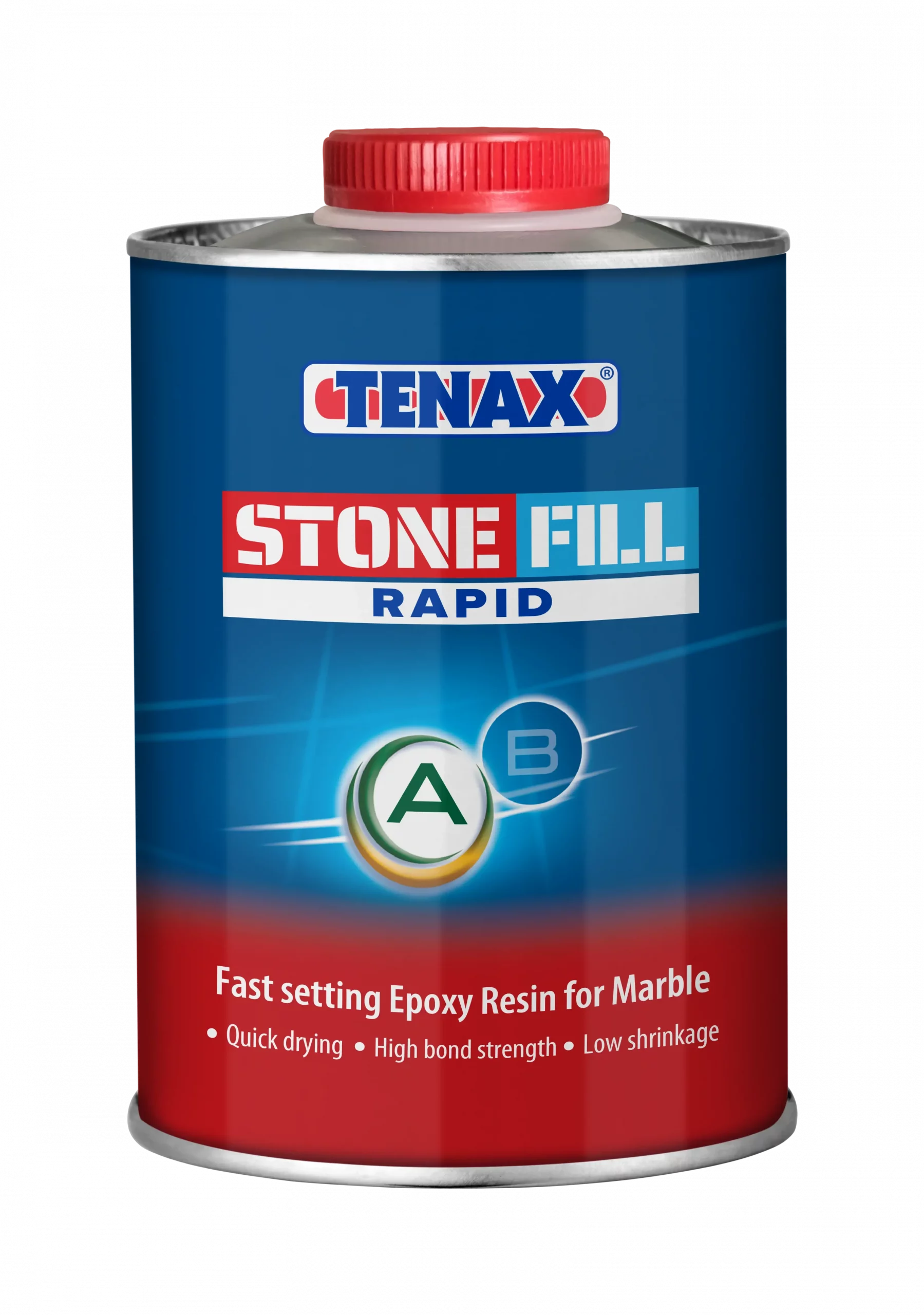
For the most demanding environments, such as chemical labs, high-traffic commercial spaces, or areas with extreme moisture, epoxy adhesives are the gold standard. They offer unmatched chemical resistance and bond strength. While they are more expensive and require precise mixing, they are the ultimate choice for tile adhesive for vertical surfaces where failure is not an option. For example, PU-based adhesives like Roff Masterfix can be used on challenging surfaces such as [AP5] [SI6] plywood or cement board, where other cement-based adhesives would struggle to perform.
Choosing the Right Adhesive for Your Wall Tile Project
Several factors influence the performance of adhesive tiles for walls.
Tile Material Compatibility
Different tile materials have different bonding requirements.
Ceramic and porcelain tiles
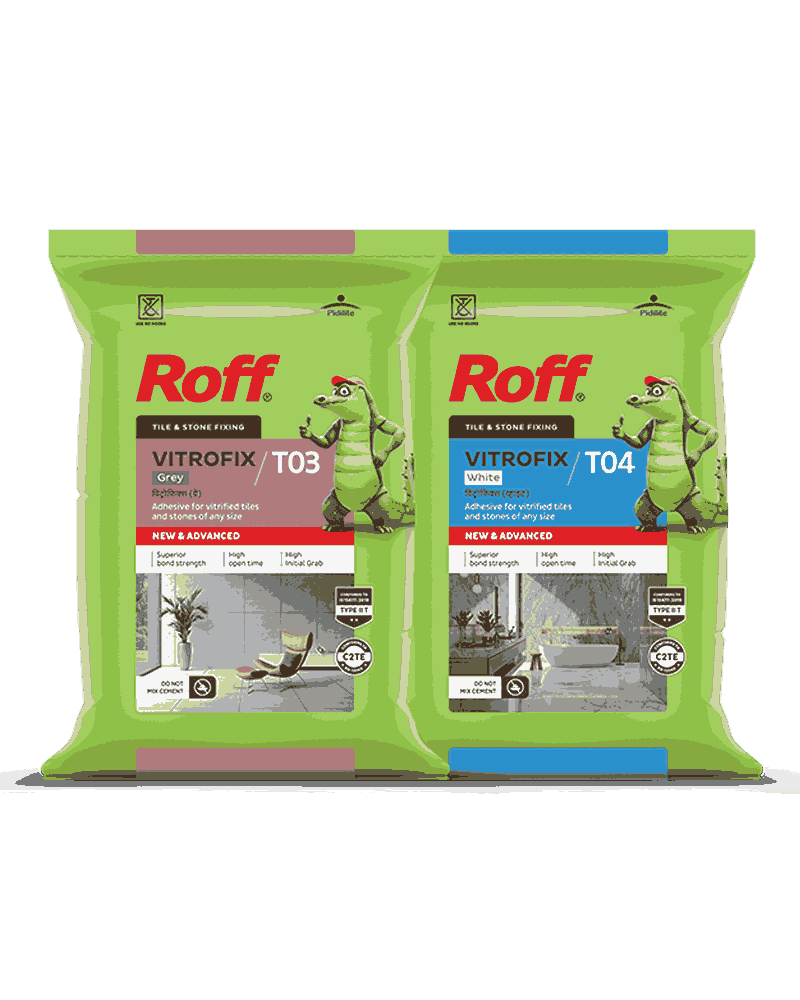
Ceramic tiles are more porous, while porcelain and vitrified tiles are denser and absorb less water. These low-porosity tiles require a specialised wall tile adhesive that provides stronger bonding and reduces the risk of hollow tiles. Roff’s Vitrofix Adhesive, for instance, is designed to handle ceramic and vitrified tiles
Natural stone tiles
Natural stones like marble, granite, and slate have varying porosity levels and can stain from certain adhesive components. You need an adhesive that won’t leave marks or discolour the stone. Additionally, natural stones can expand and contract with temperature changes, so your adhesive must have enough flexibility to move with the stone.
Glass and metal tiles
These non-porous surfaces require adhesives with exceptional bonding strength. Standard cement-based adhesives won’t provide adequate grip. This is where epoxy-based products or speciality adhesives like Roff’s Master Fix can help. These adhesive tiles for walls create mechanical bonds on surfaces where absorption isn’t possible.
Wall Surface and Substrate Considerations
Your wall’s composition matters as much as the tiles themselves.
Drywall and plasterboard
These softer surfaces need adhesives that won’t cause the substrate to deteriorate. Epoxy-based adhesives are well-suited here because they create strong surface bonds without requiring porous material absorption.
Concrete and cement board
These dense, porous surfaces are ideal for most cement-based adhesives. The concrete absorbs the adhesive components, creating an excellent mechanical bond. Just ensure the surface is clean, dry, and free from dust before application. For cement board, flexible adhesives that can accommodate movement are a must. [AP7] [SI8]
Tile-on-Tile [AP9] [SI10] Installations
Applying new tiles over old ones is now used in renovations. Your adhesive must bond to the existing non-porous, glazed tile surface. This requires products with low-absorption substrates.
Moisture and Environmental Factors
Environmental conditions should always influence your adhesive selection.
Bathroom and kitchen applications
Bathrooms and kitchen backsplashes withstand continuous humidity, steam, and water splashes. Water-resistant wall tile adhesive prevents moisture from seeping behind tiles, which eliminates hollow sounds, mould growth, and premature debonding.
Exterior wall installations
Outdoor facades and cladding face severe weather, UV rays, and thermal expansion. Exterior vertical walls require heavy-duty formulas, which can absorb dynamic structural movements and temperature shocks without cracking.
Tile Size and Weight Requirements
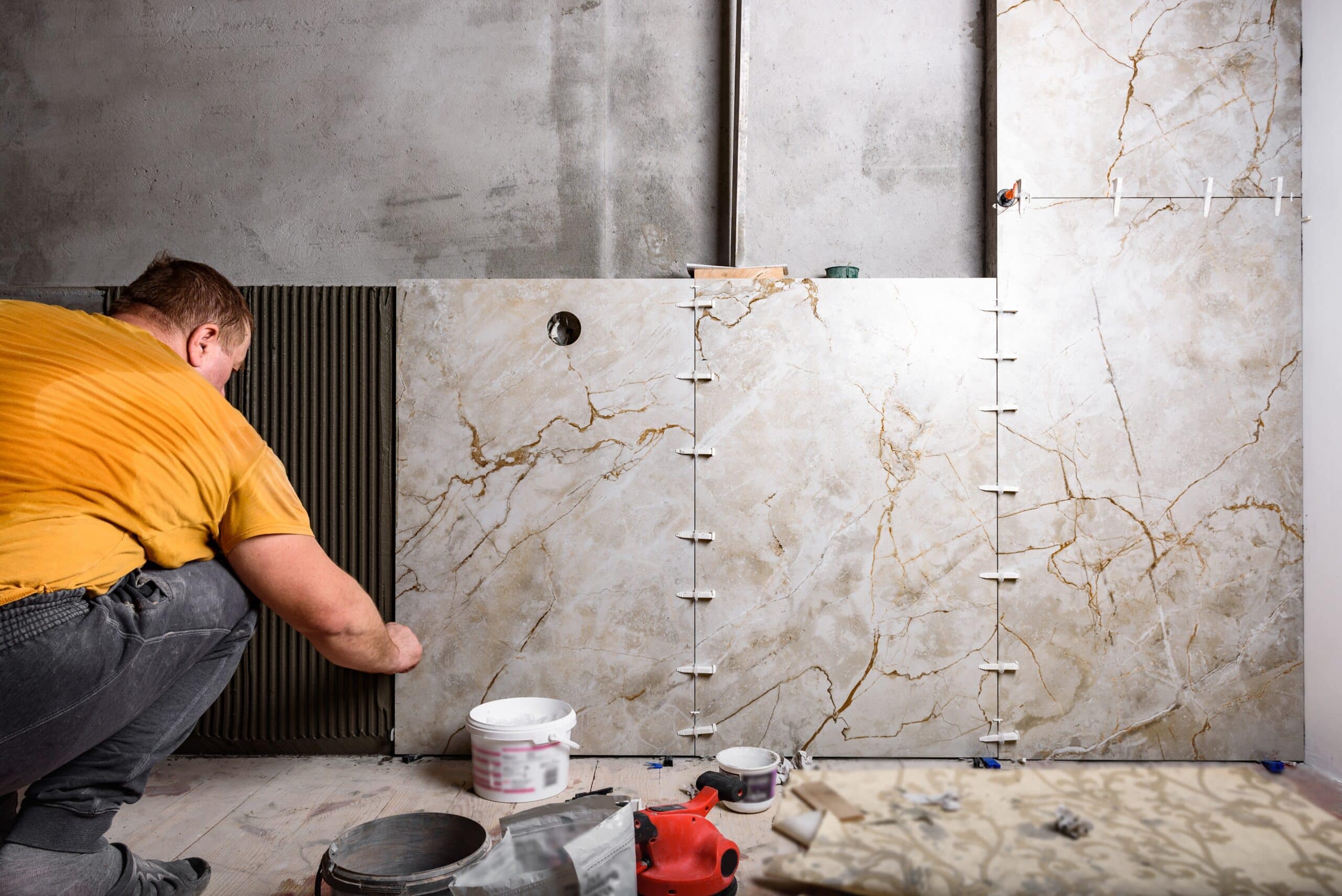
Large-format tiles are trendy, but they’re heavy. An adhesive suitable for small ceramic tiles might not provide enough initial grab. They require high-strength adhesives with excellent anti-slip properties that can support the tile’s weight immediately upon placement.
This is a critical consideration for tile adhesive for vertical surfaces. The larger and heavier your tile, the more critical the adhesive’s holding power becomes.
Here’s how you can approach the installation of adhesive tiles for walls:
Surface Preparation Essentials
A clean, dry, and level surface creates the ideal foundation for tile installation. Before applying adhesive:
Remove dust, grease, and loose particles.
Repair uneven surfaces.
Check that the wall is dry.
Ensure the substrate is structurally sound.
Good preparation allows the adhesive to bond evenly across the entire surface.
Mixing and Applying Traditional Adhesives
Cement-based adhesives should be mixed according to the manufacturer’s recommendations.
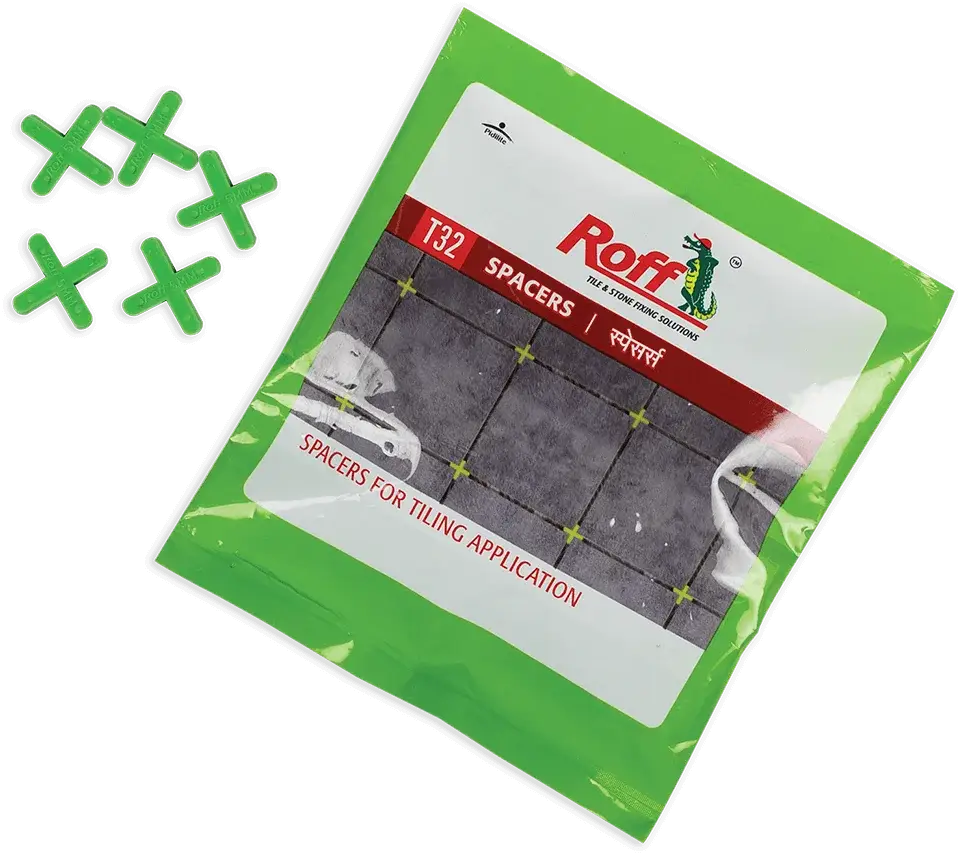
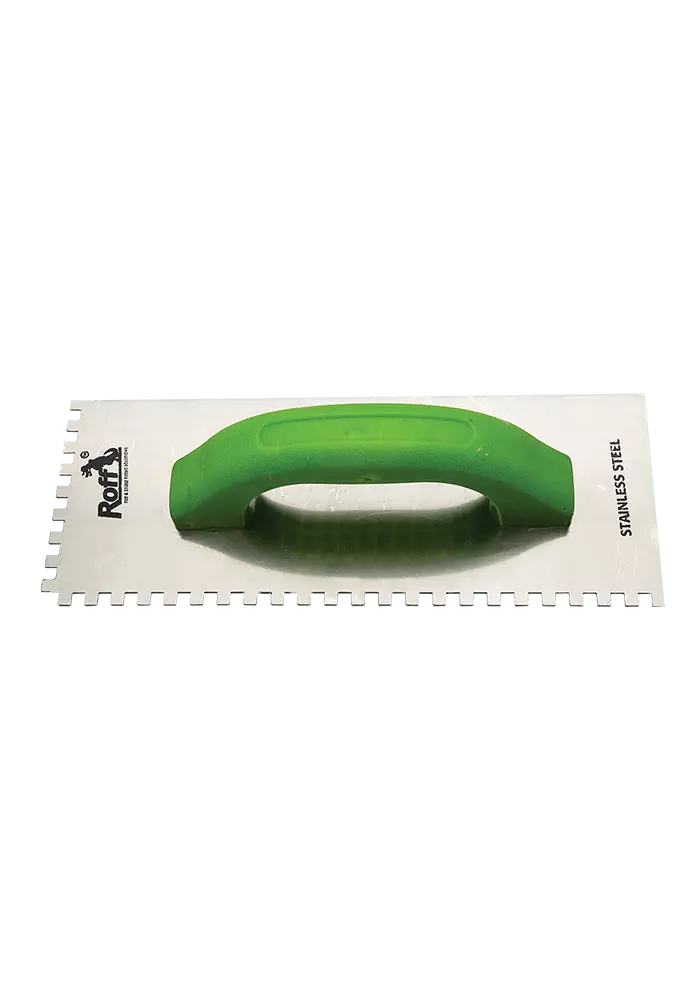
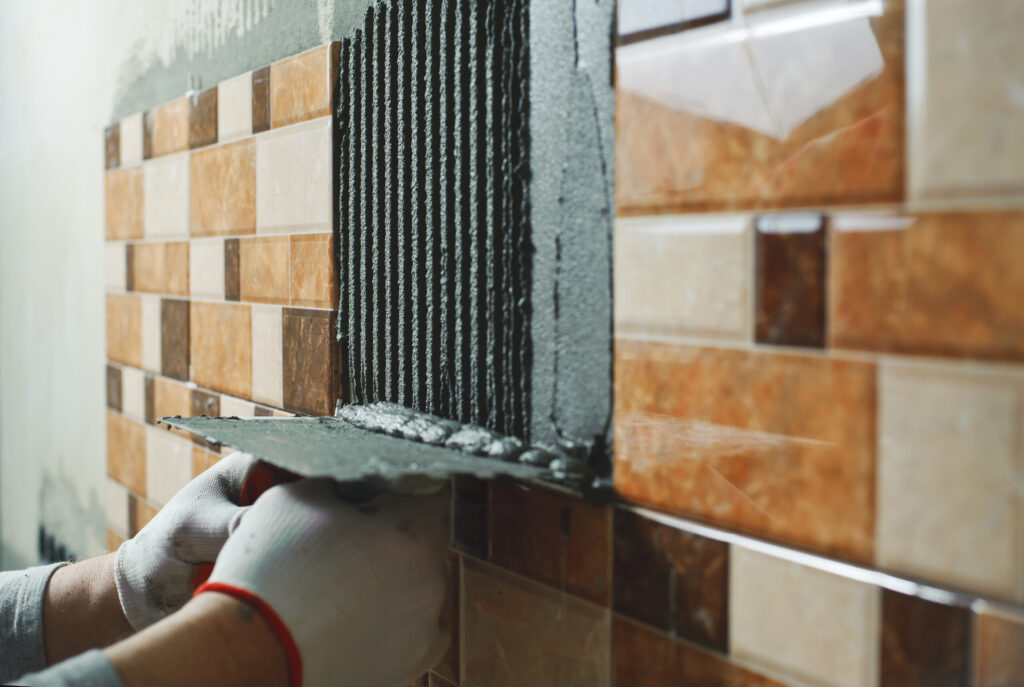
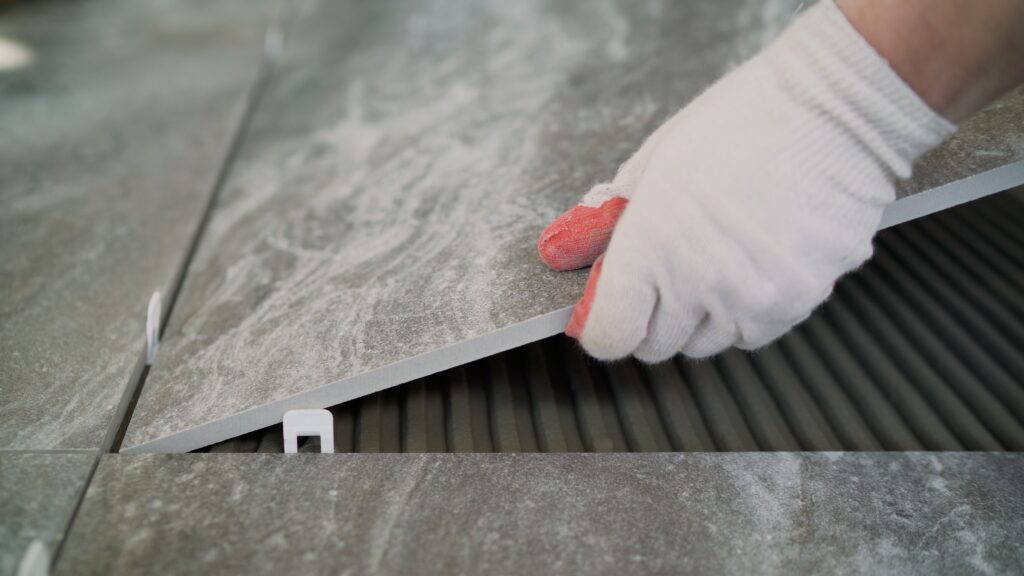
Apply the adhesive using a notched trowel to create uniform ridges. Press each tile firmly into place while maintaining consistent spacing with tile spacers. Using the correct trowel improves adhesive coverage and strengthens the final bond.
Installing Self-Adhesive Wall Tiles
Self-adhesive wall tiles are popular for quick decorative upgrades because they are easy to install. However, they are generally better suited for temporary applications. Compared to professionally installed adhesive tiles for walls, self-adhesive products may not provide the same durability, especially in moisture-prone areas.
Setting Time and Curing Considerations
Allow adequate curing time before grouting or exposing tiled walls to moisture. Although many adhesives set within about 24 hours, curing time depends on the adhesive type, temperature, humidity, and tile size. Following the recommended curing period helps achieve maximum bond strength.
Common Mistakes When Using Adhesive Tiles for Walls
Avoiding the following mistakes can improve installation quality:
Incorrect Adhesive Selection for Tile Type
Using standard interior tile adhesive for heavy outdoor stone or non-porous vitrified tiles is a recipe for failure. Always verify that your chosen adhesive matches your tile size, porosity, and location.
Inadequate Surface Preparation
Tiling over dusty, wet, or crumbling walls severely weakens the adhesive bond. Taking the time to clean, level, and prime your substrate ensures your adhesive tiles for walls lock onto a solid structure.
Poor Trowel Technique and Coverage
Swirling your trowel in circular patterns creates trapped air pockets behind vertical tiles, leading to hollow spots and tile cracking. Always comb the adhesive in clean, straight lines and press tiles perpendicular to the ridge lines to achieve 100% back-coverage.
Ignoring Cure Time Before Grouting
Grouting too early seals moisture inside the adhesive bed, slowing down the curing process and weakening the vertical bond. Always wait for the recommended curing time before applying grout.
Professional Tips for Long-Lasting Wall Tile Adhesion
Before committing to a full project, test your chosen adhesive tiles for walls on a small, inconspicuous area. Apply a few tiles and let them cure fully. This simple step confirms your adhesive choice will work for your specific conditions. It also gives you confidence when moving to the full installation.
Climate and Temperature Considerations
Adhesive performance varies with temperature and humidity. In hot, dry climates, adhesive cures faster but may become brittle. Curing is slower in cool, humid conditions, but this may lead to stronger bonds. Extreme humidity, which is common in monsoon regions, requires adhesives formulated for wet conditions.
Apply adhesives within the temperature range specified on the product label. Most perform best between 10°C and 35°C. Avoid applying when temperatures are outside this range or when rain is imminent.
Frequently asked questions (FAQs)
1) What is the best adhesive for wall tiles in bathrooms?
The best adhesive for bathroom walls is a water-resistant, polymer-modified adhesive with strong anti-slip properties, such as Roff Non-Skid Adhesive (NSA). For large format tiles, Roff Vitrofix is the go-to adhesive for long-term performance. These adhesives also prevent moisture seepage and keep tiles firmly locked in humid conditions.[AP12] [SI13]
2) Can you use the same adhesive for wall tiles and floor tiles?
Yes, many high-quality adhesives like Roff Vitrofix work on both floors and walls. However, for walls, you must ensure the product offers non-skid and anti-sag properties to handle vertical gravity loads.
3) How long does tile adhesive take to dry on walls before grouting?
Most high-performance vertical adhesives require 24 hours to cure fully before you can safely apply grout without disturbing tile alignment. However, time may vary based on the current site temperature and site conditions. [AP14] [SI15]
4) Are self-adhesive tiles as durable as traditionally glued tiles?
No, while self-adhesive tiles offer a quick DIY shortcut, they lack the structural strength, heat tolerance, and moisture resistance of tiles set with professional polymer-modified adhesive tiles for walls.
5) What type of adhesive should I use for heavy wall tiles?
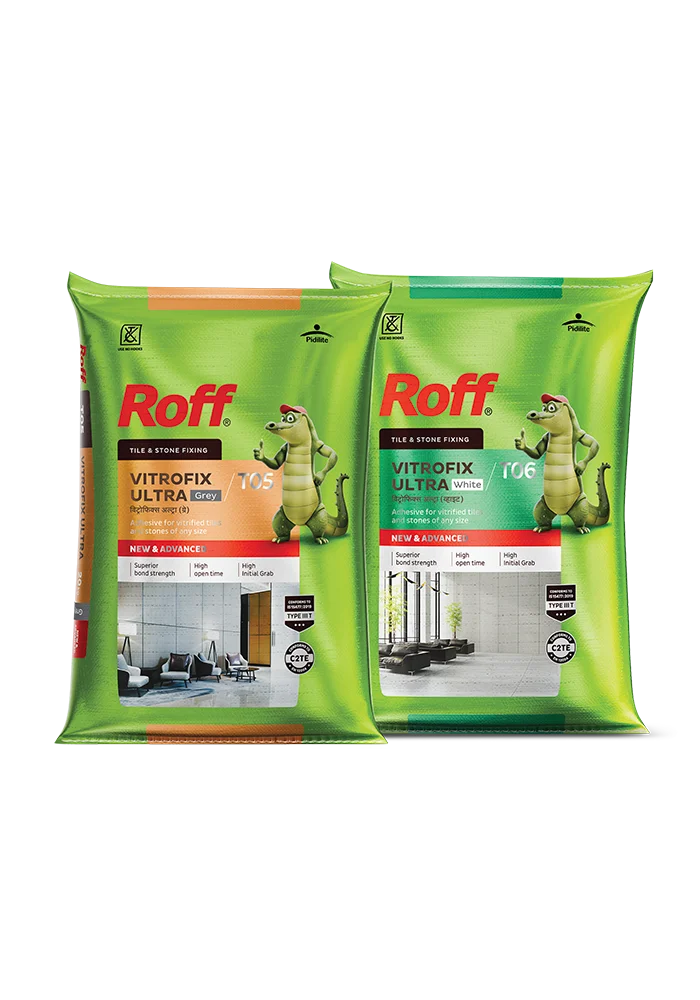
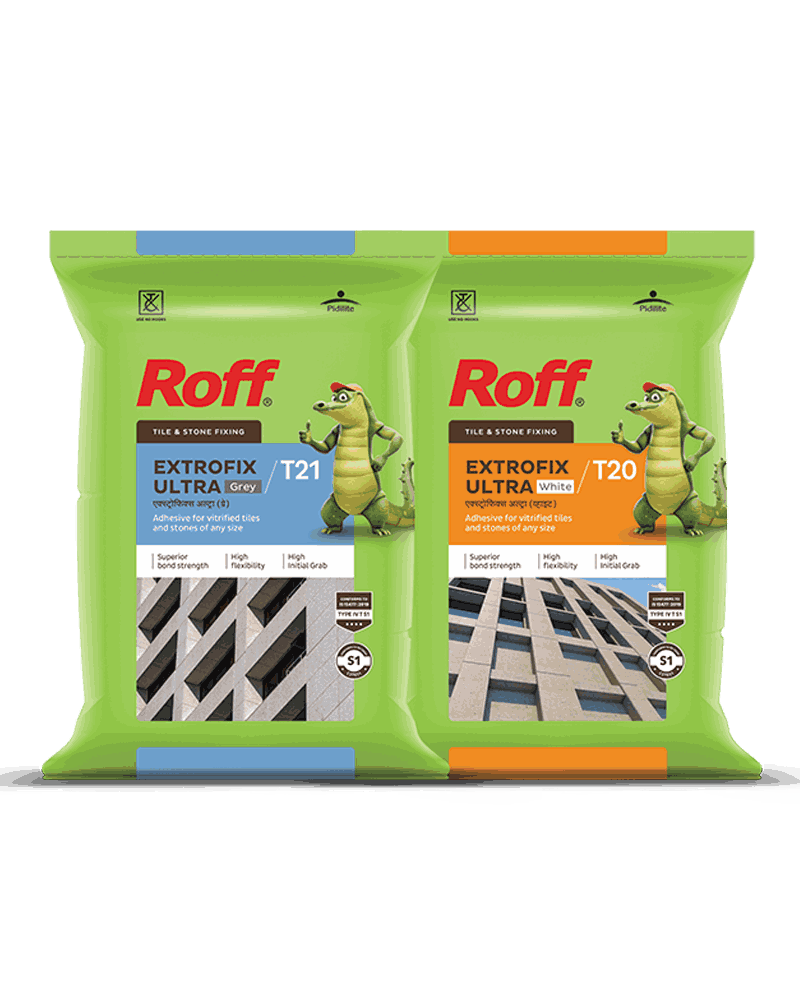
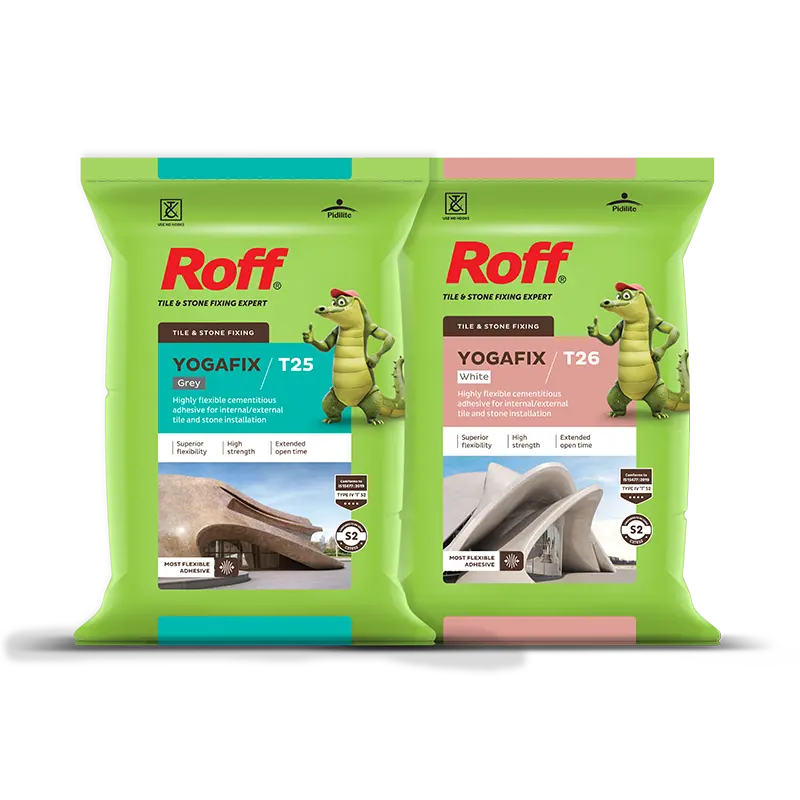
Heavy wall tiles and large-format vitrified slabs require high-tensile, high-polymer adhesives such as Roff Vitrofix[AP16] [SI17] , Roff Extrofix Ultra or Roff Yogafix to ensure zero sagging and maximum bond strength.[SI18]
6) Can tile adhesive be used on drywall?
Yes! However, you should use specialised resin-based or modified adhesives designed for drywalls, such as Roff Master Fix, to ensure a firm hold without damaging the wallboard.
7) How much adhesive do I need for wall tiles?
Adhesive coverage depends on the tile size, the notched trowel used, and the surface. Surfaces with higher undulations will reduce the product’s coverage. [AP19] [SI20] On average, a 20 kg bag of polymer-modified adhesive covers approximately 45 to 55 sq. ft. at a standard 3mm bed thickness. You can also use the online Roff Adhesive Coverage Calculator to estimate your exact quantity.