Check out the biggest trends of the season and our expert take on them.
A professional guide to selecting tile adhesives for walls
There’s a growing place for tile adhesives for walls in the specification toolkit, but only when the material and its limitations are properly understood. For architects and interior designers, the real risk isn’t choosing adhesive-backed systems, but choosing them without accounting for substrate conditions, thermal movement, or long-term performance in the application at hand.
This guide walks through what these systems actually are, where they work, where they don’t, and what separates a durable installation from one that fails at the six-month mark.
What are tile adhesives for walls?
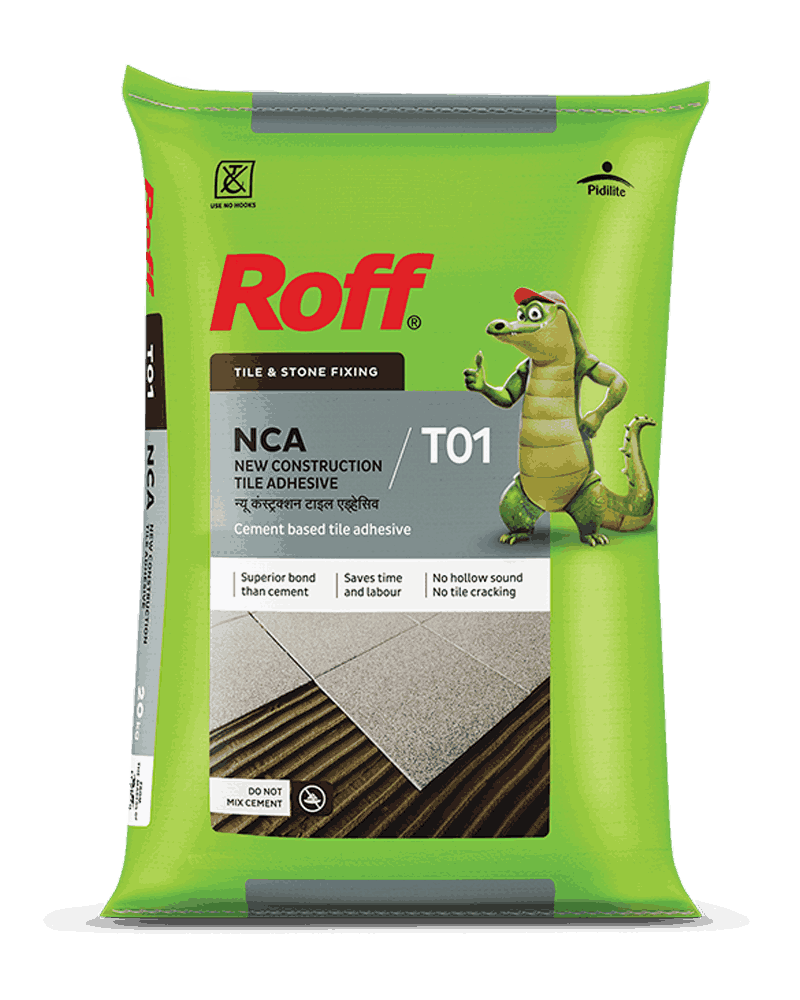
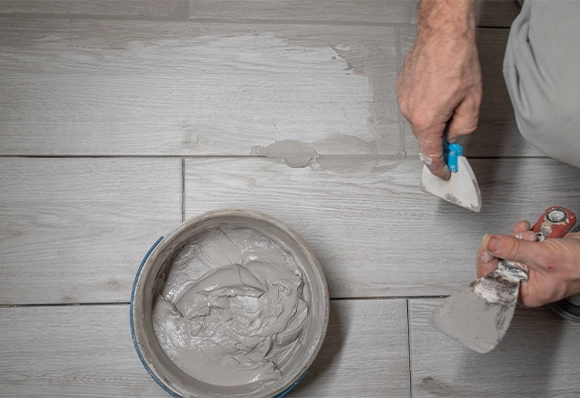
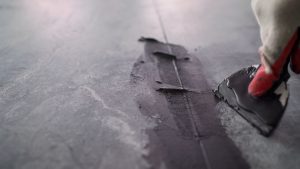
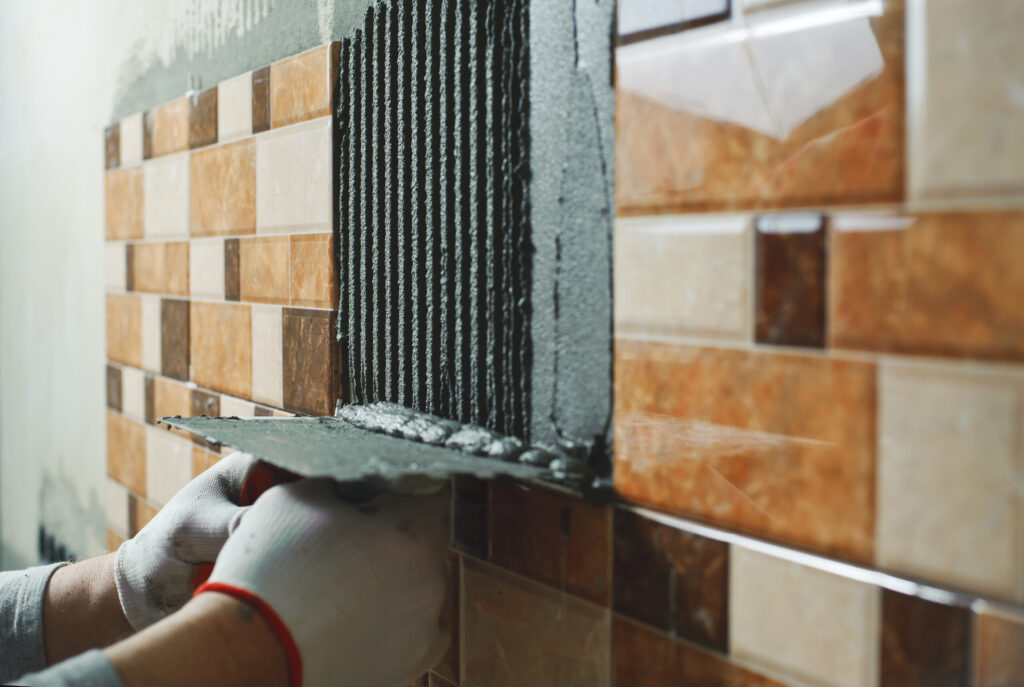
The term “tile adhesives for walls” covers a fairly wide category.Performance-grade adhesive for wall tilescan vary in their bond strength, water resistance, and overall quality, but their primary purpose remains the same: To ensure that wall tiles stay in place for decades to come.
Traditionally, tiles were fixed to walls using cement. But these adhesives were lacklustre in terms of longevity and water resistance. Moreover, cement would quickly absorb moisture in humid areas, which could cause the tiles to debond and fall off the wall just a year after installation.
For any project where longevity, substrate variability, or performance under moisture and heat are relevant factors, you need to use tile adhesives for walls, and the adhesive has to be applied by a trained professional.
Material types and what they demand from tile adhesives for walls
Not all wall tiles behave the same way, and the adhesive spec should follow the tile material.
1. Ceramic and porcelain tiles
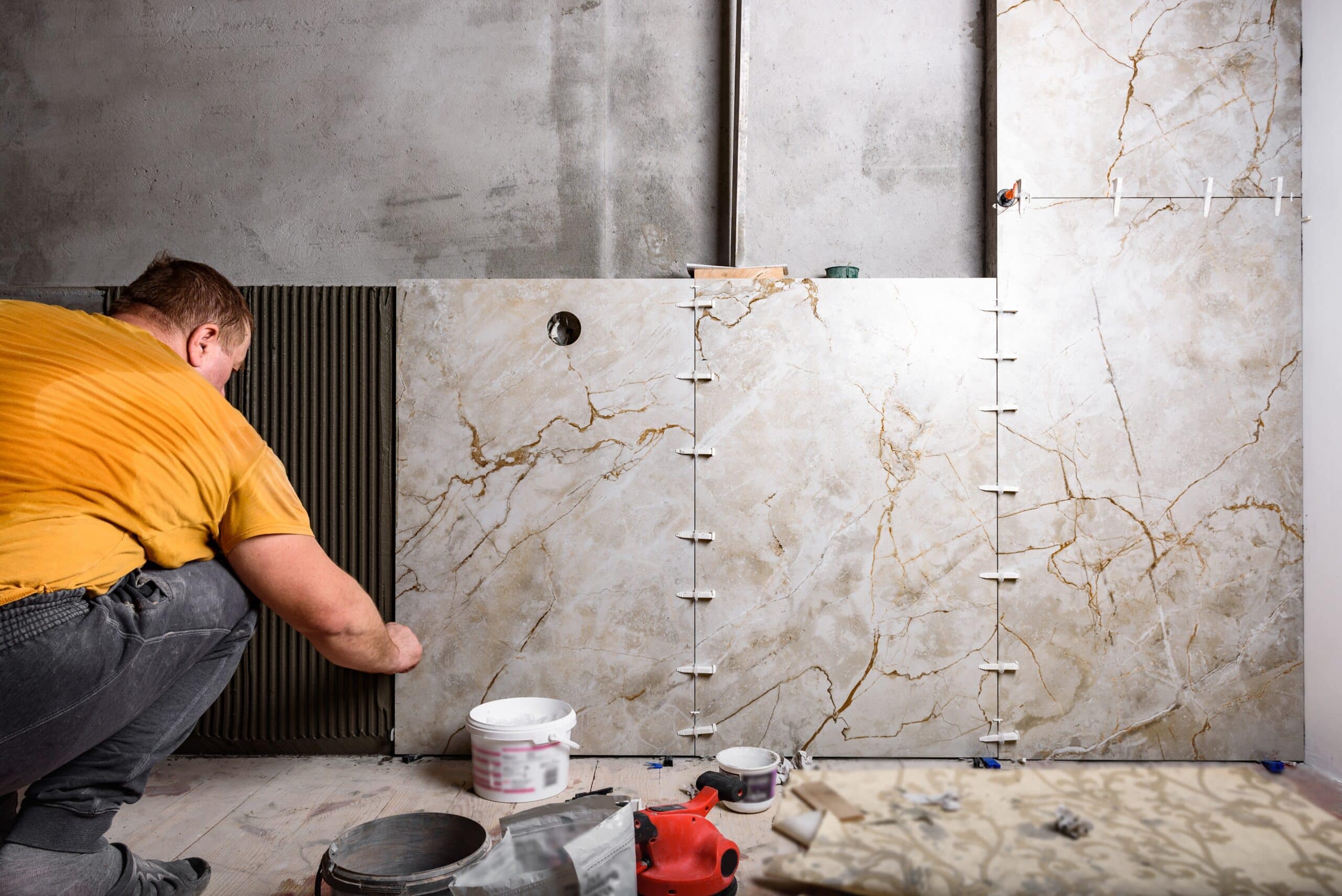
Porcelain, being denser and less porous, requires a high-performance cementitious or polymer-modified adhesive with good open time and non-sag properties, especially on vertical surfaces. Standard grey adhesives work for many ceramic applications, but large-format or rectified porcelain demands a white, non-staining adhesive with higher flexibility.
2. Natural stone
Many natural stones are prone to staining from cement-based adhesives, particularly those with high iron content. White adhesives are standard here, and for translucent stones like marble, the adhesive colour directly affects the finished appearance.
3.Glass tiles and mosaics
These are non-porous, so adhesion relies entirely on the surface bond rather than mechanical penetration. A white, polymer-enriched adhesive with a fine consistency is necessary for both bond strength and visual clarity through the tile face.
4. Metal composite panels and stone veneers
These often have unique fixing requirements and may need adhesive systems that accommodate greater flexibility, movement, and are compatible with metal substates.
There’s a consistent thread across all these materials: the best wall tile adhesive is always the one specified for the tile type, substrate condition, and application environment.
Substrate evaluation: The step most installations get wrong
Surface preparation is where most failures with tile adhesives for walls originate. Even a sound tile and a quality adhesive will fail if the substrate isn’t right.
Key substrate factors to evaluate before specifying any wall tile installation include:
Flatness and plane
The surface needs to be roughened and flat, else the adhesive will fail to bond properly. Large-format tiles are less forgiving, and the tolerance reduces as tile size increases.
Suction and porosity
High-suction substrates, such as lightweight blockwork or sand-cement render, will draw moisture from the adhesive bed before it can bond properly. Surface saturation is essential in these cases.
Surface contamination
Paint, dust, release agents, curing compounds, and efflorescence all compromise bond strength. The substrate must be clean, sound, and free of any material that could act as a separator.
Movement and deflection
Drywalls in particular present challenges as they flex, expand, and contract seasonally. For these, a polymer-modified or hybrid adhesive with sufficient flexibility is necessary, and movement joints must be factored into the tile layout.
Moisture
Wet areas need substrates that are either inherently moisture-resistant (tile backer boards, waterproofed concrete) or have been treated with an appropriate tanking system before tiling begins.
Where tile adhesives for walls work and where they don't
Here are a few guidelines for how to choose the right tile adhesives for walls:
Residential interiors (dry areas)
Kitchen splashbacks, feature walls, and bathroom surrounds in domestic projects are well-suited to standard and polymer-modified cementitious adhesives. The specification priority here is open time, i.e., enough working time to allow proper positioning and adjustment, particularly with large-format tiles.
Wet and high-humidity areas
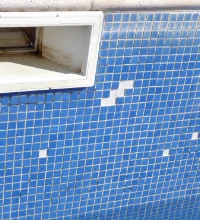
Shower enclosures, pool surrounds, and steam rooms require waterproof or water-resistant adhesive systems. In these applications, the adhesive is part of a system that includes substrate waterproofing, a flexible adhesive, and a waterproof or epoxy grout. Each element needs to be compatible with the others.
External walls and facades
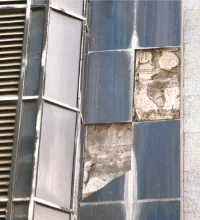
This is where the stakes in the specification are highest. Thermal cycling, wind loading, freeze-thaw exposure, and the consequences of tile detachment make external wall tile installation a specialist area. A high-performance, flexible polymer-modified adhesive is a baseline requirement here.
Lifecycle, maintenance, and replacement
A well-specified and professionally installed wall tile system should last decades with minimal maintenance. That said, long-term performance depends on a few ongoing factors.
Points of failure include:
Grout joints
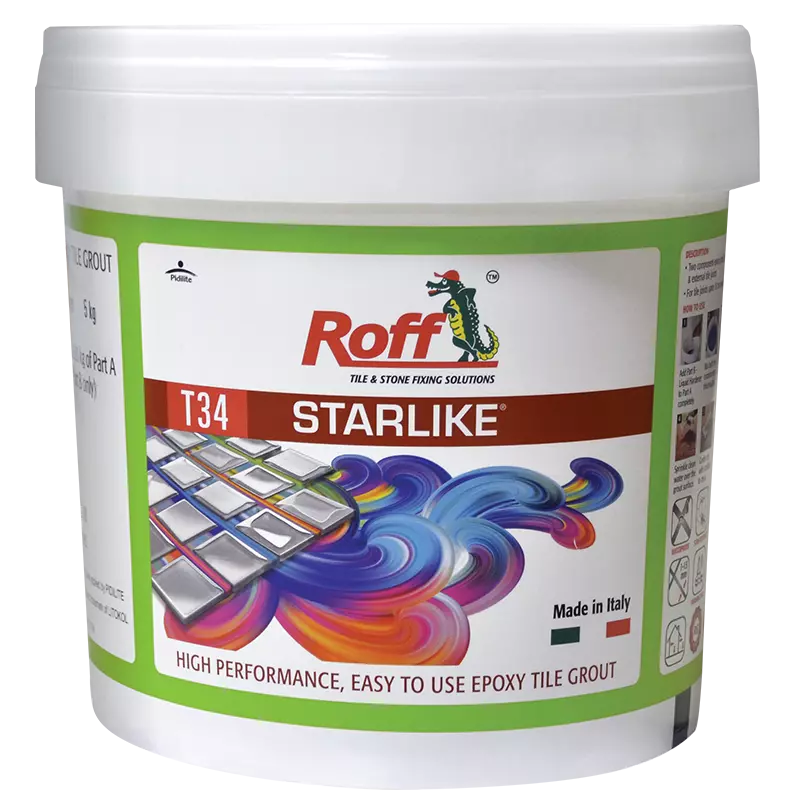
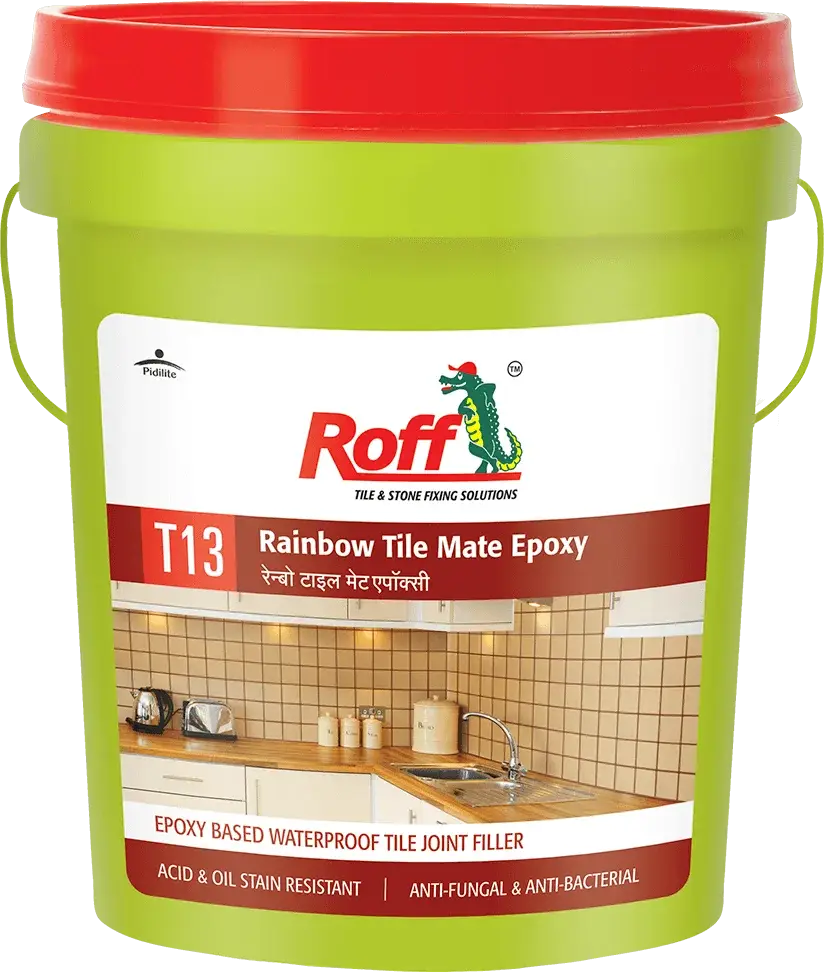
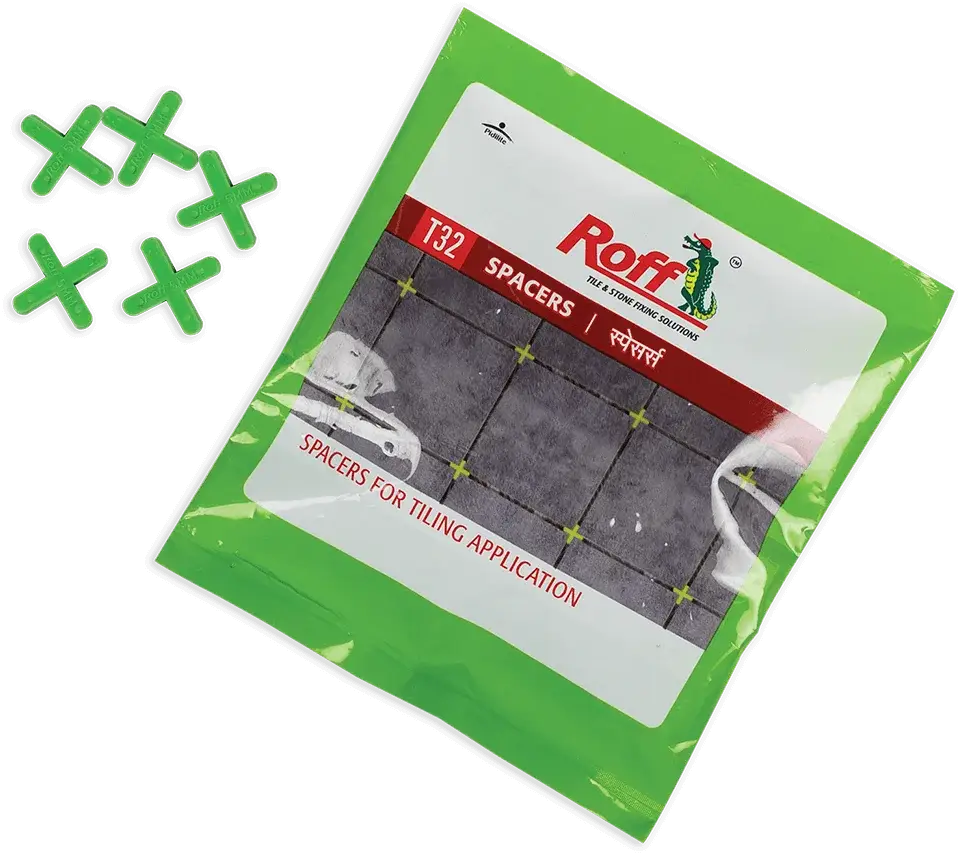
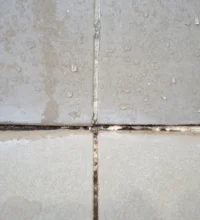
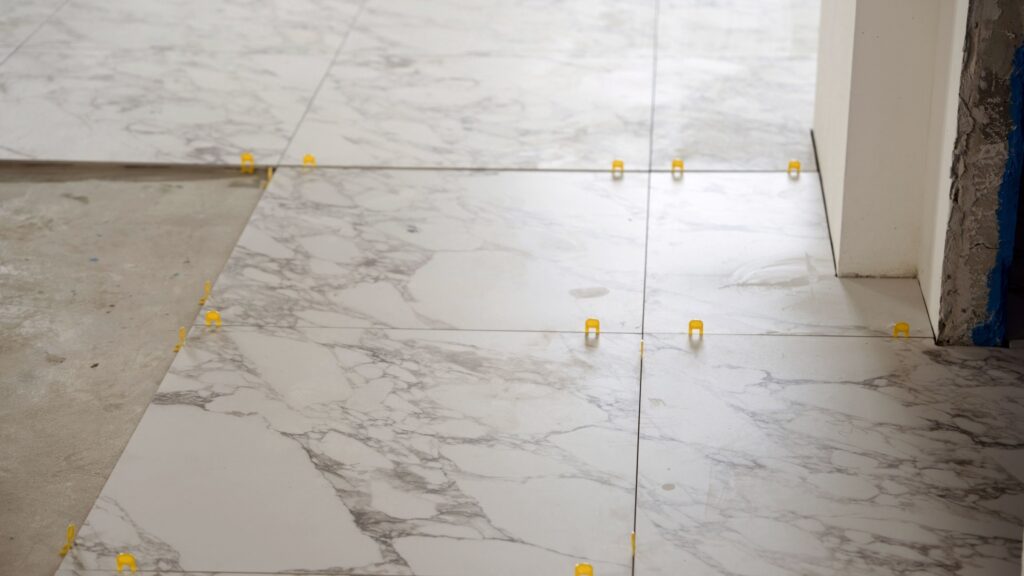
Grout joints are typically the first point of deterioration. Hairline cracks allow moisture ingress, which then compromises the adhesive bed behind. Regular inspection and prompt regrouting or joint sealing significantly extend the life of the installation. Filling grout joints with an appropriate epoxy grout, like Roff Starlike, is a must. Additionally, one must always use spacers while installing tiles to ensure that the grout joints are evenly sized and allow for minor tile movements.
Adhesive compatibility
When tile replacement is needed in part of a wall, adhesive compatibility matters. The replacement adhesive needs to be compatible with both the existing substrate and any residual adhesive.
Water resistance
In wet areas like bathrooms and kitchens, the adhesive’s water resistance becomes an extremely important property. Using the wrong adhesive can quickly lead to issues such as tile debonding or mould growth.
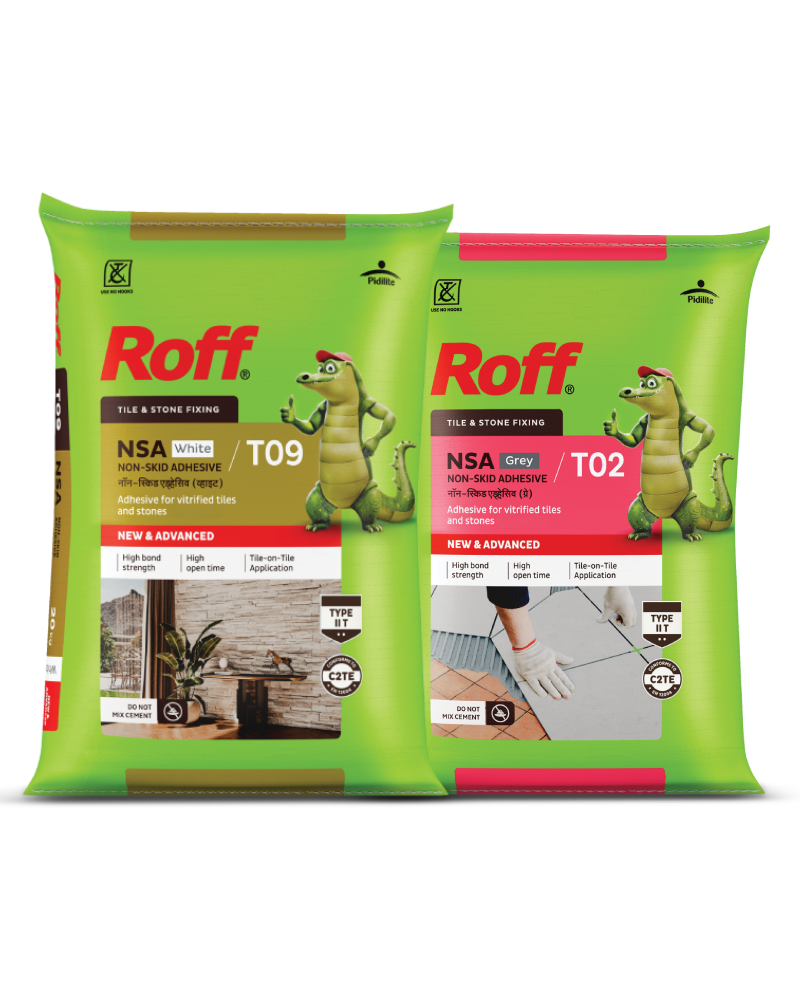
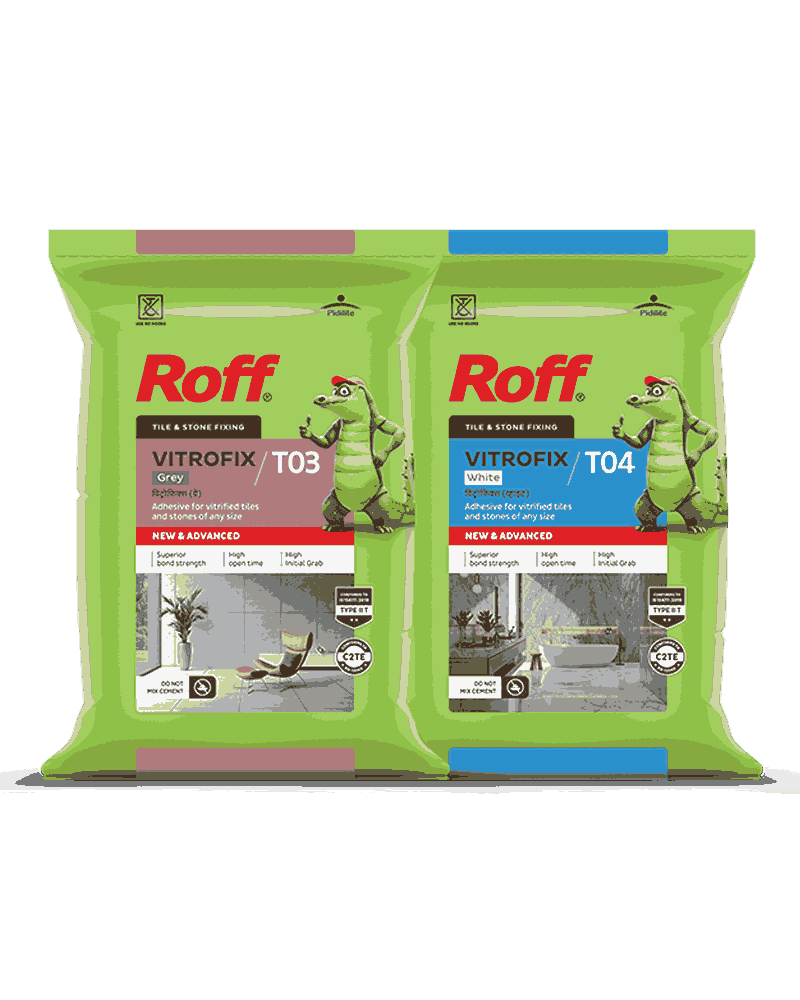
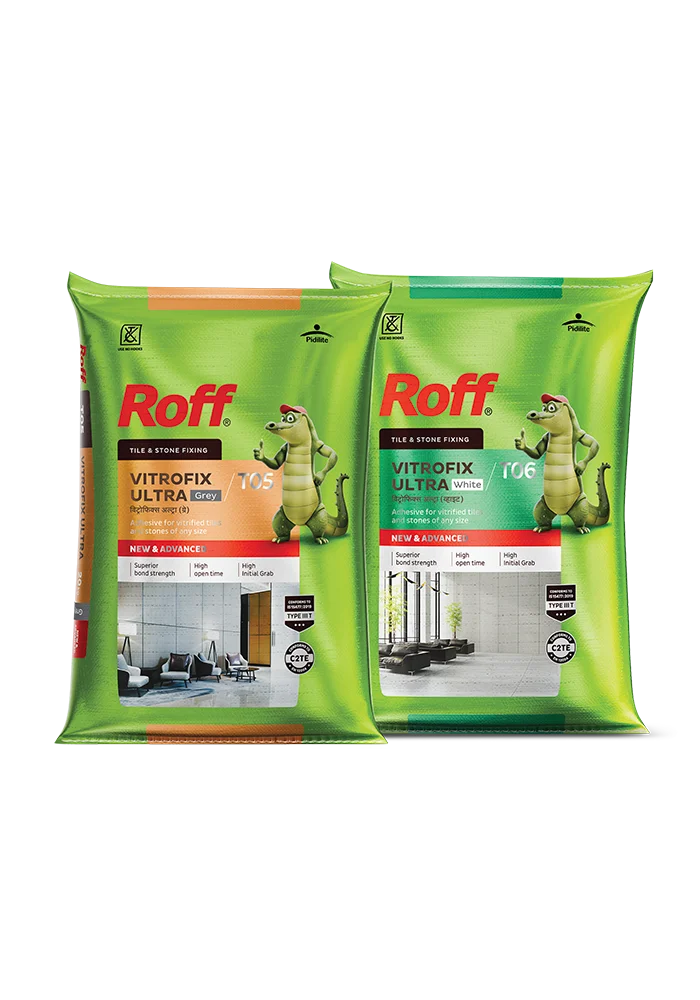
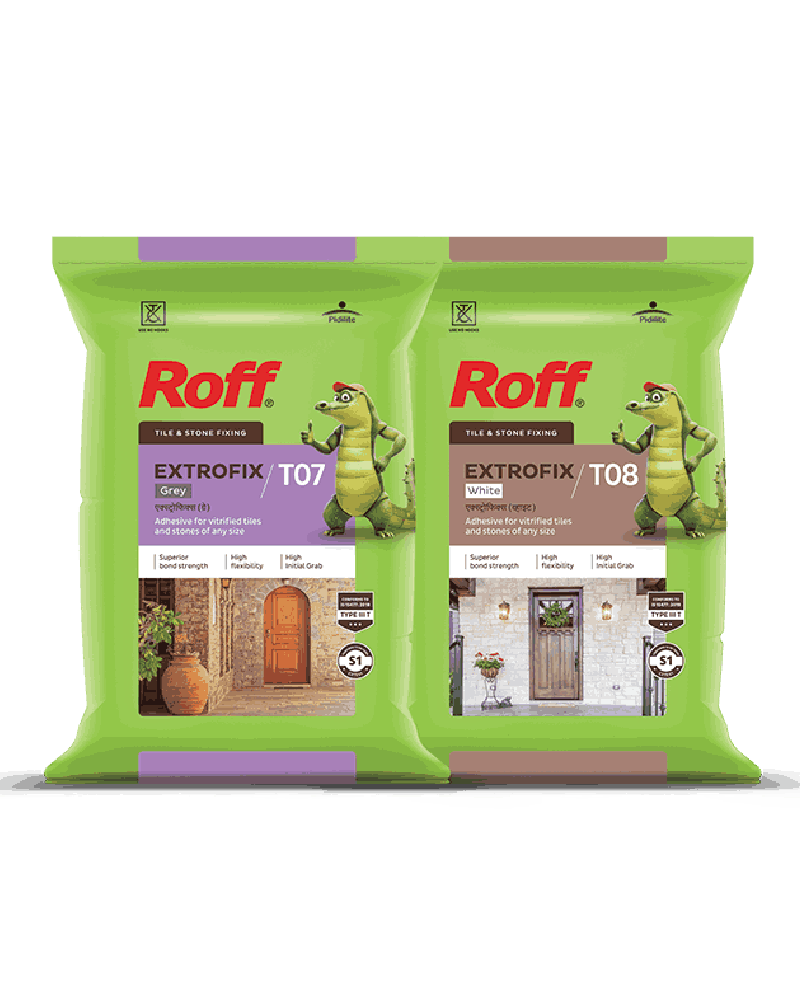
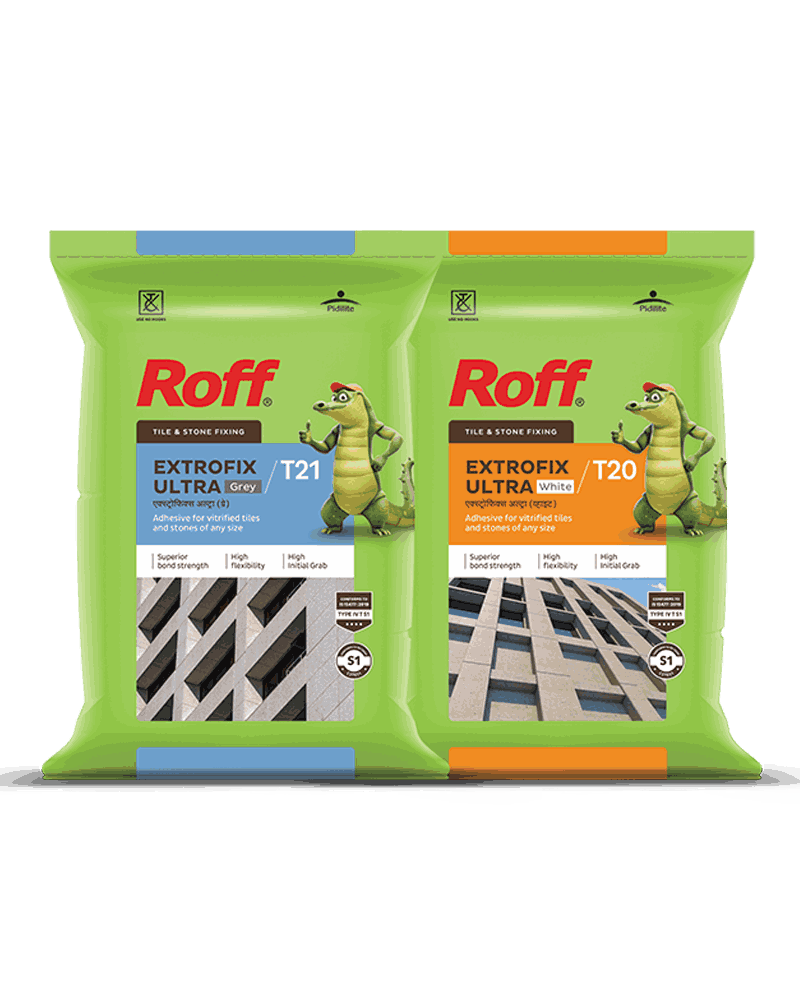
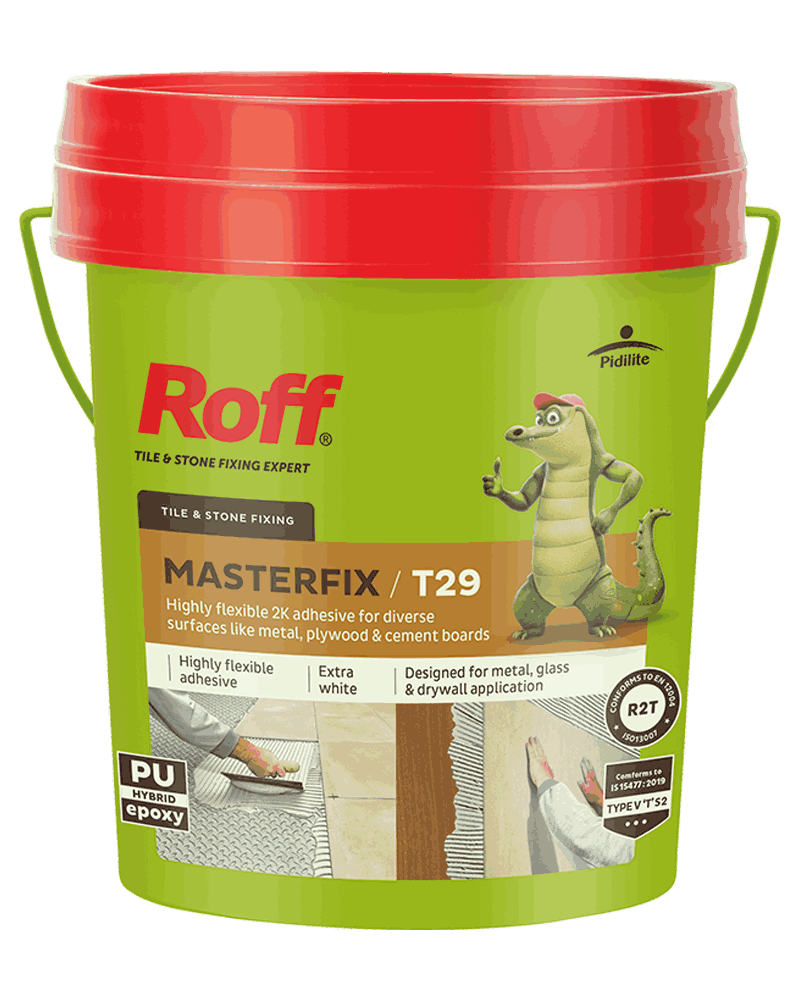
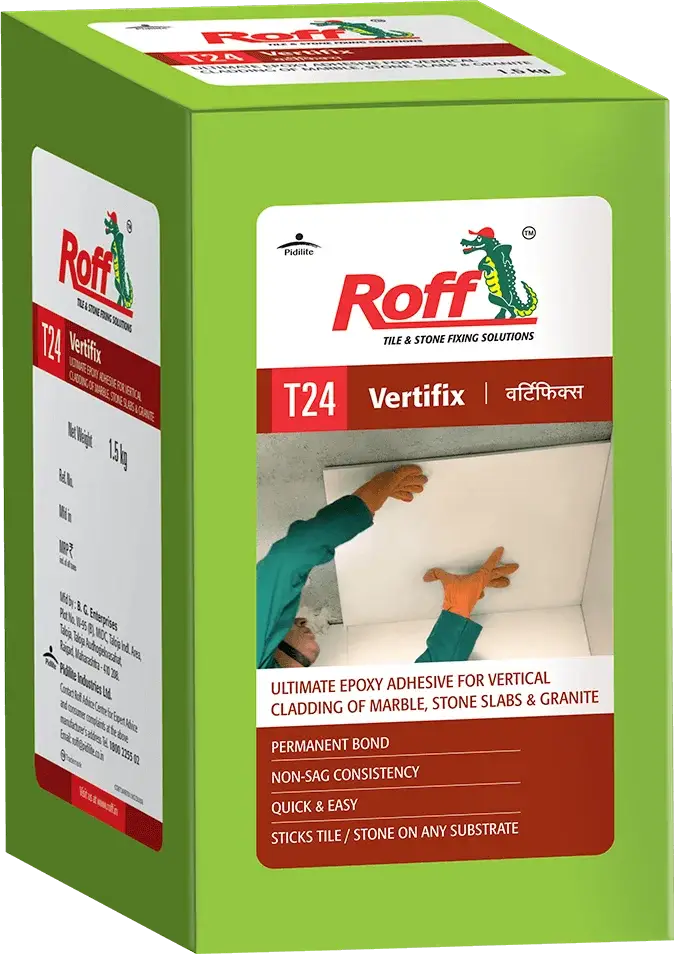
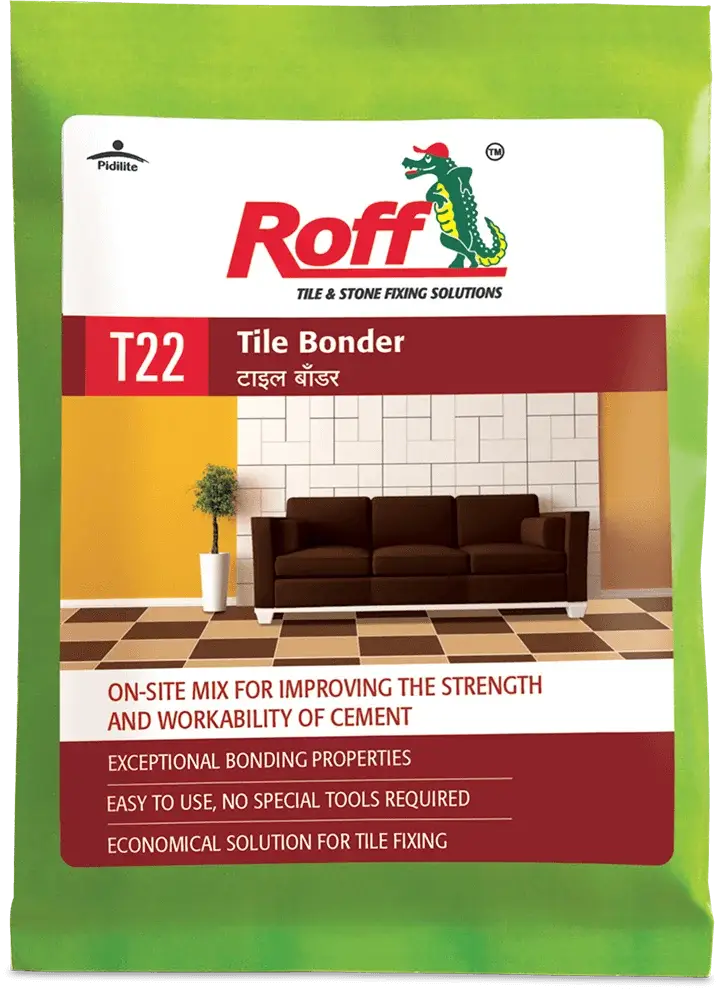
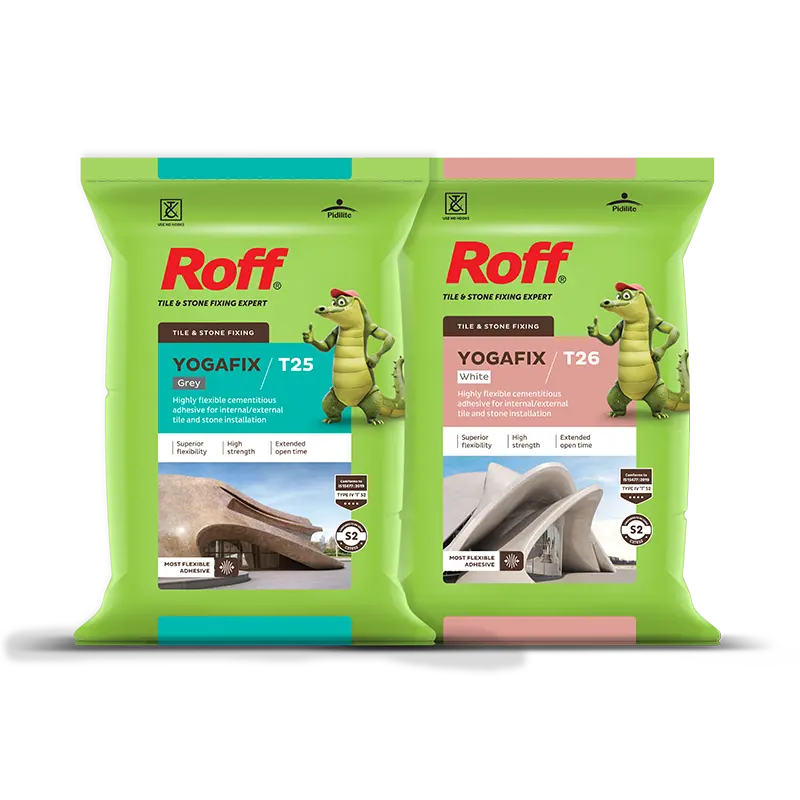
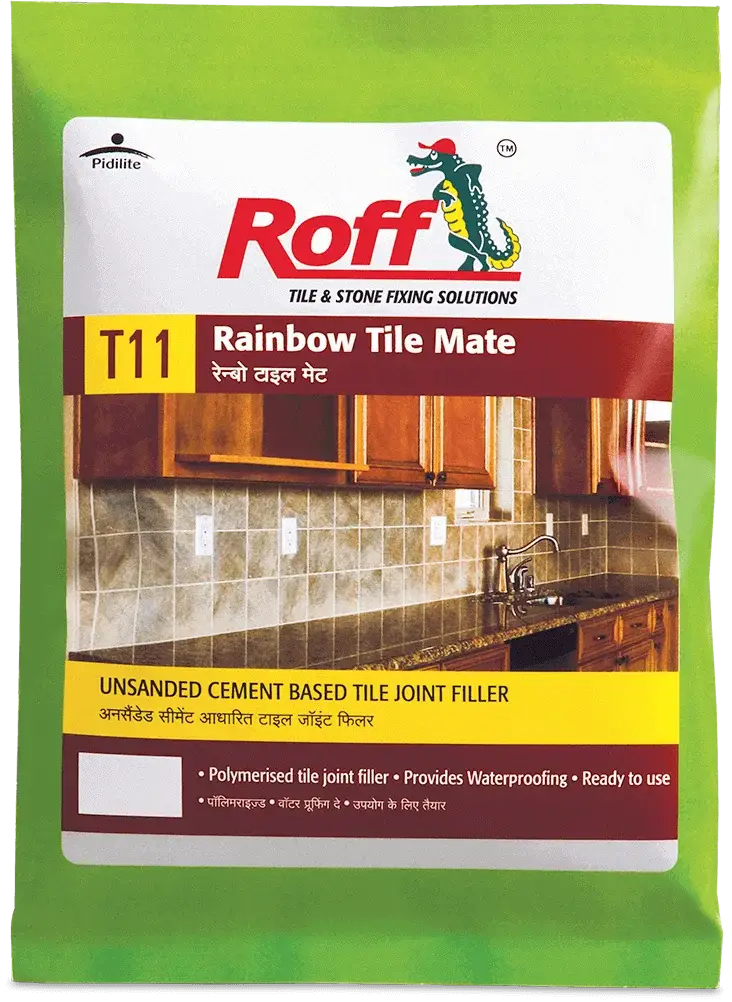
Roff’s range of tile adhesives covers the full spectrum of wall applications, from standard interiors to high-performance wet areas and external facades. The advantage of specifying within a single, consistent product range is adhesive-to-system compatibility: grout, adhesive, and waterproofing systemsfrom the same manufacturer are tested to work together, which reduces the risk of incompatibility failures over the tile’s service life.
Tile adhesives for walls: Specification decisions that last
The best tile installations simply perform, year after year, without callbacks or remediation. That outcome doesn’t happen by accident. It’s the result of adhesive specification that accounts for the tile material, the substrate condition, the application environment, and the long-term demands of the space.
Where projects go wrong, it’s rarely the tile itself. It’s an adhesive chosen too quickly, a substrate assessed too loosely, or a system where components weren’t tested to work together. Getting the spec right from the start is what separates an installation that looks good on handover from one that still looks good a decade later.
If you need any help with tile adhesive selection, consider using Roff’s adhesive selectoron their website for immediate guidance.
Frequently asked questions (FAQs)
1) Can tile adhesives for walls be installed over existing wall tiles?
In some cases, yes, but only after a thorough condition assessment. The existing tiles must be fully bonded (no hollow spots), the surface must be clean and abraded for adhesion, and existing wall tiles need to be roughened. The additional weight of a second tile layer must be within the structural capacity of the wall and the original fixing system. Professional assessment is essential before proceeding.
2) What’s the difference between a standard and a polymer-modified tile adhesive?
Standard cementitious adhesives are suitable for most dry internal applications on relatively stable substrates. Polymer-modified adhesives contain added polymers that improve flexibility, bond strength, and resistance to moisture and movement. They’re the correct specification for wet areas, large-format tiles, natural stone, and any substrate that is prone to thermal or structural movement.
3) How do I choose the best wall tile adhesive for a high-humidity environment?
Look for a polymer-modified or flexible adhesive rated for wet area or immersion use, and ensure it’s part of a compatible system that includes a waterproof membrane and appropriate grout. In steam rooms or pool areas, an epoxy adhesive system may be the correct specification. The adhesive manufacturer’s technical data sheet will clearly specify the application suitability.
4) What causes the failure of tile adhesives for walls, and how is it prevented?
The most common causes are poor substrate preparation, incorrect adhesive specification for the tile material or application, insufficient adhesive coverage, skinned-over adhesive, and missing movement joints. Prevention comes down to correct specification from the outset and professional installation by a trained applicator, both of which significantly reduce the risk of failure and remediation costs.