Check out the biggest trends of the season and our expert take on them.
Epoxy Tile Adhesive: Uses, Benefits & When You Need It
Key Takeaways
Epoxy tile adhesive consists of two or three parts, a resin, a hardener, and sometimes a filler system. It delivers strong bonding and high resistance to water and chemicals.
These adhesives suit wet areas, industrial environments, heavy-use spaces, and other high-performance applications.
They can be useful for critical surfaces like metal, drywalls, wet areas, and stones (engineered/composit).
Epoxy adhesive offers higher performance but can cost more and require careful mixing and application.
Choosing the right tile adhesive affects how well your tiles perform over time. Epoxy adhesive is a resin-based option designed for demanding applications. It uses reactive components to create a strong, durable bond. Most modern tiles/stones now require epoxy-based adhesives while being installed on critical surfaces like drywall or metal, as cement cannot bond to them properly.
Epoxy (Resin-Based) vs Cement-Based Adhesive
The key difference lies in how each adhesive reacts. Epoxy is a two-part reactive resin system. The resin and hardener react to form the bond. This gives it high resistance to water, chemicals, and demanding conditions.
Cement-based adhesives use hydraulic cement that sets through a reaction with water. It is widely used for everyday tile and stone installations on cement based substrates, but generally underperforms when compared to epoxy adhesives.Modern tile installations require epoxy-based adhesives for critical areas.
How each works
An epoxy tile adhesive relies on a reactive resin and hardener. Once mixed, these components chemically react and form a strong bond. Cement-based adhesive relies on hydration. Water activates the cement and allows the adhesive to harden.
When each applies
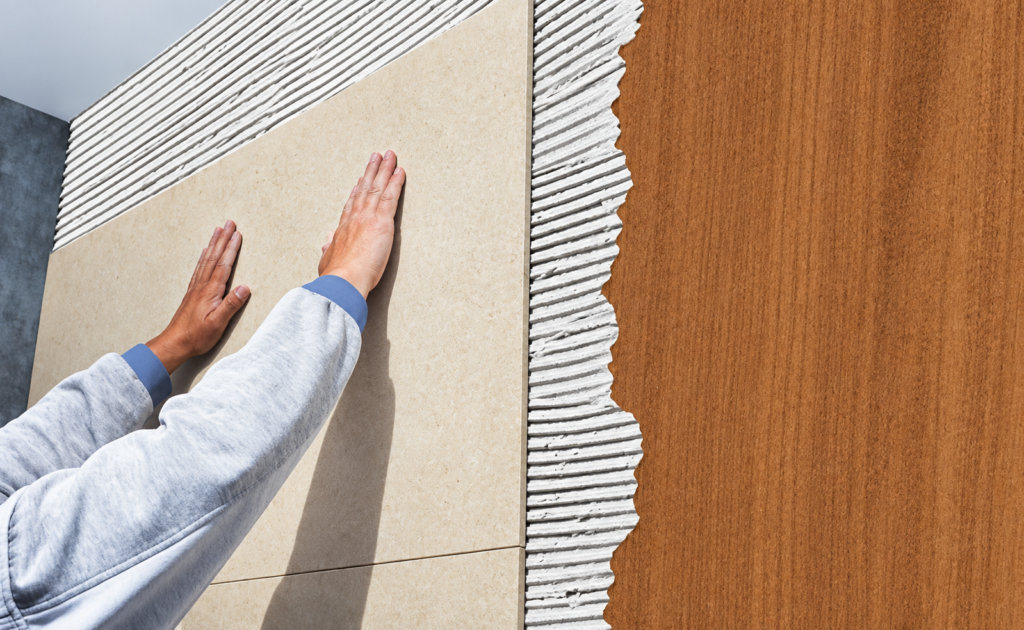
Cement-based adhesive can be used for fixing tiles and natural stone on cement based substrates. However, epoxy/reisin-based adhesives are used while fixing composit/engineered stones or tiles on critical surfaces like drywall or metal. Use epoxy tile adhesive in areas where chemical exposure or heavy foot traffic is expected.
What is Epoxy Tile Adhesive?
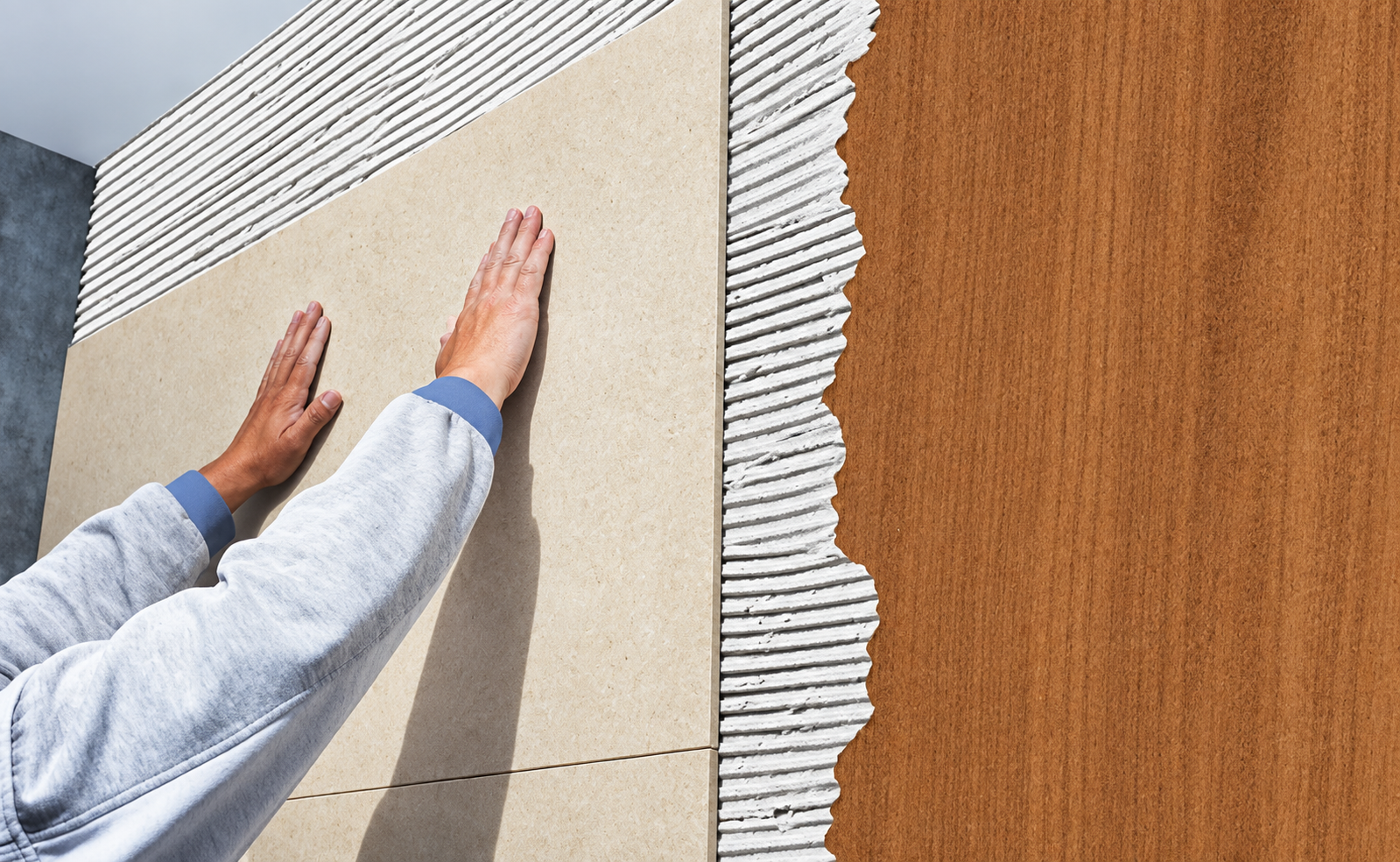
Epoxy tile adhesive is a two-part reactive adhesive made from resin and hardener. It forms a strong bond and resists water and chemicals. Its performance makes it suitable for demanding tile and stone applications. Epoxy resin adhesive is generally superior to cement-based adhesives when high performance in critical areas is required. By using the right epoxy adhesive during installation, you can greatly improve the durability and lifespan of your tiles.
When You Actually Need Epoxy
Epoxy adhesives work best when working on critical surfaces. However, not every surface needs a resin-based system. Epoxy adhesives should be used when fixing engineered stones, or when you need to fix tiles to difficult surfaces like drywall, metal, plywood etc.
Industrial or chemical exposure
Industrial spaces face chemicals, cleaning agents and heavy use. In such conditions, epoxy adhesive can offer useful resistance and durability. It can also support installations where moisture resistance is a key requirement.
Heavy stone/large format
Large-format tiles and heavy stone can place greater demands on the fixing system. Substrate preparation, tile weight and installation conditions all matter. Consider an epoxy adhesive when the application requires high bond strength and greater resistance to demanding conditions. Always select the right product based on the substrate and tile specifications.
Benefits & Trade-offs
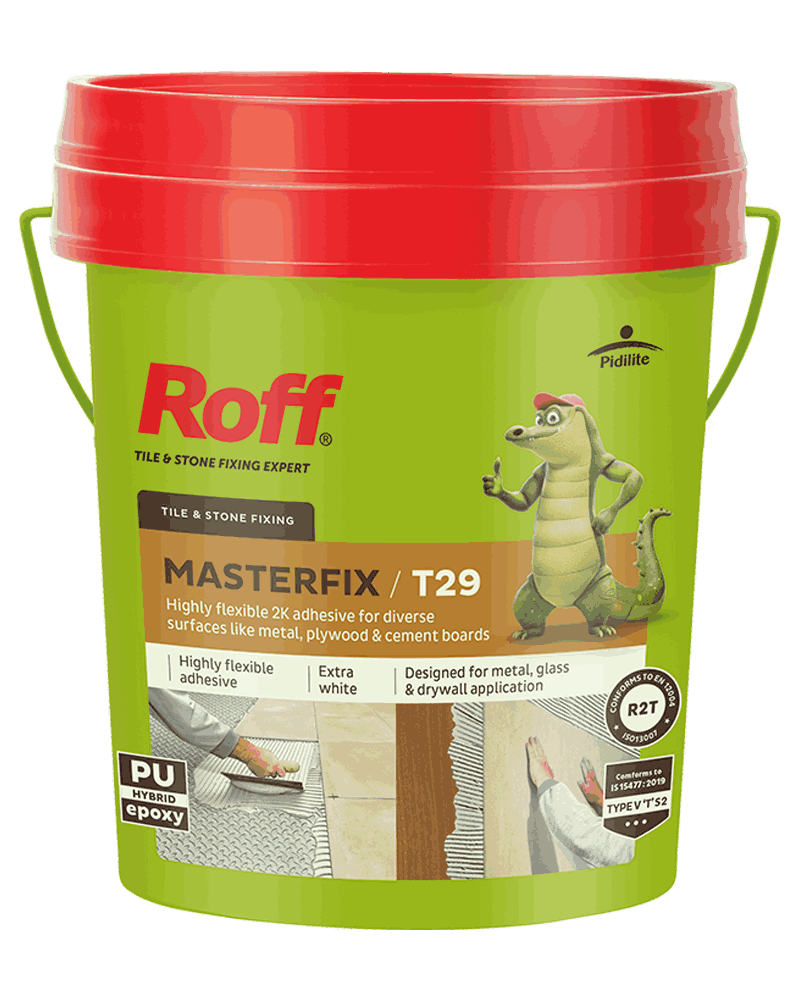
The main benefit of epoxy adhesives, such as Roff Master Fix Adhesive, is that they perform well even in challenging environments. However, higher performance can also mean greater cost and more demanding application requirements.
Pros
Key benefits can include:
Strong bonding for demanding applications
High resistance to water exposure
High flexibility allows them to be used in areas with heavy vibrations
Good resistance to many chemicals
Durable performance in heavy-use areas
Suitability for certain industrial applications
These properties make epoxy tile adhesive useful when performance requirements go beyond routine installations.
Trade-offs
Cost is one important consideration. Epoxy systems can cost more than standard cement-based adhesives. Application can also require greater care. The components need correct mixing and timely application, so professional labourers may be required to ensure tiles are installed correctly.
Frequently asked questions (FAQs)
1) What is epoxy tile adhesive?
Epoxy tile adhesive is a two-part reactive adhesive made from resin and hardener. It provides strong bonding and high resistance to water and chemicals.
2) Is epoxy adhesive the same as resin adhesive?
Yes, the terms are often used for resin-based reactive adhesive systems. However, always check the specific product formulation and application instructions.
3) When should I use epoxy instead of cement adhesive?
Consider epoxy adhesives for fixing critical stones like composit or engineered stone. Additionally, use epoxy adhesives on critical substrates like metal or drywall. Cement-based adhesive can suit many routine tile or natural stone installations.
4) Is epoxy adhesive waterproof?
Epoxy adhesive offers high water resistance. However, it should not replace a complete waterproofing system where the substrate needs protection from water ingress.
5) Is epoxy adhesive worth the cost?
It can be worth considering when the installation demands higher water, chemical or performance resistance. For routine applications, a suitable cement-based adhesive may be more appropriate.
6) Can epoxy adhesive be used for stone?
It can suit certain stone applications. Product selection should consider the stone type, size, substrate and site conditions.
7) What is the difference between epoxy adhesive and epoxy grout?
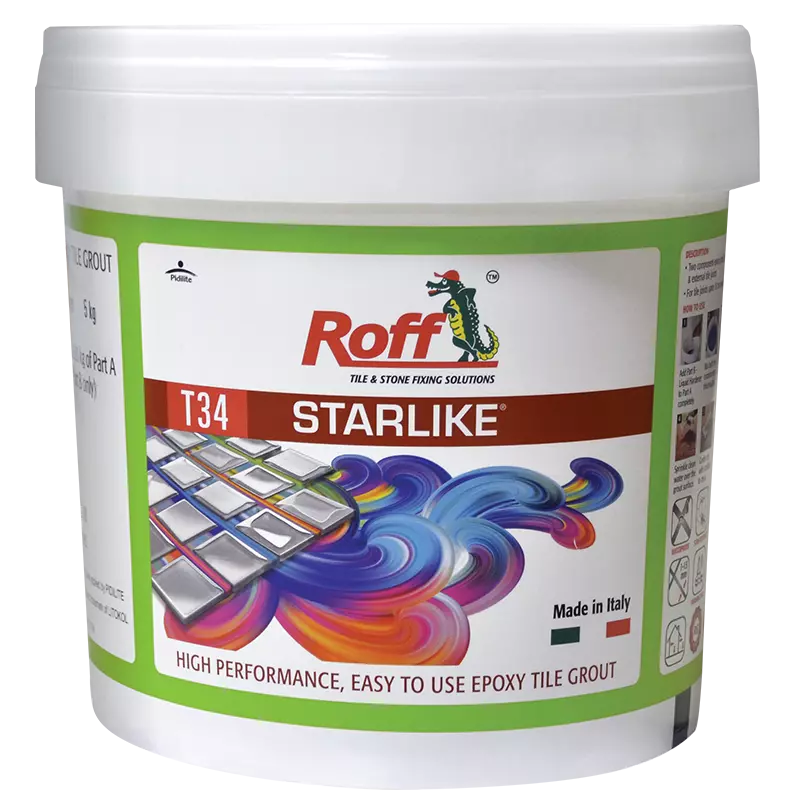
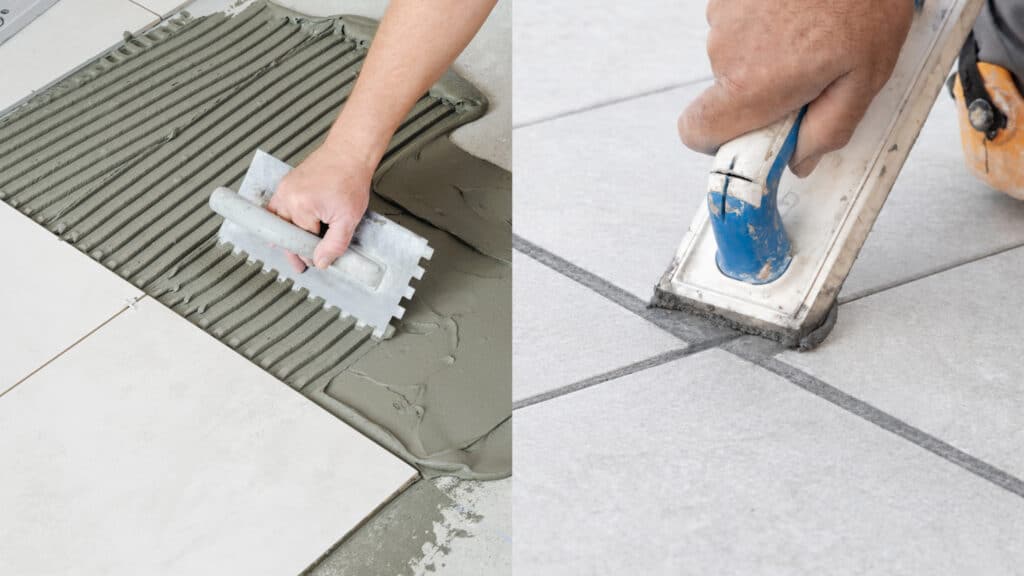
An adhesive fixes tiles or stone to a substrate. Epoxy grout, on the other hand, is used to fills the joints/gaps between tiles. They serve different purposes within a tiling system. Roff Starlike Epoxy Grout is an epoxy grout, while Roff Master Fix is an adhesive. Each product is used at a different stage of tile installation.