Check out the biggest trends of the season and our expert take on them.
Tile Grout Price in India: Cement vs Epoxy Grout Range
Key Takeaways
Cement-based grout is the more affordable option, typically costing around ₹70–₹150 per kg, while epoxy grout generally ranges from ₹700–₹1,100+ per kg.
Epoxy grout costs more because it offers higher resistance to water, stains, chemicals and blackening.
Grout quantity affects the actual project cost. Consider tile size, joint width, joint depth, tiled area, and wastage.
Choose grout based on application requirements, not price alone. In general, epoxy grout provides better long-term value in most installations.
Tilegrout price depends on the grout type, pack size, colour, and brand. Cement-based grout is usually the lower-cost option. Epoxy grout costs more, but offers added resistance for demanding areas. The average cost of cement grout generally ranges from ₹75 per kilogram.
However, epoxy grout products can range from roughly ₹700 to ₹1,100 or more per kilogram, depending on the product and seller. For accurate project planning, compare the material rate with the quantity required.
Grout Price Range at a Glance
A practical indicative range is:
Grout type
Approximate price range
Cement-based grout
₹70 to ₹150 per kg
Epoxy grout
₹700 to ₹1,100+ per kg
Grout price per kg varies by formulation, shade, pack size, and seller. The price for 1 kg of tile grout can therefore differ significantly between cement and epoxy options.
Why Epoxy Grout Costs More
The higher price for epoxy grout reflects its formulation and performance characteristics. In general, epoxy grout outperforms cement grout in most metrics, providing a more durable, long-lasting tile finish.
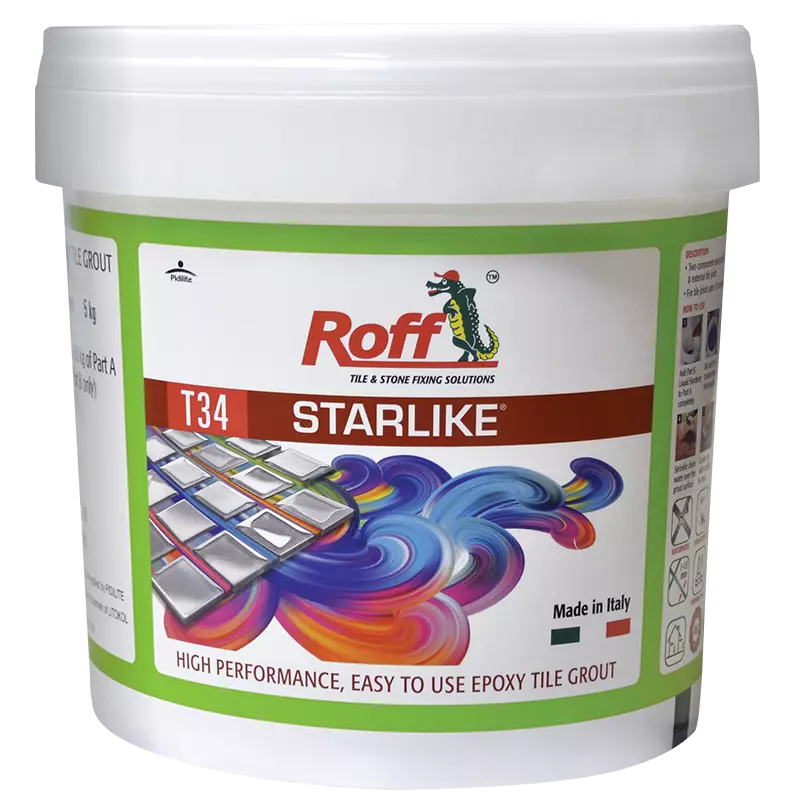
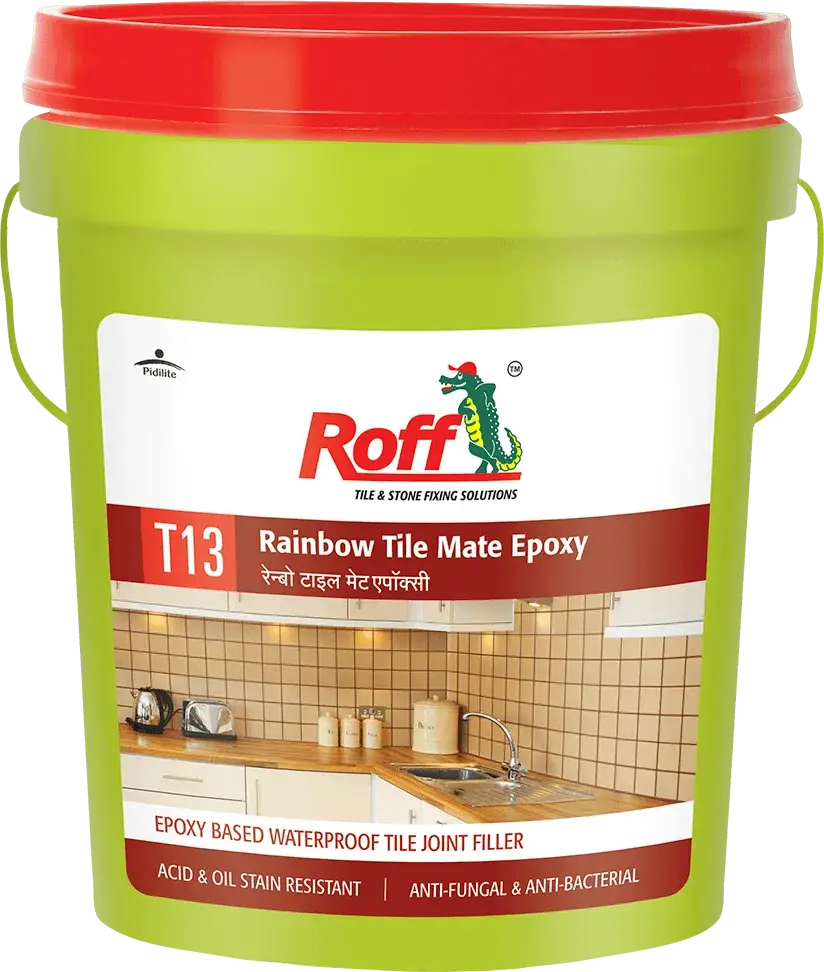
For example, Roff Starlike is a two-component epoxy grout resistant to stains, chemicals, and water. It can also be used in wet and demanding environments. It is also highly resistant to blackening, so your tiles will stay beautiful for years to come.
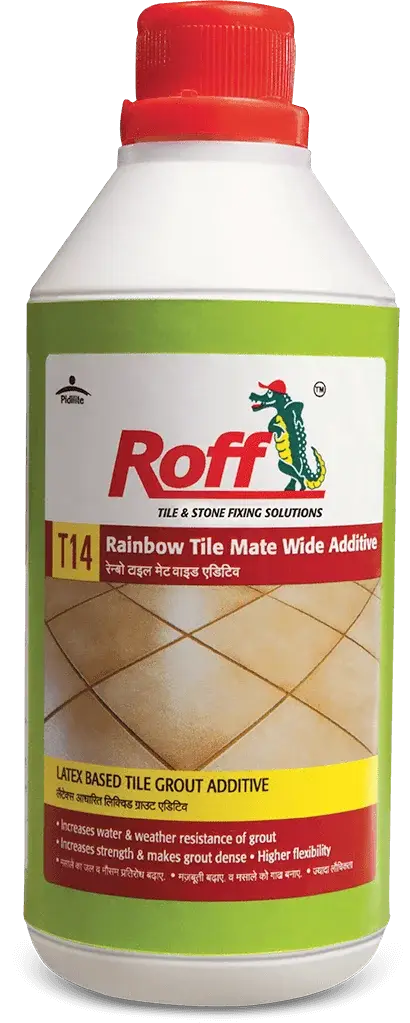
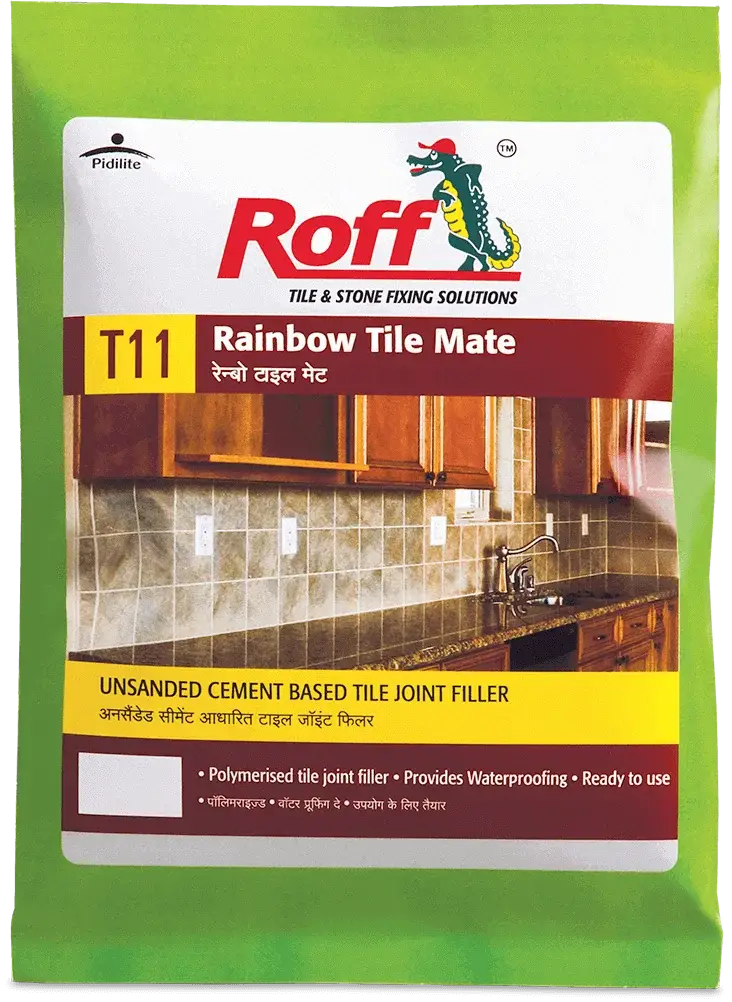
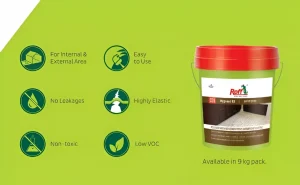
Cement-based grout is suitable only for regular tile installations in dry areas. For example, Roff Rainbow Tile Mate is a polymer-modified, cement-based joint filler designed for internal and external applications.
For demanding applications, compare the requirements before choosing a grout just because it costs less.
Coverage Changes Your Real Cost
Coverage variables + calculator
The tile grout price alone does not determine your project budget. Your required quantity matters just as much.
Coverage changes with:
Tile length and width
Joint width
Joint depth
Total tiled area
Tile thickness
Wastage during application
Wider joints generally need more grout. Smaller tiles can also increase grout consumption because they create more joint length. For larger projects, use a coverage calculator before buying. Roff provides a joint filler coverage calculator that can help with product selection and quantity planning.
Which Grout Gives Better Value
Best for wet/high-use
The best option depends on the installation conditions. Cement-based grout suits standard applications where joint conditions are less demanding, and water exposure isn’t a major issue. Consider epoxy grout for bathrooms, kitchens, commercial spaces, and other areas exposed to moisture, stains, or chemicals.
So, the lowest price may not always mean the lowest overall project cost. Consider durability, cleaning needs, exposure and expected maintenance before choosing a tile joint filler for your project.
Frequently asked questions (FAQs)
1) How much does tile grout cost in India?
Cement-based grout can start around ₹70 per kg. Epoxy grout can cost ₹700 or more per kg. Prices vary by product, pack and seller.
2) Is epoxy grout more expensive than cement grout?
Yes, epoxy grout generally costs more. Its formulation offers added resistance for demanding applications.
3) How much grout do I need?
Your requirement depends on tile size, joint width, joint depth and tiled area. Use a coverage calculator for a closer estimate.
4) Which grout lasts longer?
Longevity depends on application, conditions, installation quality and maintenance. Epoxy grout is designed for demanding environments and resists stains and chemicals.
5) Is epoxy grout worth the extra cost?
It can be worth considering where moisture, staining, chemicals or heavy use are concerns. For standard dry areas, a suitable cement-based grout may be sufficient.
6) Can grout replace waterproofing?
No, grout fills tile joints but should not be treated as a substitute for a waterproofing system beneath tiles.