Blogs & Current Trends

Check out the biggest trends of the season and our expert take on them.

Best Grout for Floor Tiles: Epoxy vs Cement Compared

Key Takeaways

  • Consider foot traffic, moisture exposure, spills, and cleaning needs before choosing grout for floor tiles.
  • Epoxy grout provides better stain resistance, lower water absorption, and easier maintenance, making it ideal for kitchens, bathrooms, and high-traffic areas.
  • Cement-based grout is budget-friendly, but it generally performs worse than epoxy grout, especially when stains or water exposure are concerns.
  • Follow the recommended joint width, mixing ratios, and cleaning instructions. Use grout sealers only when required.

Floor tiles need strong, well-finished joints to handle everyday foot traffic, spills, dust, and regular cleaning. Choosing the right grout is just as important as selecting the tiles themselves. The wrong product can make joints harder to maintain and leave the finished floor looking worn prematurely.

Two common options are epoxy grout and cement-based grout. Both have useful applications, but they differ in stain resistance, water absorption, maintenance, and cost. Understanding these differences helps you choose the right Roff grout for your floor, whether it is a busy kitchen or a relatively low-traffic space.

What Floor Grout Has to Survive

Floor grout does more than fill the gaps between tiles. It helps create a finished, easy-to-clean surface and must withstand the conditions in which the floor is used. Choosing grout based only on colour or price can overlook important performance requirements.

Traffic, spills, cleaning

Floor joints face repeated stress throughout the day. The amount and type of exposure depend on the room, but several factors influence grout performance:

  • Foot traffic: Entryways, corridors, kitchens, and commercial spaces experience repeated movement that can wear down poorly selected or incorrectly installed grout.
  • Spills and moisture: Water, food, oil, and other liquids can penetrate some grout materials, potentially causing stains or discolouration.
  • Cleaning routines: Frequent washing and cleaning chemicals can affect grout over time, especially when the product isn’t suitable for the conditions.
  • Dirt accumulation: Dust and grime can collect in joints, making the floor appear less clean even when the tiles themselves are in good condition.
  • Joint movement: Temperature changes and structural movement can affect tiled surfaces. Grout is not a replacement for correctly designed movement joints.

The best choice depends on these demands. A bathroom or kitchen floor may need stronger resistance to moisture and stains than a lightly used bedroom floor. A busy entrance may benefit from a grout that is easier to clean and maintain.

Epoxy vs Cement Grout for Floors

Epoxy and cement-based grout both fill tile joints, but they serve different needs. Epoxy grout is generally the stronger choice where stain resistance, low water absorption, and durability are priorities. Cement-based grout is often a practical, economical option for standard residential floors with moderate use and routine maintenance.

Feature

Epoxy grout

Cement-based grout

Stain resistance

Generally high; suitable for areas exposed to spills and grease

More susceptible to staining, depending on formulation and maintenance

Waterproof

waterproof; suitable for many wet-area applications

Water-resistant options are available, but performance depends on the product

Maintenance

Usually easier to clean

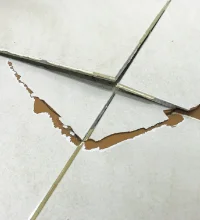
Frequent cleaning may cause cracking and wear and tear

Cost

Typically higher upfront cost

Usually more budget-friendly but higher lifetime cost due to poor durability

Suitable uses

Kitchens, bathrooms, busy floors, and demanding applications

Standard residential floors and less demanding applications

Application

Requires careful mixing and timely cleaning

Generally mixed with water; follow the product instructions


Best Roff Grout by Floor Type

The right Roff grout depends on the room’s exposure to water, spills, traffic, and cleaning products. Match the grout to the tile and joint requirements, not just its cost or colour.

By area

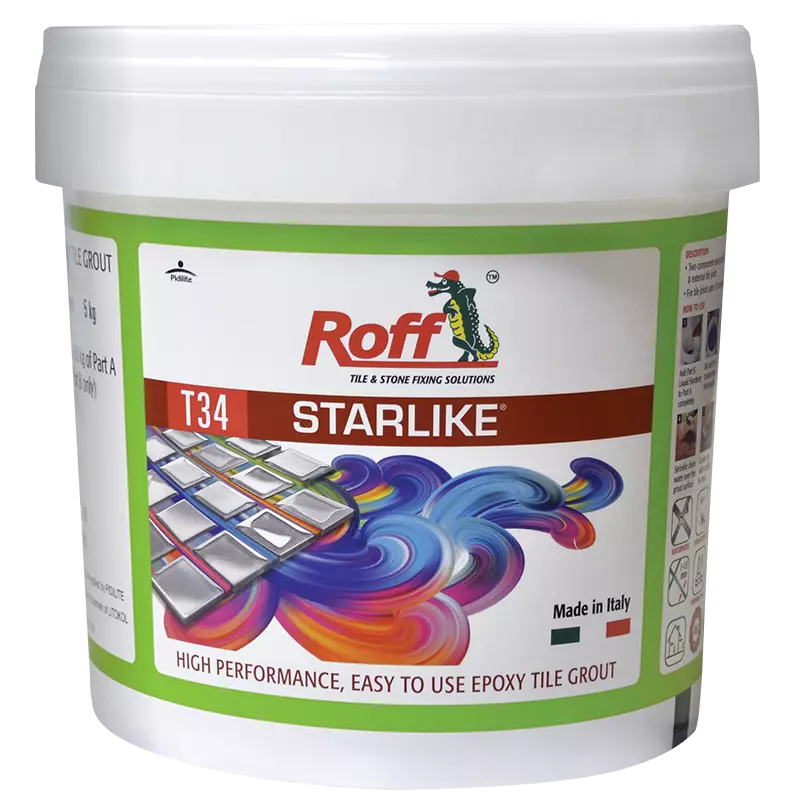
  • Kitchen floors: Consider an epoxy grout for better resistance to food stains, grease, and frequent cleaning. Roff Starlike Epoxy Grout is designed for stain-resistant, waterproof tile joints and can be used in suitable domestic and commercial applications. 
  • Bathroom floors: Consider epoxy grout where joints are exposed to regular moisture and cleaning. Roff Starlike Epoxy Grout is a two-component epoxy joint filler designed for internal and external floors and walls, including wet areas. 
  • Living rooms and bedrooms: For a standard residential floor with moderate traffic, Roff Starlike Epoxy Grout is a cement-based, water-resistant option. Choose epoxy instead if stain resistance is a priority. 
  • High-traffic or commercial floors: Consider an epoxy grout where abrasion, spills, and cleaning demands are significant. Confirm the selected product suits the site conditions and chemical exposure.

Remember that grout fills the joints; it does not replace the tile adhesive beneath the tiles or the waterproofing system required for a wet area. For a broader overview, check the guide on different types of tile joint fillers and how to choose one.

Application & Maintenance Tips

Even high-performance grout can perform poorly if the joints are dirty or filled incorrectly. Follow the product’s mixing and application instructions, and clean excess grout before it hardens on the tile surface.

Joint width, cleaning, sealing

  • Use the correct joint width: Joint width depends on tile size, edge variation, installation conditions, and the grout manufacturer’s recommendations. Roff Starlike is specified for joints from 1 to 15 mm; always verify the selected product’s limits. 
  • Mix and apply correctly: Follow the prescribed ratios for epoxy grout components or the water-mixing instructions for cement-based grout. Fill the joints and clean the tile surface within the recommended time.
  • Seal only when appropriate: Some cement-based grouts may benefit from a compatible sealer, depending on the formulation. Don’t assume every cement grout needs sealing; follow the manufacturer’s guidance. Epoxy grout generally does not require a separate grout sealer.

Frequently asked questions (FAQs)

1) Which grout is best for floor tiles?

Epoxy grout is generally best when stain resistance, water resistance, and easy maintenance are priorities. Cement-based grout suits standard residential floors where budget matters and maintenance needs are moderate.

2) Is epoxy grout good for floors?

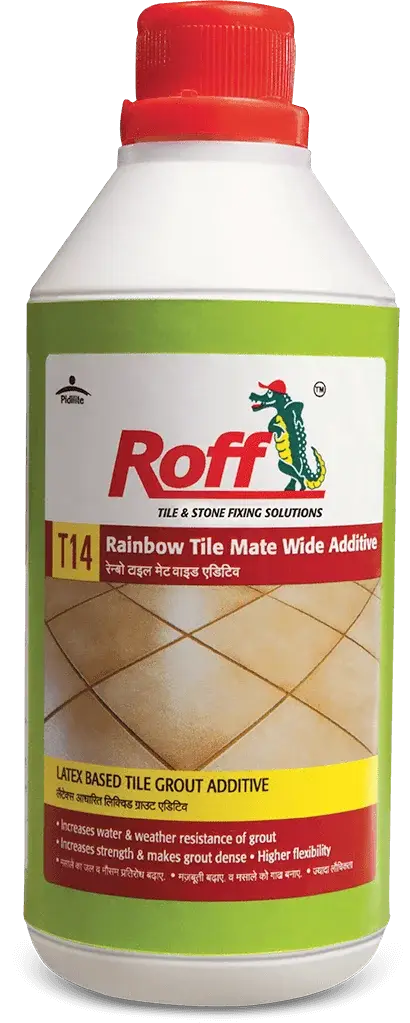
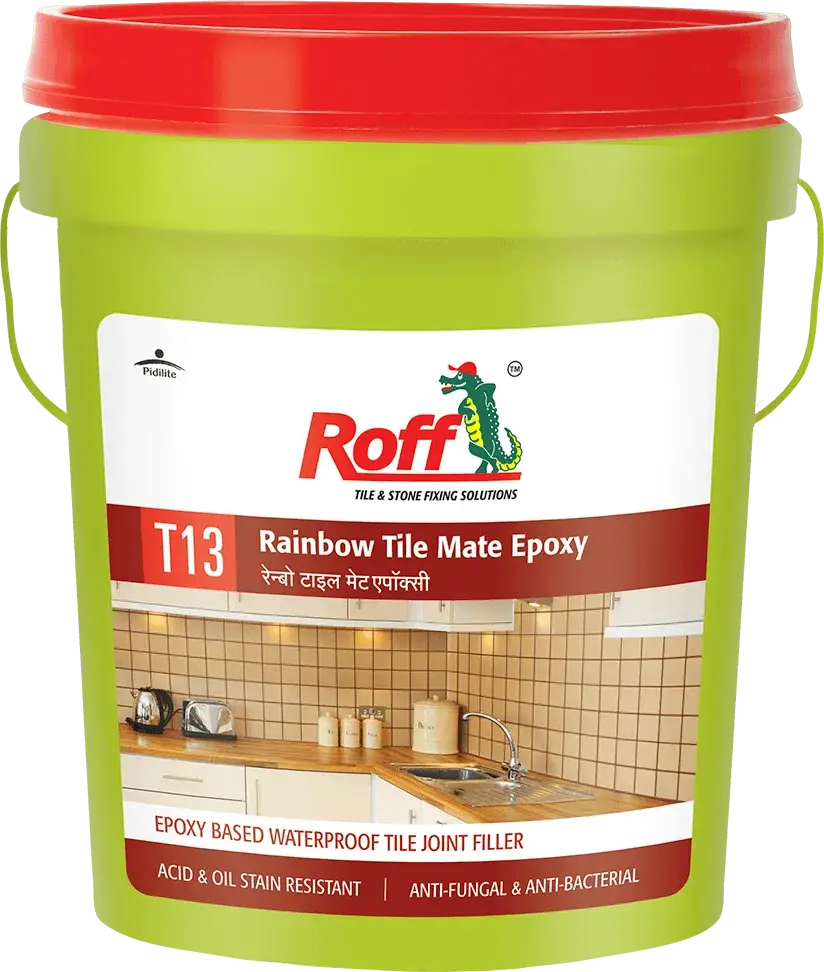
Yes, epoxy grout suits many floor applications and offers strong resistance to stains, water, and chemicals. Roff Rainbow Tile Mate Epoxy Grout and Roff Starlike are options for appropriate residential and commercial installations. Check each product’s technical instructions for suitability.

3) Can I use tile adhesive as floor grout?

No, not unless the specific product is explicitly designed and approved for use as both an adhesive and a grout. Tile adhesive bonds tiles to the substrate, while grout fills the joints between them. Using an unsuitable material can compromise the finished installation.

4) Which grout resists stains best?

Epoxy grout generally resists stains better than conventional cement-based grout. Roff Starlike and Roff Rainbow Tile Mate Epoxy Grout resist staining and are worth considering for floors exposed to spills and frequent cleaning.

5) How wide should floor grout joints be?

The appropriate width depends on tile dimensions, edge finish, and the grout’s specified application range. Roff Starlike supports joints from 1 to 15 mm, but that range isn’t a universal recommendation for every tile. Follow the tile and grout manufacturers’ guidance.

This approach ensures the wall isn’t just ‘ready’ but rather bonded to the wall tile adhesive system.