Check out the biggest trends of the season and our expert take on them.
Understanding the difference between ceramic and vitrified tiles to pick the best tile adhesive for each type
The success of your new tile construction or renovation largely depends on choosing the right products. This needs an in-depth understanding of material properties, surface compatibility, and adhesive requirements. Understanding the difference between ceramic and vitrified tiles can help you with adhesive selection and installation methods across diverse project conditions. Also, choosing the best adhesive for your tiles ensures surfaces remain intact, crack-free and durable.
So, if you’re on the lookout for efficient and reliable options for your next tile installation project, this comprehensive guide will not only explain to you the difference between ceramic and vitrified tiles but also help you pick the best adhesives for your tiles.
What is a ceramic tile?
There are several differences between ceramic and vitrified tiles.
For instance, a ceramic tile is made up of a combination of clay and water, which is pulverized to make a substance. It is then shaped and fired in a kiln at high temperatures to achieve hardness and durability. The firing process creates a porous structure with water absorption rates typically ranging from 3% to 10%, making ceramic tiles mildly absorbent compared to vitrified tiles. They are easily moldable and can be made into unique shapes.
The porous nature of ceramic tiles affects their performance and the best adhesive for the tile. These tiles generally feature smaller formats, rarely exceeding standard residential sizes, and often require additional glazing for an extra layer of protection, water resistance and visual appeal. Their coarser texture and matte finish make them less slippery. Available in different shapes, sizes, designs and colors, they are suitable for areas with moderate moisture exposure, such as living rooms and bedrooms.
What is a vitrified tile?
A vitrified tile is made up of a combination of silica and clay in a 60:40 ratio, along with materials like quartz and feldspar. It is then heated to extremely high temperatures until the materials fuse into a glass-like structure. This process creates tiles with exceptional density and water absorption rates below 0.5%, making them virtually non-porous.
The difference between ceramic and vitrified tiles is that vitrified options have better strength and higher scratch and stain resistance compared to ceramic tiles. Their smooth and glossy surface needs minimal maintenance while providing a modern aesthetic suitable for high-end residential and commercial applications.
Another difference or benefit of vitrified tiles lies in their size capability. Modern manufacturing allows vitrified formats of more than 8 ft, enabling dramatic installations with minimal grout lines. This format, paired with low porosity, creates unique challenges when trying to choose the best adhesive for the tile.
How to identify ceramic and vitrified tiles?
Understanding the differences between ceramic and vitrified tiles can make it very easy to identify them. This can help you develop an understanding of where each type of tile would fit best depending on the overall aesthetics and structural requirements.
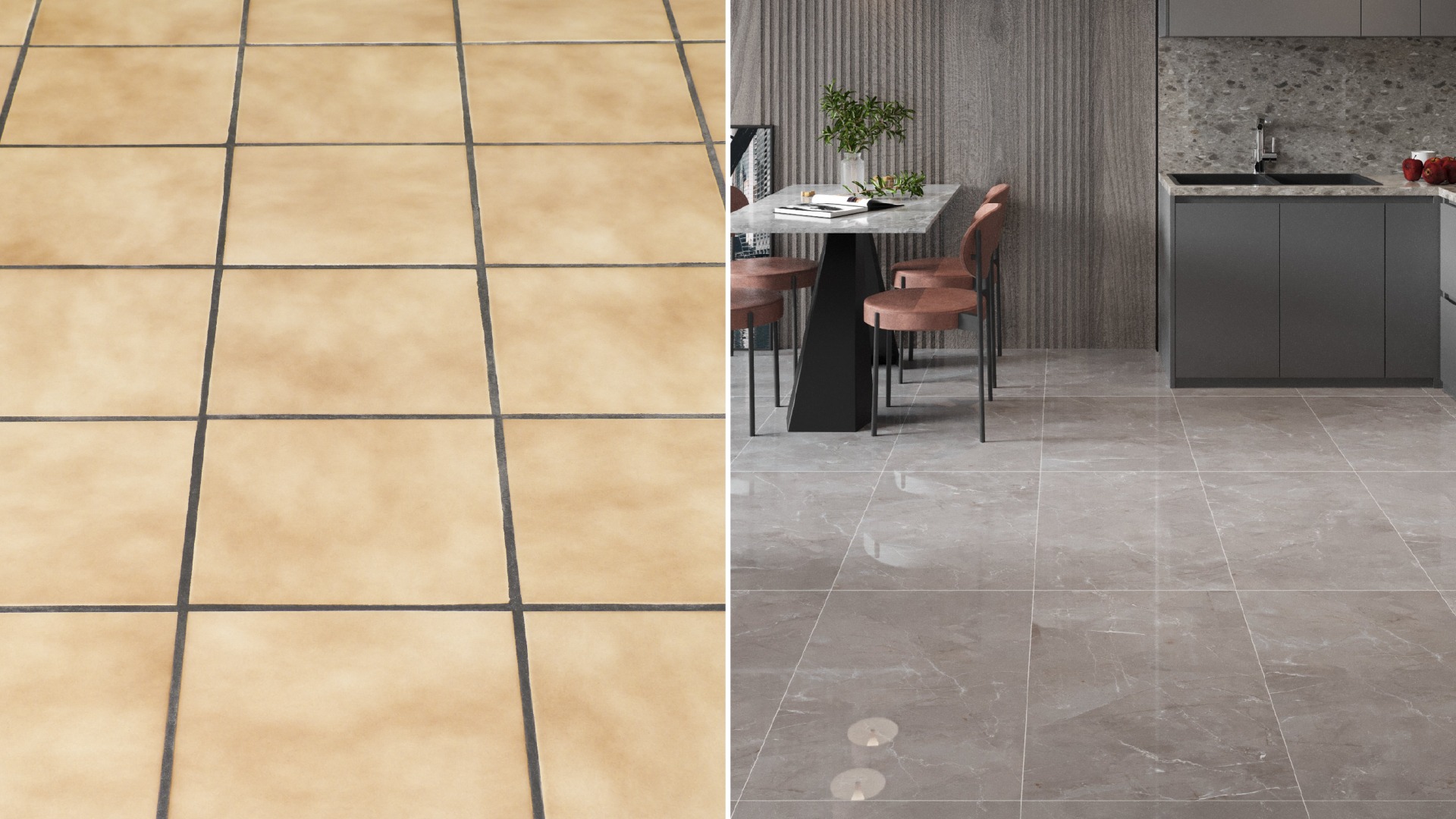
Ceramic tiles typically display a red or brown body colour due to clay content, while vitrified tiles appear lighter and more uniform in texture. When tapped gently, vitrified tiles produce a sharper, clearer ring due to their higher density, whereas ceramic tiles create a duller sound.
Ceramic tiles generally feature matte or semi-gloss finishes, while vitrified tiles showcase high-gloss, glass-like surfaces. The back pattern also differs, with ceramic tiles showing coarser textures and vitrified tiles displaying smoother, more uniform backs that challenge traditional adhesive bonding methods.
Key differences between ceramic and vitrified tiles that affect adhesive selection
Depending on the type you choose, the best adhesive for your tiles can vary a lot. Here are some of the differences between ceramic and vitrified tiles and how they affect adhesive selection:
Porosity
The fundamental difference between ceramic and vitrified tiles lies in their porosity levels, which directly impact adhesive bonding mechanisms. The 3-10% water absorption of ceramic tiles allows traditional adhesives to achieve mechanical bonding through surface penetration. The 0.5% absorption of vitrified tiles, on the other hand, demands adhesives with enhanced wetting agents and polymer modification to achieve reliable bonding on non-porous surfaces.
Size and format
Ceramic tiles typically remain within conventional size ranges, allowing standard adhesive application methods. Vitrified tiles, particularly large-format installations exceeding 900 cm², require specialised adhesive techniques including back-buttering and enhanced coverage requirements to prevent voids and hollow sounds. Large-format vitrified tiles demand adhesives with extended open time and enhanced grab strength to manage their weight and size during installation.
Surface characteristics and bonding challenges
The textured, porous backs of ceramic tiles facilitate adhesive penetration and mechanical interlocking. Vitrified tiles present smooth, dense surfaces that resist traditional bonding mechanisms, requiring adhesives formulated with polymer modifications and wetting agents to achieve proper transfer and long-term adhesion.
Adhesive requirements for ceramic tiles
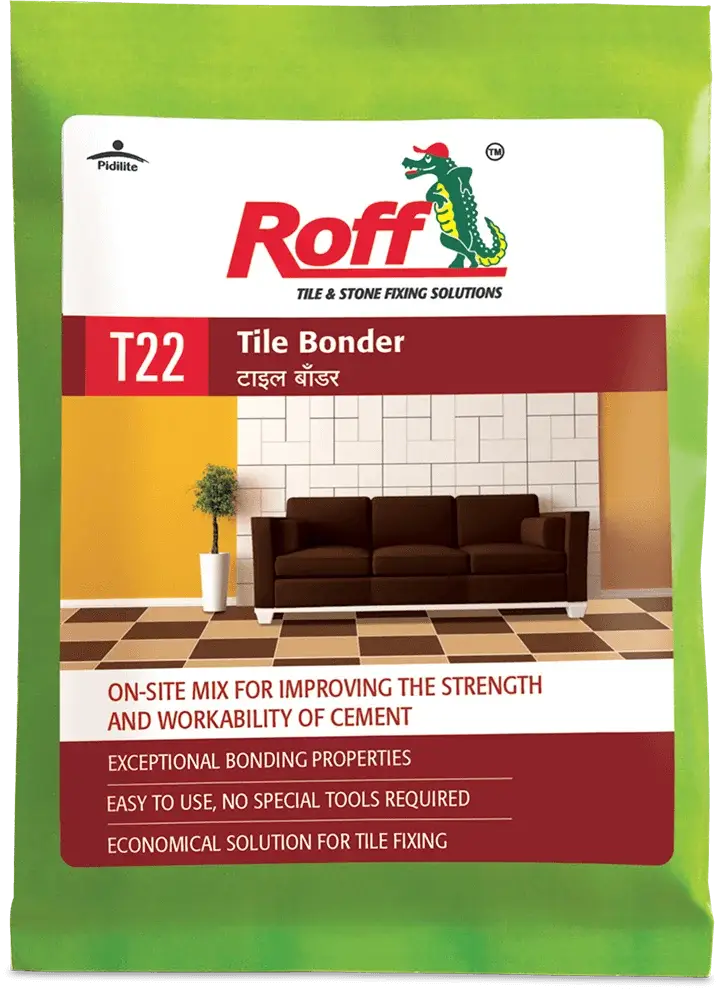
Some of the best adhesives for ceramic tiles include:
For ceramic tile installations, polymer-modified adhesives provide enhanced performance, particularly in areas subject to moisture or temperature fluctuations. These modified formulations offer improved flexibility and water resistance while maintaining compatibility with their absorption characteristics.
Vertical application ceramic tilesbenefit from adhesives with anti-sag properties and extended open time, allowing proper alignment and adjustment during installation. Floor applications require adhesives with sufficient impact resistance to handle foot traffic while accommodating the tiles’ moderate expansion and contraction.
Adhesive requirements for vitrified tiles
Some of the best adhesives for vitrified tiles include:
Vitrified tiles demand high-performance adhesives specifically engineered for low-porosity surfaces. These adhesives must incorporate polymer modifications, wetting agents, and enhanced bonding chemicals to overcome the non-porous characteristics of tiles and achieve reliable long-term adhesion.
Best adhesive for tiles in the vitrified category includes formulations with extended open time to accommodate the precise positioning required for large-format installations. The adhesive must provide sufficient initial grab to prevent slippage, particularly on vertical surfaces where the tiles’ weight and smooth backs create installation challenges.
Large-format vitrified tiles exceeding standard sizes and carrying higher weight require adhesives with enhanced flow and high grab strength, along with back-buttering techniques, to ensure complete coverage and eliminate voids. Professional installations therefore specify advanced adhesives that offer strong initial tack, extended working time, and resistance to tile slippage, meeting the demanding performance needs of modern vitrified tile applications.
Roff's specialised solutions
Roff’s comprehensive adhesive range addresses the differences betweenceramic and vitrified tile installations through targeted formulations. The Tile Adhesive Selector tool guides you through product selection based on tile type, installation area, and substrate conditions, ensuring optimal adhesive-tile pairing for each application.
For ceramic tiles
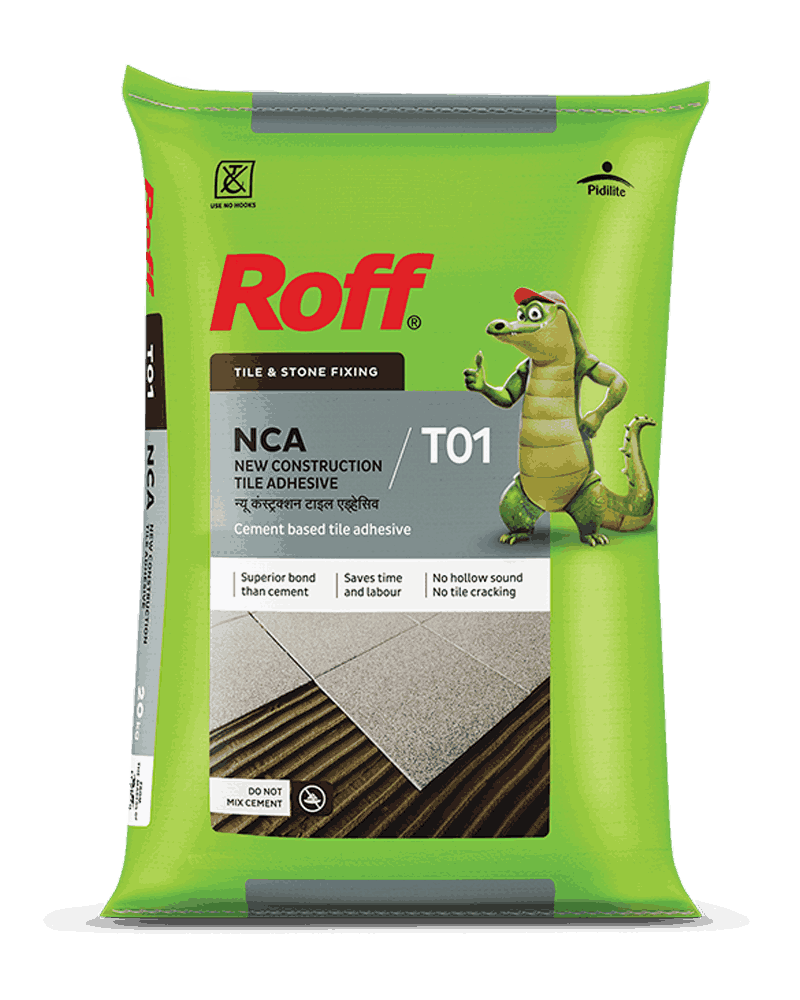
Roff New Construction Tile Adhesive (NCA) is one of the best adhesives for ceramic tiles on floors that provides polymer-modified bonding. This grey cement-based formulation offers reliable performance for standard ceramic applications while maintaining cost-effectiveness for residential projects.
By combining proper diagnosis, high-quality materials, skilled workmanship, and reliable waterproofing solutions from Dr. Fixit, homeowners can achieve lasting protection. For expert guidance and customised terrace waterproofing support, connect with Dr. Fixit specialists by filling out the form below.
For vitrified tiles
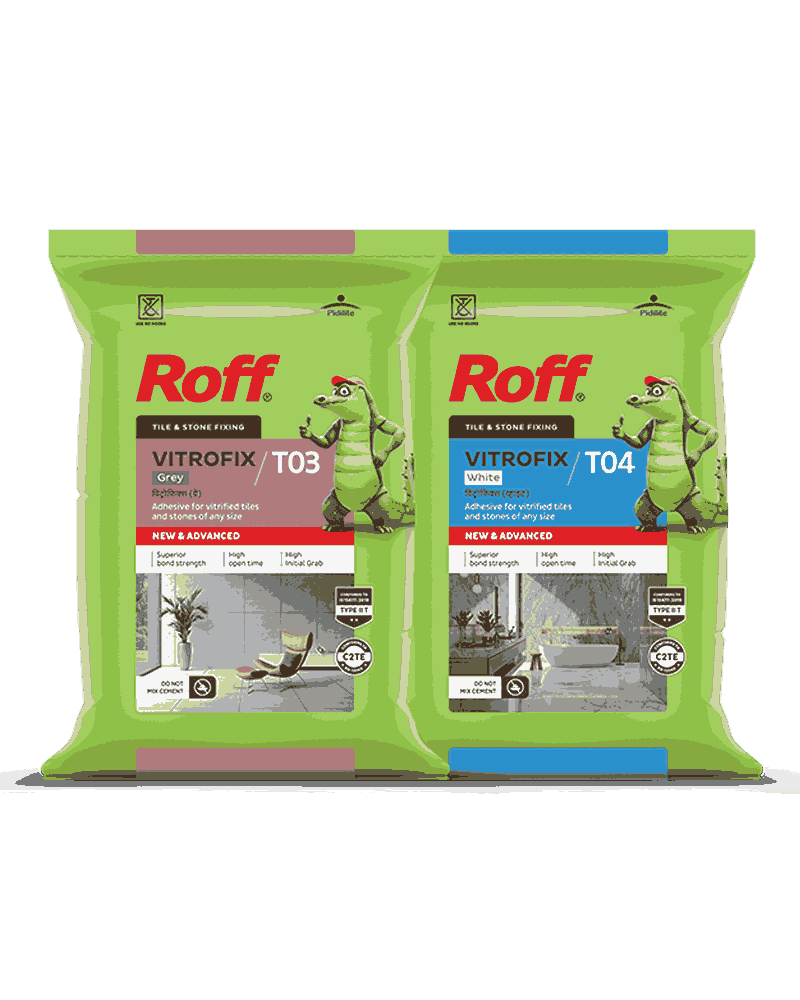
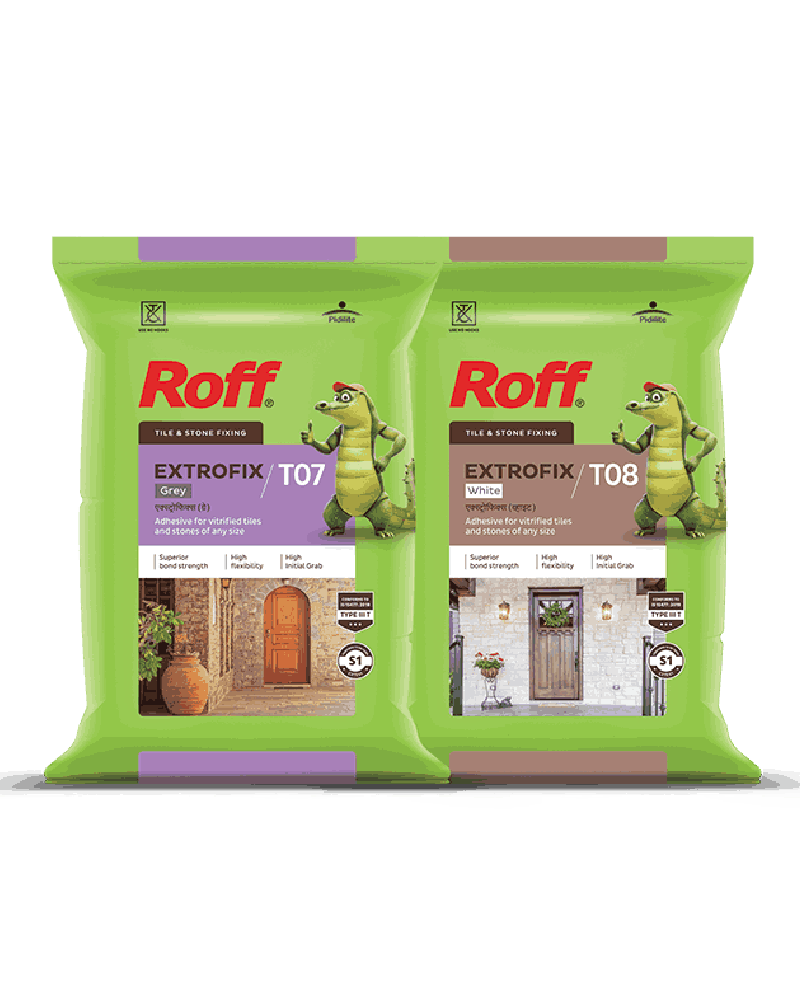
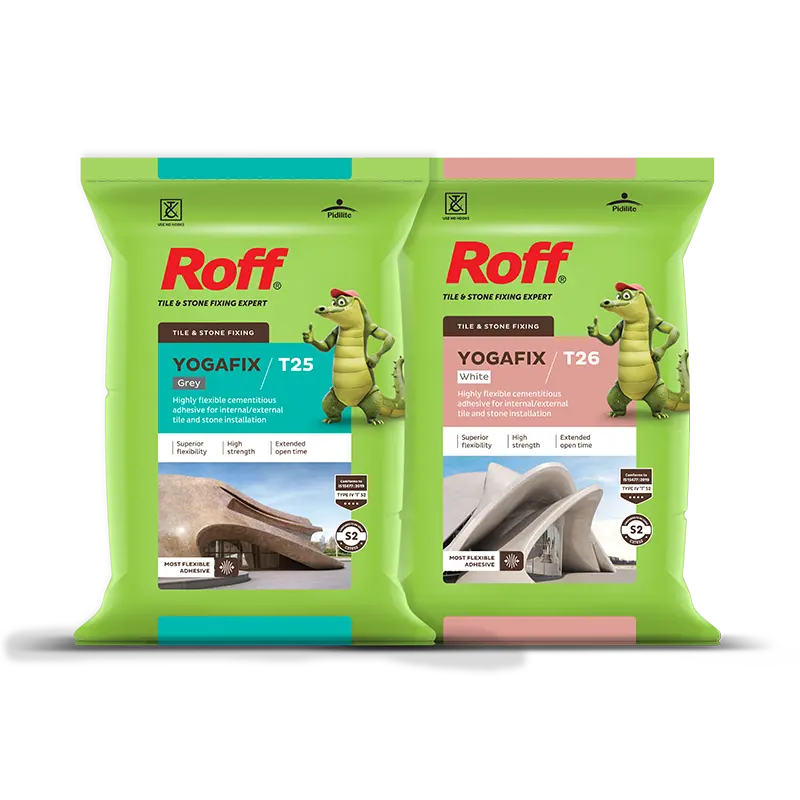
Roff Vitrofix Adhesive stands as the premier solution for vitrified tile installations, featuring low-porosity compatibility and enhanced bonding strength for ceramic, vitrified, glass mosaic, and natural stone applications. What makes it the best adhesive choice for these tiles is its polymer-modified composition that ensures reliable bonding, with specialised formulations available for external floor applications.
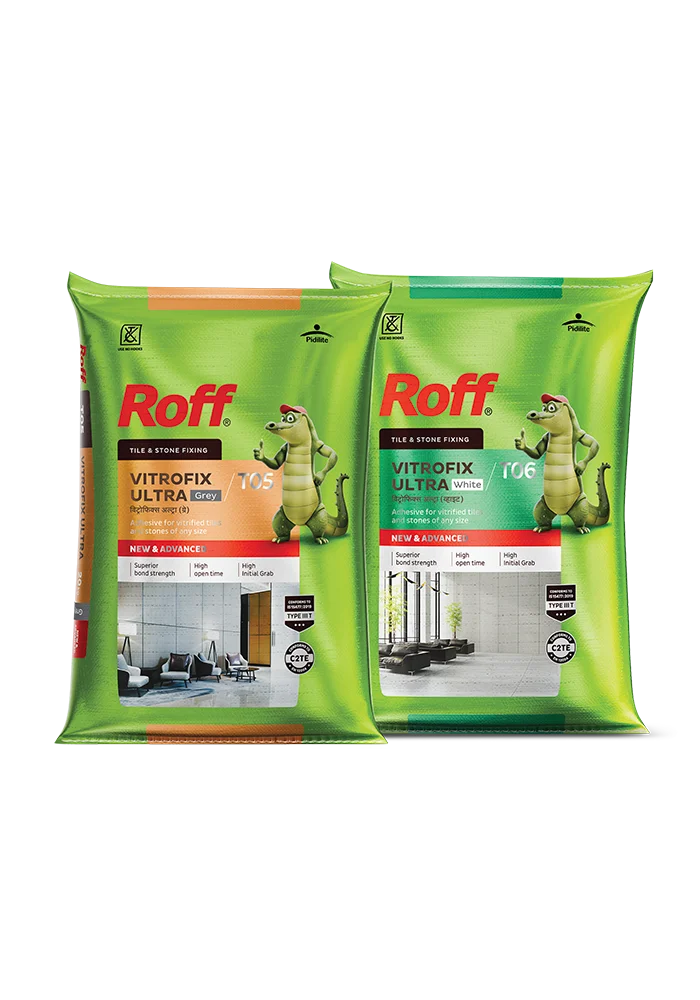
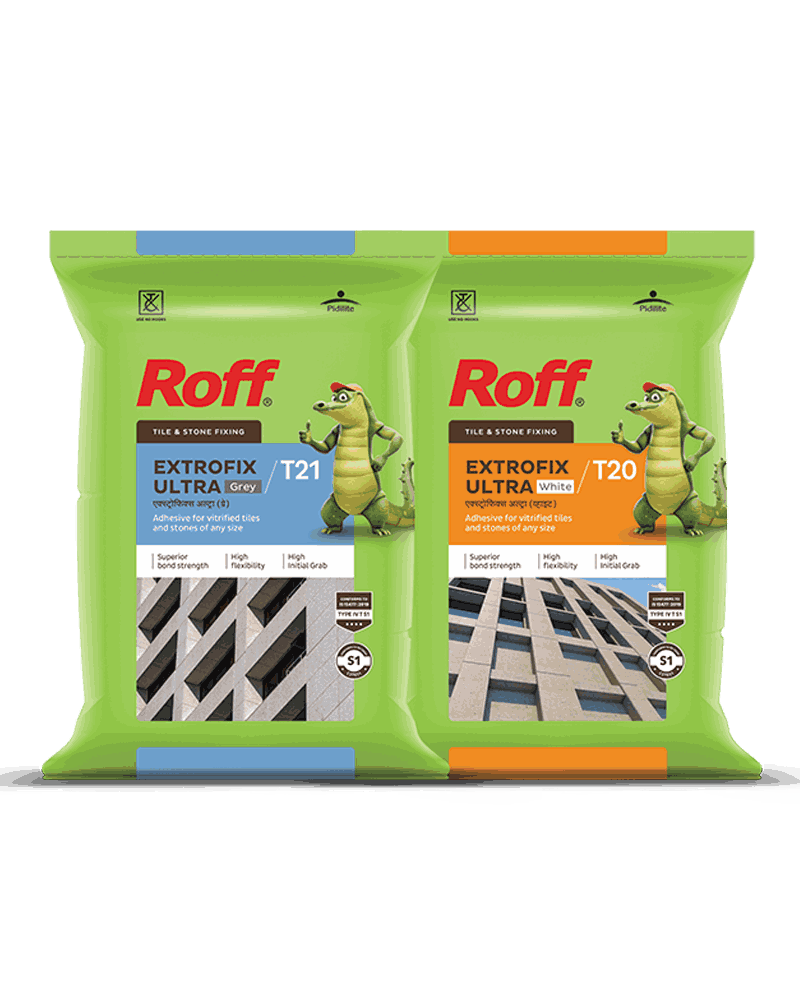
Moreover, Roff Vitrofix Ultra Adhesive provides the highest performance level for demanding vitrified tile installations, incorporating advanced polymer modification for superior adhesion and durability in both internal and external environments. This premium formulation addresses the most challenging applications, including large-format tiles and high-traffic commercial installations.
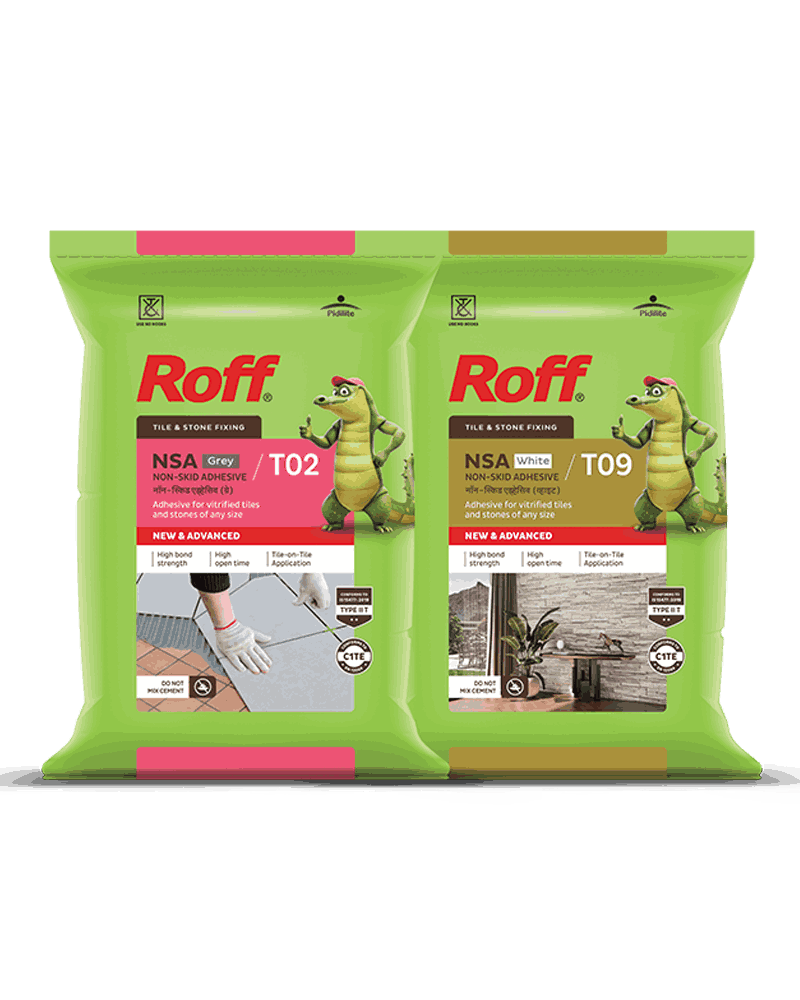
Lastly, Roff Non-Skid Adhesive (NSA) is ideal for indoor vitrified tile applications, especially for standardsmall and medium sizedtiles as well as for tile-on-tile installations. Its polymer-modified, sag-resistant formulation ensures strong bonding on walls and floors, even on dry or wet surfaces, enabling controlled, non-skid tile fixing.
Best adhesive practices for tile installation
Understanding the differences between ceramic and vitrified tiles and choosing the best adhesives for each type of tile is only a part of the process. Here are some best practices to ensure a successful installation that lasts for years:
Surface preparation requirements
Both tile types demand proper substrate preparation, though vitrified tiles need enhanced attention to surface cleanliness and levelness. Substrates must be sound, clean, and free from contamination, with vitrified tile installations benefiting from specialised primers on dense or previously sealed surfaces.
Application techniques
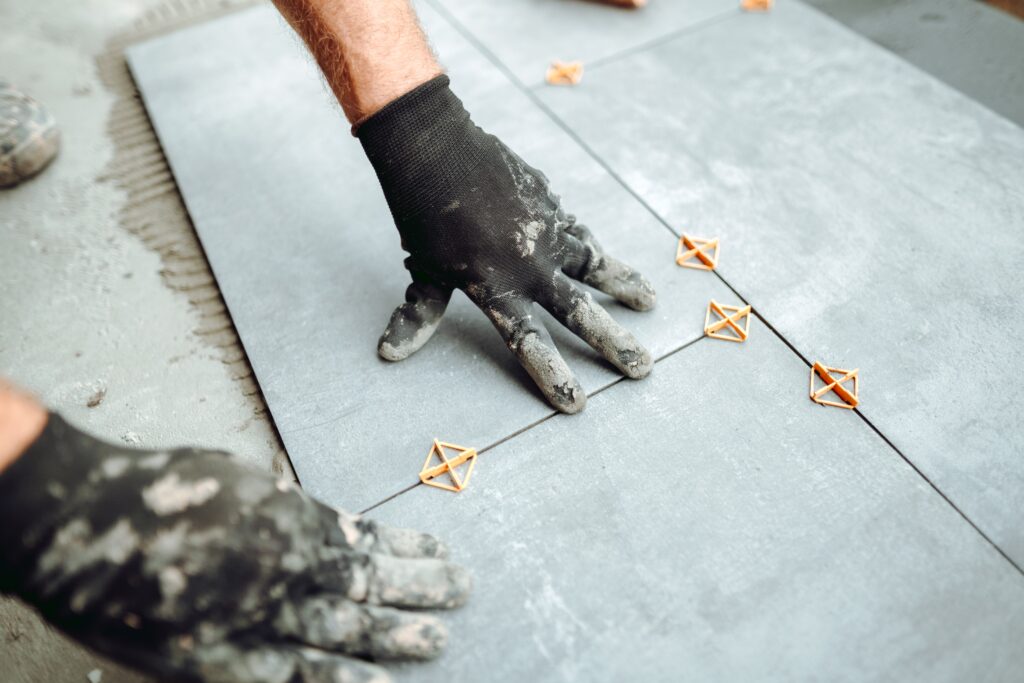
Ceramic tile installations can utilise standard trowel techniques with appropriate notch sizes for tile format. Vitrified tiles, particularly large formats, require enhanced application methods, including back-buttering, to ensure complete coverage and prevent air pockets that cause hollow sounds.
Coverage requirements
Standard ceramic installations typically achieve adequate performance with 80-90% adhesive coverage. Vitrified tiles demand higher coverage rates, about 90% for interior applications and 95% for wet areas or exterior installations, to compensate for their non-porous characteristics and ensure long-term bond integrity.
Choose the best adhesive for your tiles today
Understanding the differences between ceramic and vitrified tiles is only half the job done. Architects must pair tile selection with compatible adhesive, based on tile properties and surface conditions, to ensure complete installation success. The best adhesive for tiles varies significantly between ceramic and vitrified applications.
For wet areas, high-traffic zones, and exterior applications, vitrified tiles paired with high-performance adhesives deliver superior long-term value despite higher initial costs. Interior residential areas with controlled environments may achieve adequate performance with ceramic tiles and standard polymer-modified adhesives. With Roff’s high-performance adhesive range, supported by comprehensive selection tools, you can simplify this pairing process with reliability and excellent performance.
Frequently asked questions (FAQs)
FAQ #1: Can I use the same adhesive for both small ceramic and large-format vitrified tiles?
No. Large-format vitrified tiles require specialised adhesives with extended open time, enhanced grab strength, and back-buttering techniques, while standard ceramic tiles work with conventional polymer-modified formulations.
FAQ #2: Which tile is better? Ceramic or vitrified?
Vitrified tiles are better for high-traffic and moisture-prone areas for higher durability and low porosity, while ceramic tiles are ideal for low-traffic indoor spaces.
FAQ #3: Are vitrified tiles a good choice for the kitchen?
Yes. Vitrified tiles have low porosity, high durability and resistance to stains and scratches. Their non-porous layer makes them easy to maintain.
FAQ #4: Are Roff products recommended for tile-on-tile applications?
Yes. Roff Non-Skid Adhesive (NSA)is specifically formulated for tile-on-tile applications in internal areas, while external floors require specialised formulations designed for existing surface conditions and environmental exposure.
FAQ #5: Are vitrified tiles more durable than ceramic?
Yes, vitrified tiles are more durable and suitable for high-traffic areas due to their strong and non-porous surface.
FAQ #6: Can I combine vitrified and ceramic tiles in my home design?
Yes, of course. Mixing ceramic and vitrified tiles can balance cost, design, and functionality across different rooms.