Tile cleaner acid can remove stubborn mineral deposits, but it is not suitable for every surface.
Always check surface compatibility before using an acidic cleaner and follow the manufacturer’s dilution, application and rinsing instructions.
Safe use requires proper precautions, including gloves, eye protection, ventilation, and avoiding mixing acid-based cleaners with bleach.
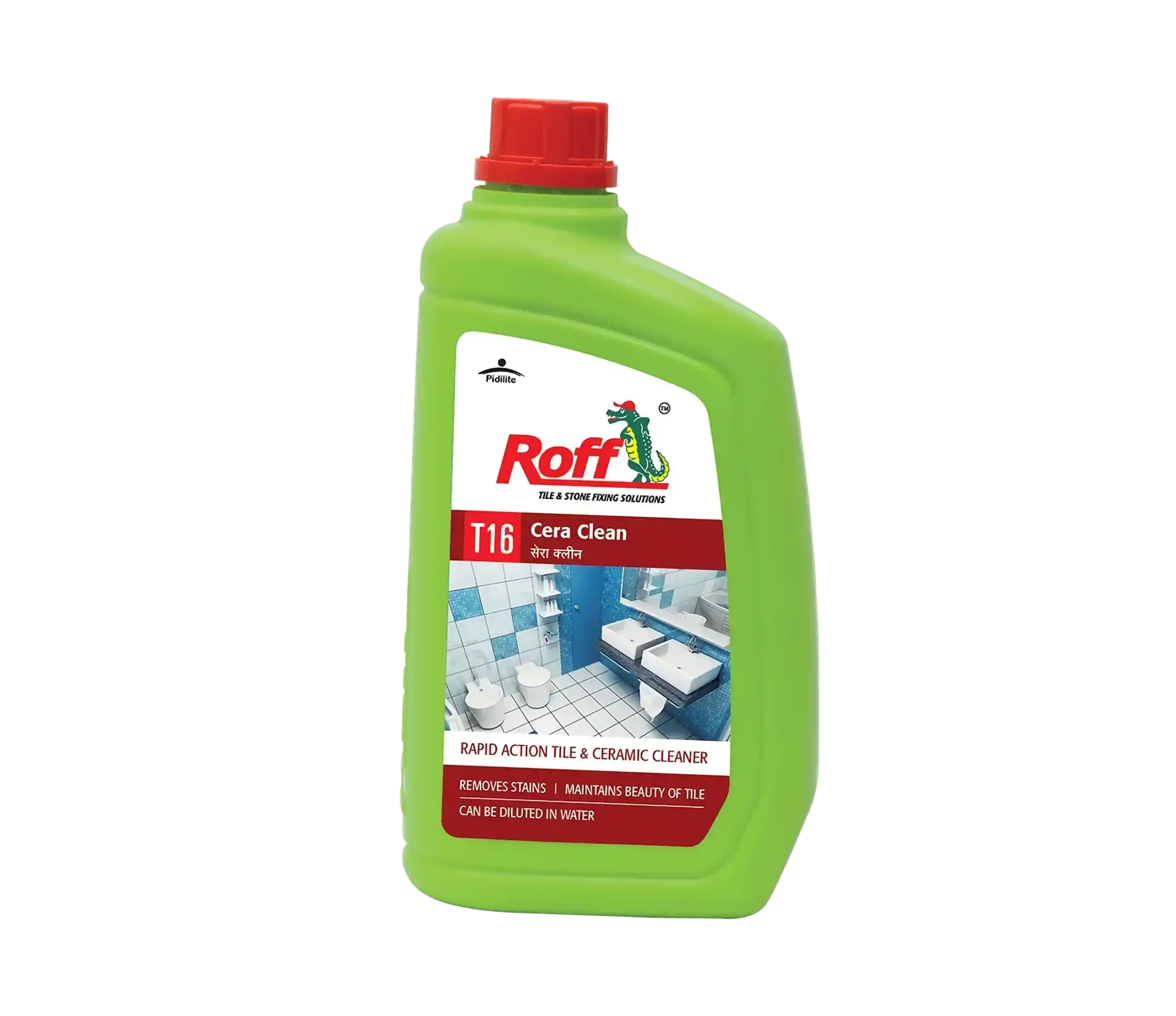
For routine cleaning of ceramic, porcelain, and vitrified tiles, a formulated cleaner such as Roff Cera Clean may be a better option.
Tile cleaner acid can remove mineral deposits and some stubborn residues. However, it is not suitable for every tile or surface. Acid can react with sensitive materials, weaken grout, or damage natural stone.
Is Acid Safe for Cleaning Tiles?
Tile cleaner acid is safer when the product suits the surface and you follow the label instructions. It becomes risky when used on acid-sensitive materials, mixed with other chemicals, or applied incorrectly.
Before choosing an acid-based tile cleaner, identify the tile type and stain. Don’t assume stronger chemicals will clean better. The right cleaner should match the surface and cleaning requirement.
What Acid Damages (Grout, Stone, Fittings)
The main concern with an acidic tile cleaner is surface compatibility. Acid can affect grout, natural stone, and some metal fittings.
Grout & natural stone
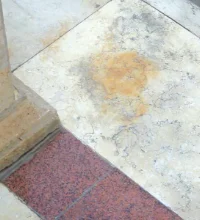
Grout can be more vulnerable to aggressive chemicals than the tile surface. Repeated exposure can weaken or discolour grout. Natural stones such as marble, limestone and travertine are especially sensitive. Acid can etch their surface and affect their finish. For these surfaces, use a cleaner specifically formulated for natural stone.
If you are unsure about the surface, consult a qualified professional before using acid for cleaning tiles.
Metal fittings
Strong acidic cleaners can corrode or mark certain metal surfaces. Taps, fittings, profiles and other exposed components may need protection during cleaning. Avoid leaving an acidic tile cleaner on fittings longer than the product instructions allow. Rinse exposed areas thoroughly where required.
How to Use an Acidic Cleaner Safely
If an acid-based product is specifically recommended for your surface, follow the manufacturer’s instructions. Do not improvise dilution ratios or application times.
Dilute, test patch, rinse
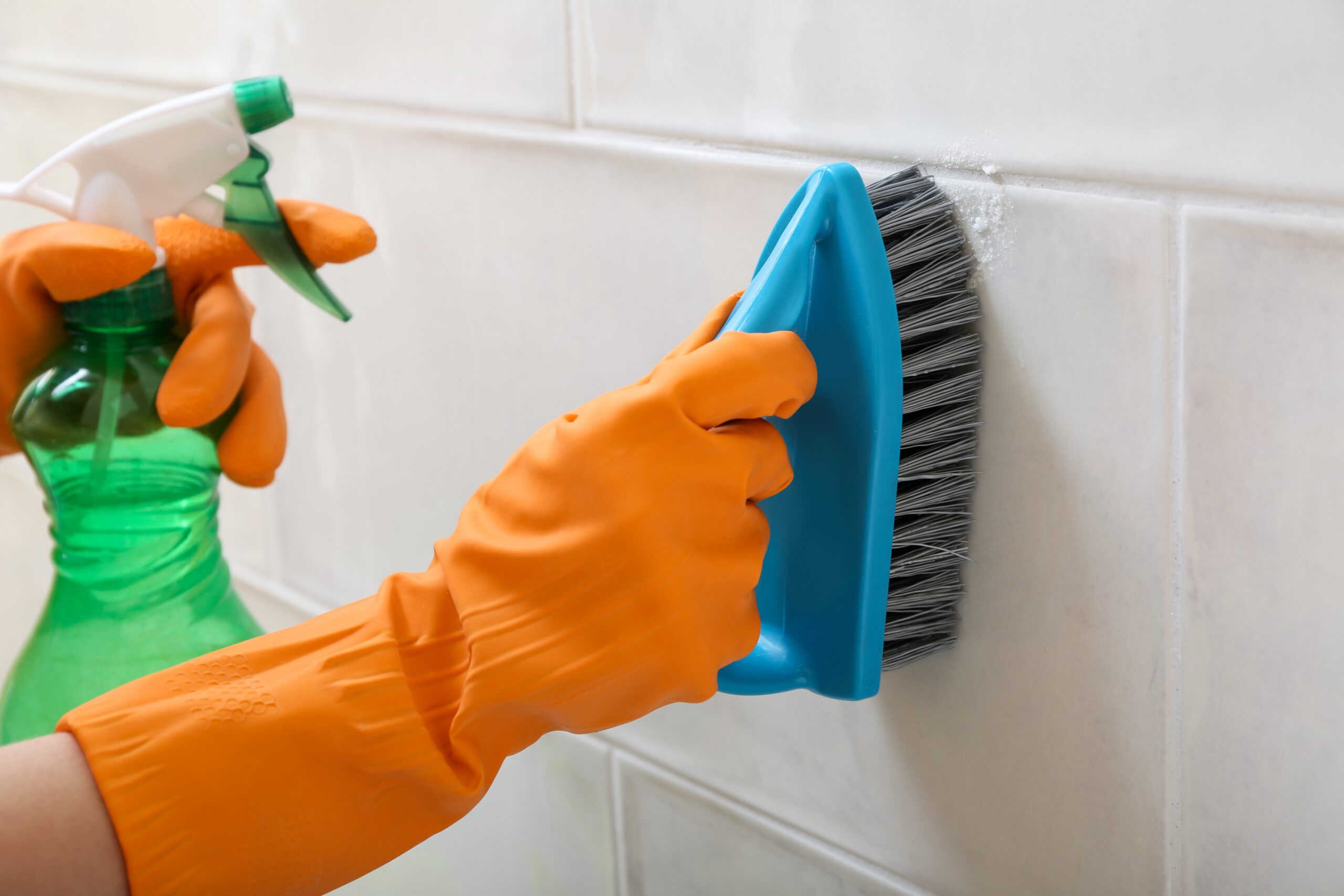
Always follow the stated dilution instructions for the specific product. Do not assume that a higher concentration gives better results. A small, hidden patch test can help identify unwanted reactions. This is particularly important when the surface or its chemical resistance is uncertain. After cleaning, rinse as directed. Do not allow chemical residue to remain on the surface.
PPE & ventilation
Read the product label and safety information before use.
Wear the recommended protective equipment, such as gloves and eye protection.
Keep the area well ventilated, especially in bathrooms and other enclosed spaces.
Never mix cleaning chemicals unless the product instructions specifically allow it.
Mixing an acid with bleach can produce harmful chlorine gas.
Safer Alternative: Roff Cera Clean
A surface-specific, professionally formulated cleaner can reduce the need for harsh chemical treatment. The right product should clean effectively while being suitable for the tile and grout.
Why a pH-safe cleaner
Roff Cera Clean tile cleaner is formulated for ceramic, porcelain, and vitrified tiles. It removes stains, grime, oil, wax, moss, and white deposits. You can also use it on grout, tiled walls, and floors.
You can dilute Roff Cera Clean for different cleaning needs. Roff recommends a one-to-one dilution for mild spots. For stubborn stains, the product information recommends a patch test before using the undiluted solution. For routine cleaning, add two capfuls to half a bucket of water. For marble and natural stone, choose a product specifically designed for those surfaces. Note that Roff Cera Clean is not recommended for stone surfaces.
Acid can remove certain mineral deposits and stubborn residues. However, it may damage grout, marble, limestone, and some metal fittings. Check the tile type first. For routine cleaning, choose a surface-appropriate, formulated tile cleaner instead.
2) Does acid damage grout?
Yes, repeated or incorrect use can weaken or discolour grout. Avoid strong acidic products on grout unless the manufacturer confirms they are suitable. For regular maintenance, use a cleaner formulated for tiled surfaces and grout.
3) Can I use acid on marble?
No, marble is acid-sensitive and can become etched or lose its finish. Avoid acid for cleaning tiles on marble. Use a cleaner specifically formulated for marble or natural stone.
4) What is the safest tile cleaner?
The safest choice depends on the tile, grout, and stain type. For ceramic, porcelain, and vitrified tiles, Roff Cera Clean is a formulated option designed to remove grime, stains, oil, wax, and white deposits. Always follow the product instructions.
5) How do I remove stubborn tile stains without acid?
First, identify the stain and tile type. Then select a cleaner designed for that surface. For ceramic, porcelain and vitrified tiles, Roff Cera Clean can help tackle stubborn stains without automatically resorting to tile cleaner acid. Follow the recommended application method.
6) How often should I use an acidic tile cleaner?
Do not use an acidic cleaner routinely unless its instructions specifically recommend it. Frequent exposure can affect grout and acid-sensitive surfaces. For regular maintenance, use a suitable formulated tile cleaner and follow its usage instructions.