Check out the biggest trends of the season and our expert take on them.
Why are tile adhesives for walls gaining popularity?
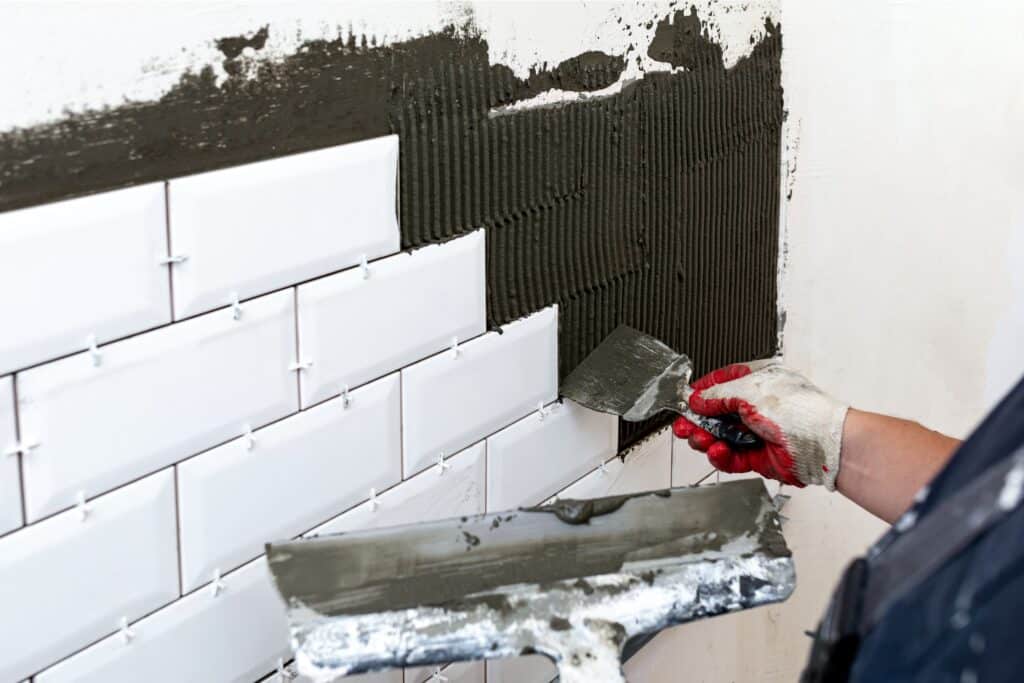
Traditional cement mortar is no longer the only solution for fixing tiles. Given the demanding installation needs, designers today prefer tile adhesives, a more modern solution. It’s quickly becoming a standard for residential and commercial projects for its superior bonding, efficiency, and flexibility. As tiles become larger, heavier, less porous, and used across complex surfaces, specialised adhesives are necessary to achieve construction speed, durability, and long-term performance.
This is precisely why modern fixing methods have shifted towards adhesive tile for walls over traditional cement mortar.
Let’s understand the reasons in detail.
1. Change from ceramic to vitrified tiles
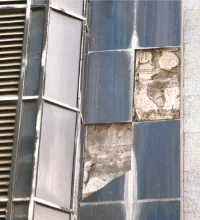
Earlier, ceramic tiles were smaller and more porous, so cement mortar could create a workable bond. But vitrified and porcelain tiles are denser and less absorbent. Cement struggles to bond effectively to these surfaces, often leading to hollow tiles or debonding over time.
This is where the chemical for tile fixing becomes integral. Advanced adhesives are designed to bond with low-porous tiles and deliver consistent performance.
2. Rise of large-format tiles
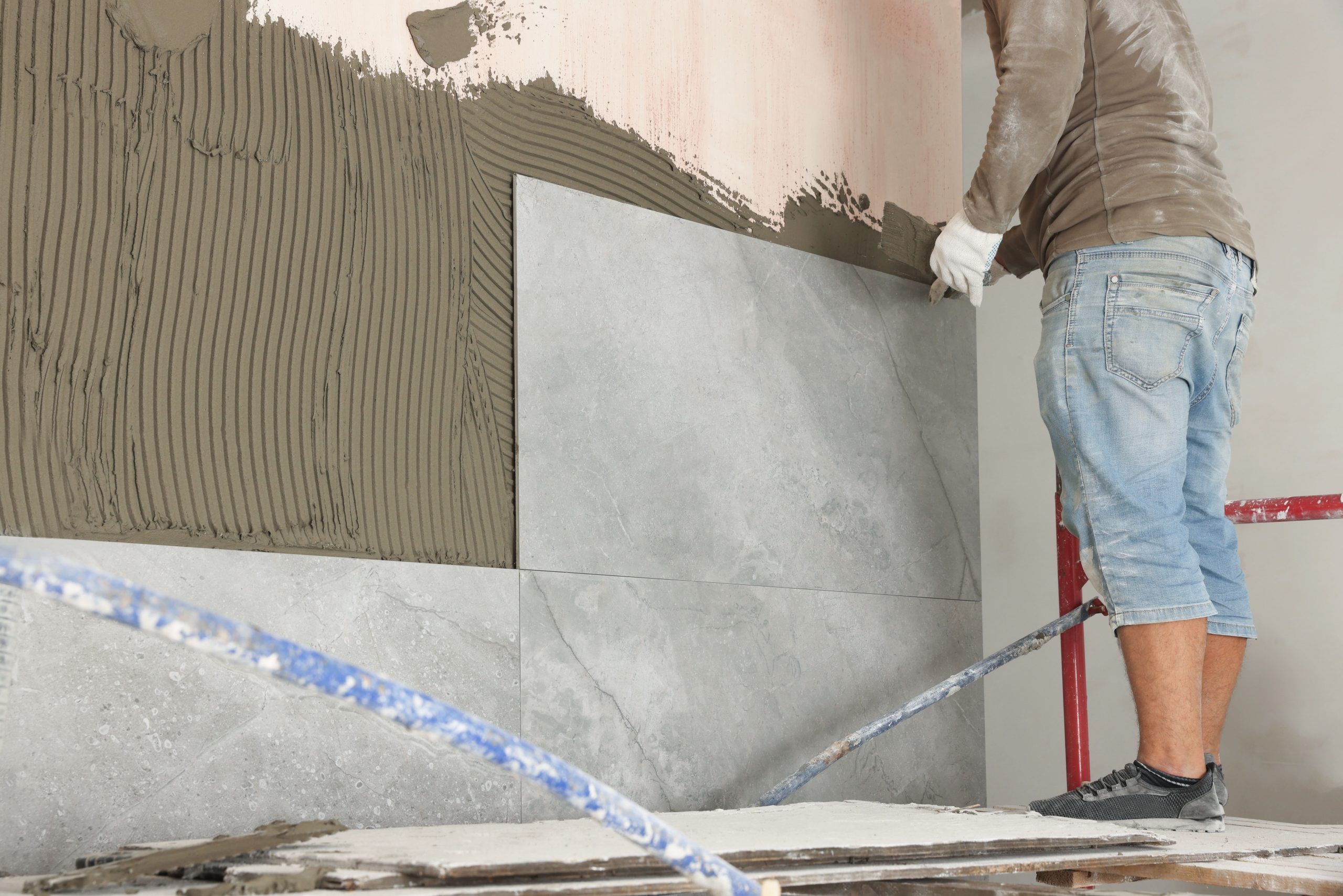
Larger-format tiles are a common feature in most designs. But they also add weight and surface stress, increasing the need to switch from traditional fixing methods to specialised wall tile adhesive.
Traditional methods cannot provide uniform bonding across such large areas. This increases the risk of:
Tile slippage
Uneven levelling
Long-term detachment
Using tile adhesive for large wall tiles ensures better grip, even load distribution, and reduced movement, especially on vertical surfaces.
3. Changing substrate conditions
Projects often include diverse substrates ranging from plastered walls,concrete, drywall, and even tile-on-tile applications.
Unlike cement mortar, adhesive wall tiles are designed to adapt to varying surface conditions. They provide consistent bonding performance across substrates, reducing the risk of failure due to surface incompatibility.
4. Faster construction timelines
Compared to traditional methods, tile adhesives significantly reduce installation and curing time.
Benefits include:
Cleaner application with less material wastage
Faster setting and reduced downtime
Quicker project handover
Understanding how long wall tile adhesive takes to dry helps designers plan execution schedules more efficiently, ensuring smooth coordination.
5. Improved durability and reduced maintenance
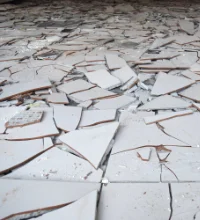
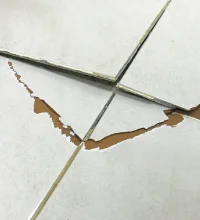
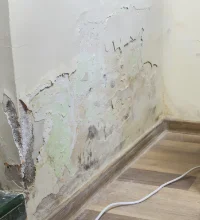
Failures in wall tiling, such as debonding, cracks, or tile slippage, can lead to highly expensive repairs, especially in luxury projects.
Modern chemical for tile fixing offers:
Higher bond strength
Resistance to moisture and temperature variations
Reduced risk of long-term failures
Considering the cost of renovation and rework, investing in a reliable adhesive ensures better performance.
6. Enhanced vertical load handling
Full-height wall tiles and high-rise applications require superior vertical grip. Advanced wall adhesives are formulated to withstand heavier loads without sagging when applied properly.
This makes them ideal for:
Feature walls
Bathroom and kitchen wall tiling
Commercial vertical installations
Specification considerations
To maximise performance, designers must evaluate:
Tile type, size and weight
Substrate preparation and flatness
Type of surface
Exposure to moisture or heat
Selection of the right tile adhesive for the application
Correct specification ensures safety as well as aesthetics in wall installations.
Key takeaway
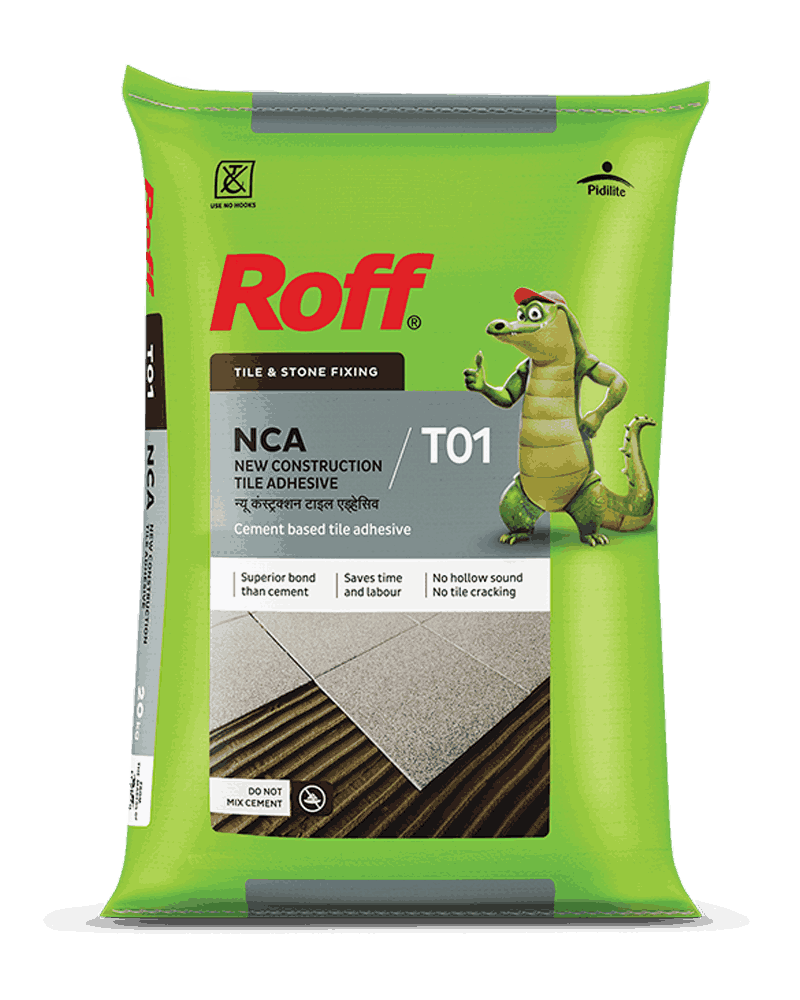
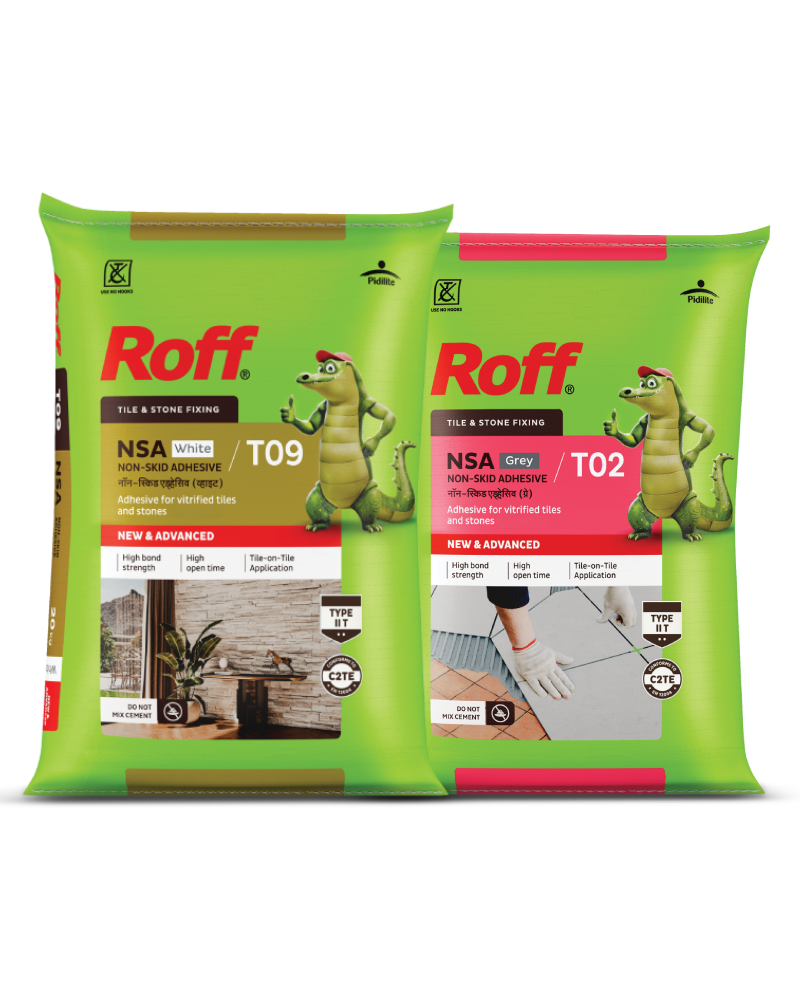
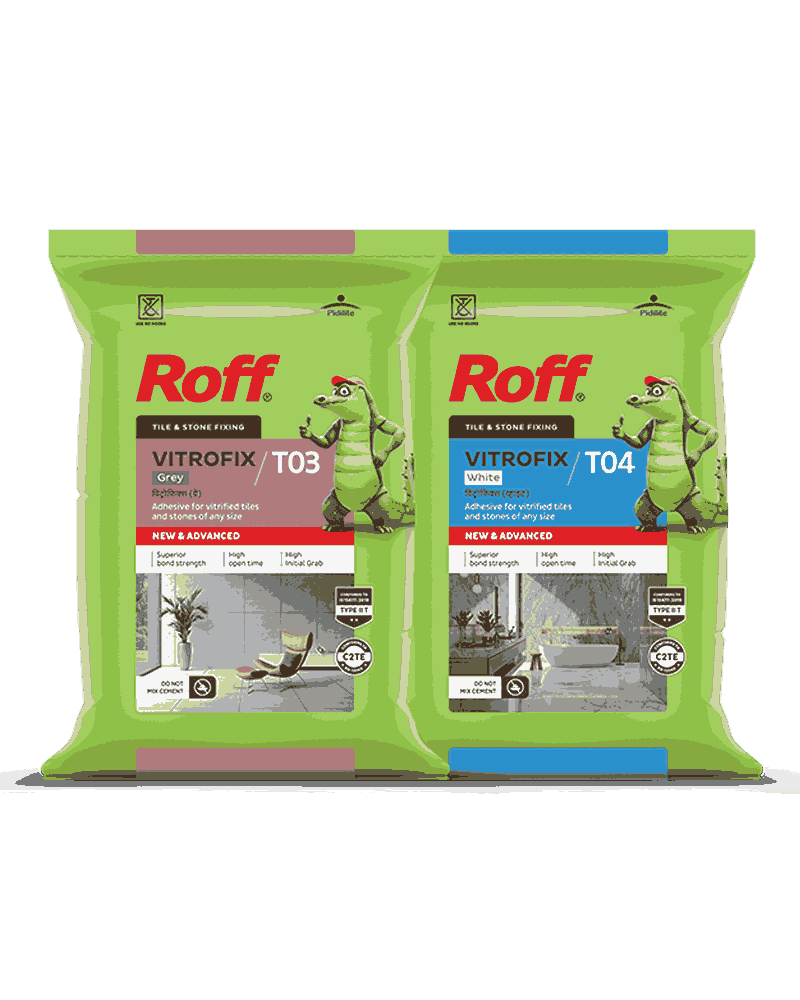
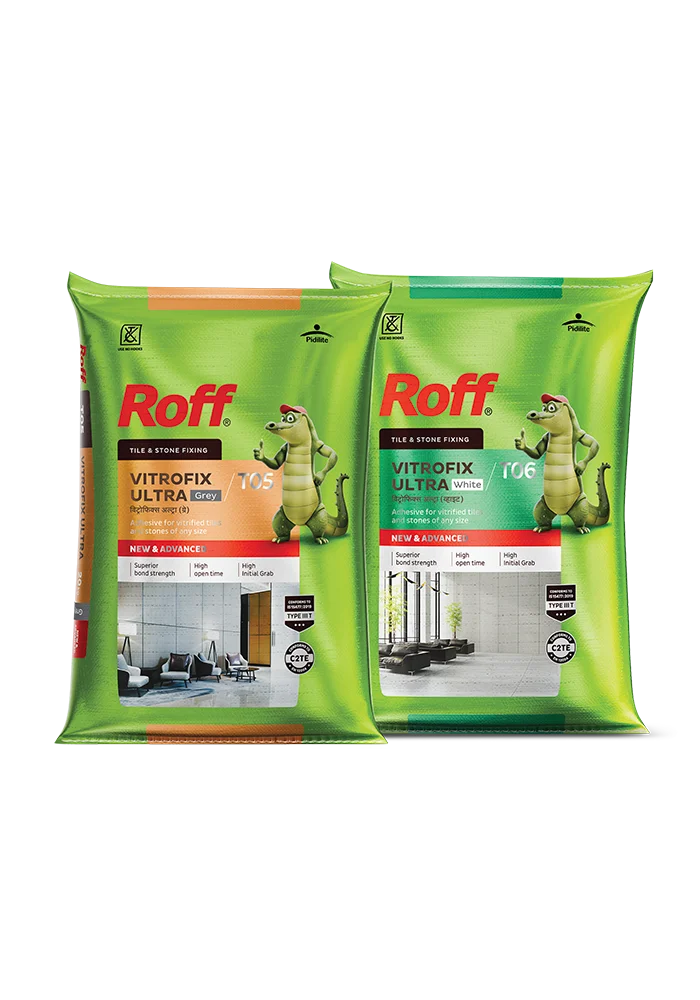
The growing popularity of adhesive tile for walls reflects the evolution of materials, substrates, and construction practices. With Roff’s high-performance range, you get faster execution, stronger bonding, and safer vertical installation. Choose Roff’s tiling adhesives and improve the performance of your upcoming project.
FAQs
1) Why are tile adhesives better than cement mortar?
Tile adhesives provide stronger bonding, better flexibility, and long-term durability compared to cement mortar.
2) Can tile adhesive be used for large-format tiles?
Yes, tile adhesives are specifically designed to support the weight and size of large-format tiles.
3)How long does wall tile adhesive take to dry?
Most tile adhesives set within 24 hours, depending on the type and conditions.
4)Can tile adhesive be applied to different surfaces?
Yes, modern tile adhesives work on concrete, plaster, drywall, and even tile-on-tile surfaces.
5)Is tile adhesive suitable for vertical wall applications?