Check out the biggest trends of the season and our expert take on them.
How to Calculate Tile Adhesive Quantity (with Coverage Formula)
Key Takeaways
Tile adhesive quantity depends on three main factors: the total area, thickness of adhesive-bed, the level of the substrate/tile, and the product used for tiling.
Use the coverage formula to estimate bags required.
Actual adhesive consumption can vary on site based on trowel size, tile dimensions, substrate condition, surface preparation, and application method.
Add a 5–10% wastage allowance to the calculated quantity and use Roff’s Adhesive Coverage Calculator for a more product-specific estimate.
Calculating tile adhesive quantity starts with four main considerations. The area that is going to be tiled, the adhesive-bed thickness, level of the substrate/tile, and the product being used for tiling. Use a simple formula to estimate the requirement, then add a small wastage buffer. Roff’s online Adhesive Coverage Calculator can also help estimate the quantity based on the selected adhesive, area and thickness.
The Coverage Formula
The basic calculation converts your tiled area and adhesive consumption into the approximate number of bags required.
The main formula used to calculate coverage is:
Bags of tile adhesive required = (Area in m² × adhesive consumption in kg/m²/mm × bed thickness in mm) ÷ bag size in kg
Alternatively, use the Roff Adhesive Coverage Calculator for a quick and easy calculation. This gives an estimated quantity based on the specified adhesive consumption and adhesive-bed thickness.
What the terms mean
Area: Surface that you need to tile in square metres.
Adhesive consumption: The product-specific quantity required per square metre for each millimetre of adhesive thickness.
Bed thickness: How thick the adhesive layer needs to be during application.
Bag size: The how much adhesive (quantity) is contained in one bag, such as 20 kg or 30 kg.
Actual consumption can vary upon the trowel, tile size, substrate condition and application method, so treat the result as an estimate rather than an exact site requirement.
What Changes Your Consumption
The same amount of floor area can require different quantities of adhesive depending on how it is applied and the surfaces being tiled.
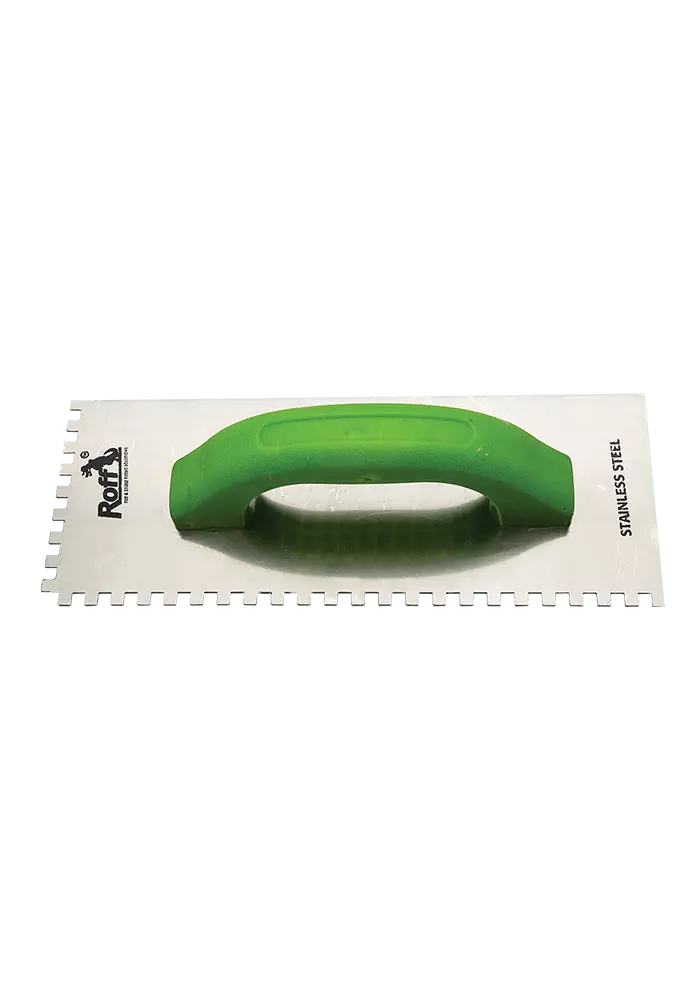
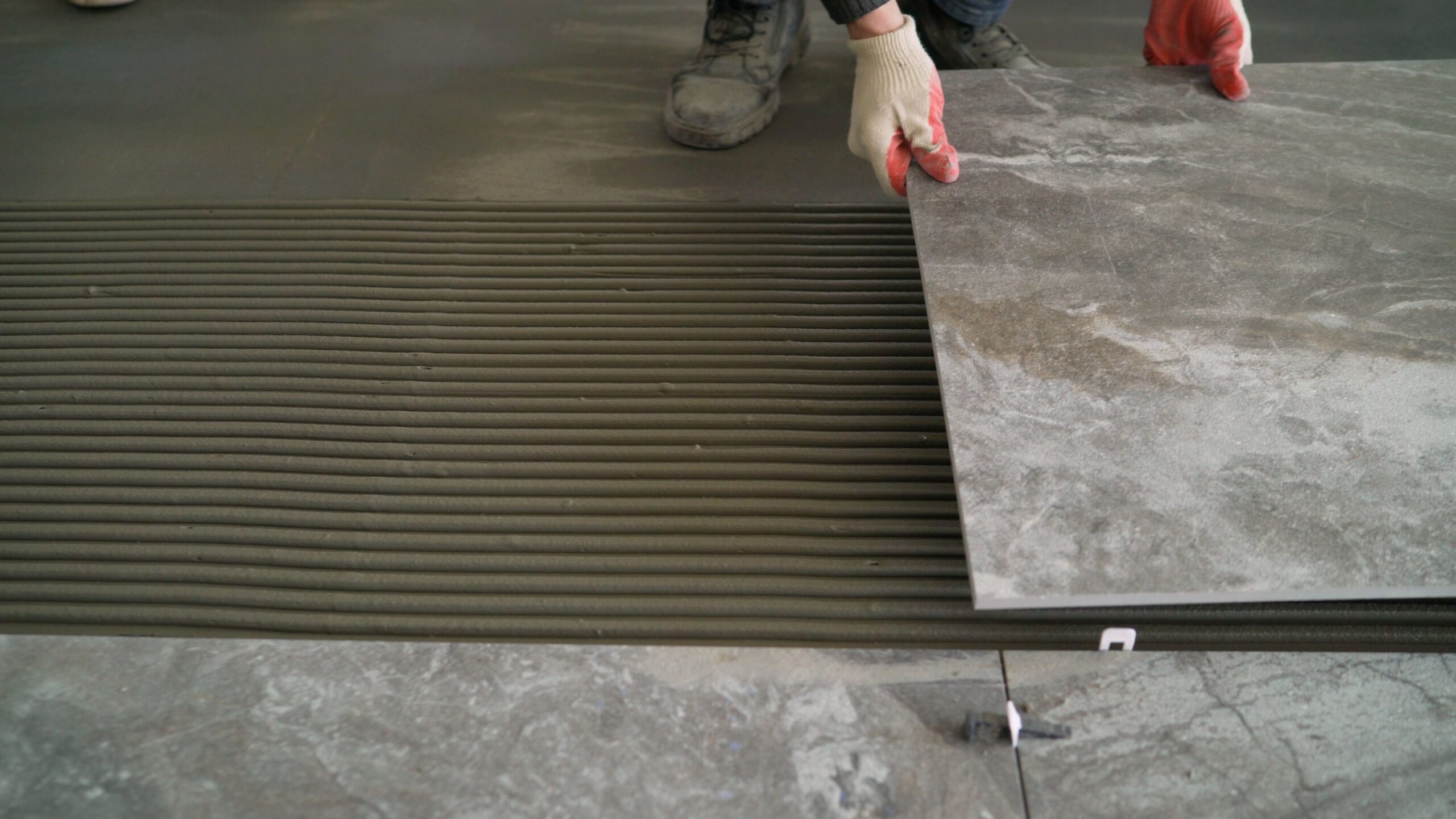
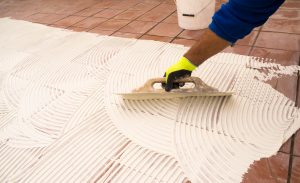
Trowel size & bed thickness
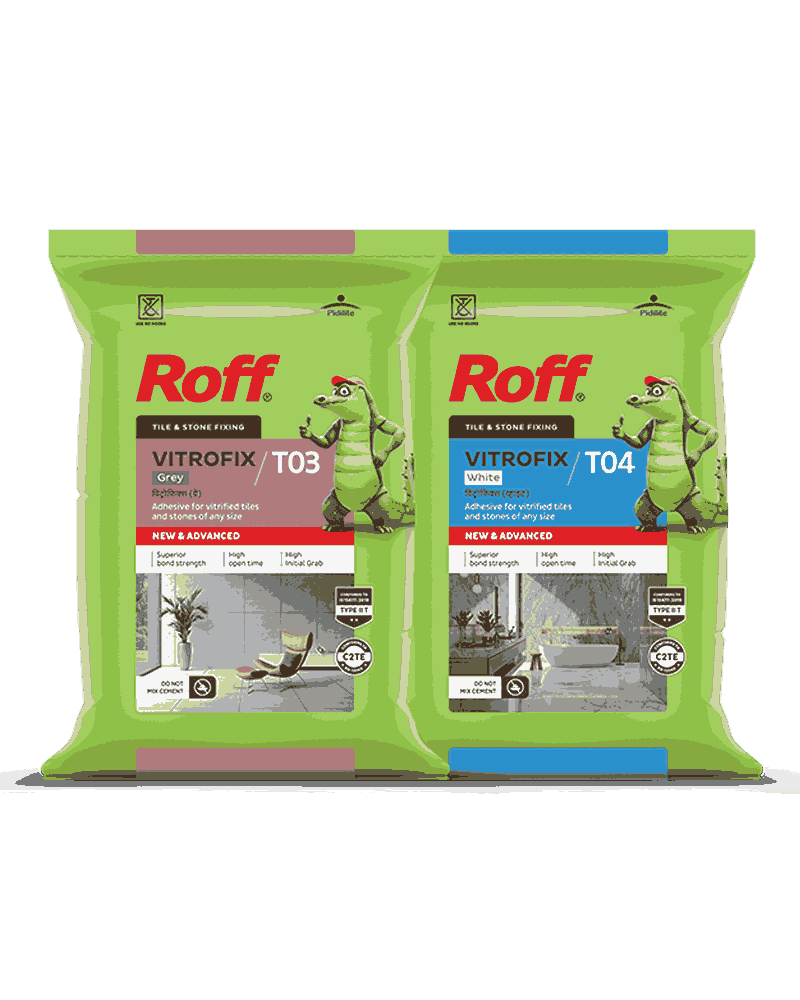
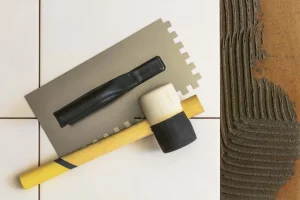
The adhesive-bed thickness is one of the biggest drivers of consumption. A thicker bed uses more adhesive per square metre. Trowel notch size also affects the amount applied. A bigger notch generally produces a thicker adhesive bed and therefore lower coverage per bag. For example, Roff Vitrofix provides approximately 4.8–5.0 m² per 20 kg bag at a 3 mm thickness, compared with approximately 2.4–2.5 m² at 6 mm.
Tile size & substrate
Large-format tiles may require more adhesive because installation can demand greater coverage and a different trowel application. Substrate condition also matters. A surface that requires more adhesive to achieve the specified coverage will reduce the area covered by each bag. Always prepare the substrate correctly rather than using excess adhesive to compensate for surface problems. Undulated surfaces require more tile adhesive.
Worked Example
Sample room calculation
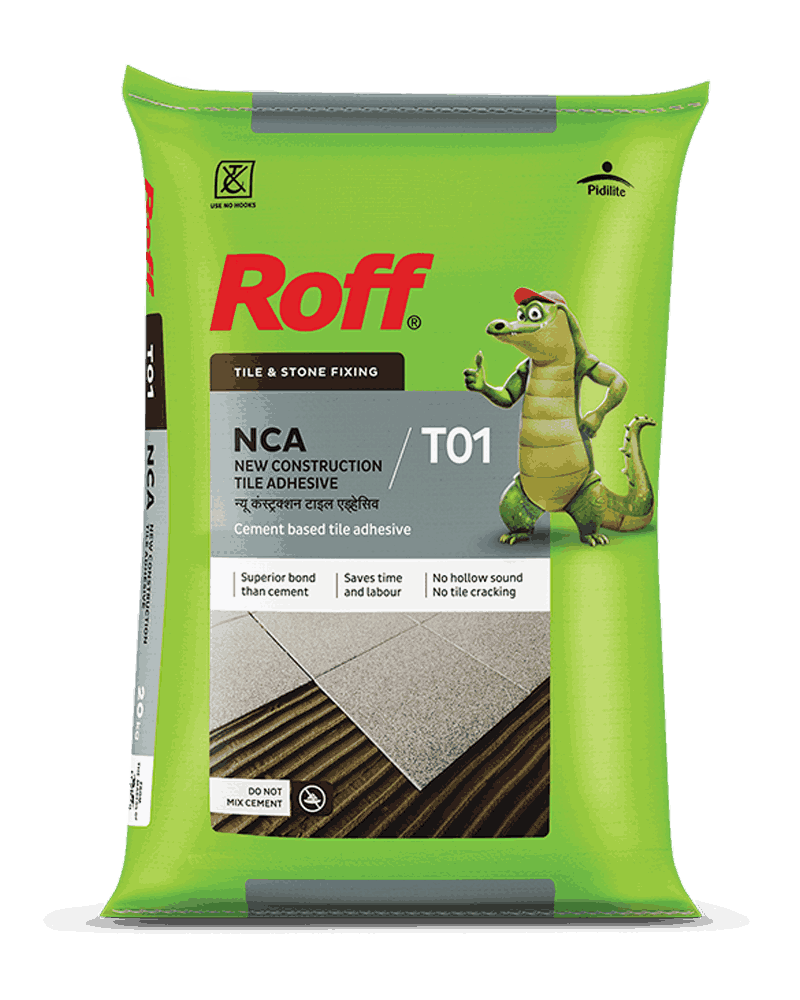
Suppose you need to tile a 20 m² floor using Roff New Construction Adhesive (NCA) with a consumption rate of 1.4 kg/m² per mm, applied at a 3 mm bed thickness, with 20 kg bags.
Step 1: 20 × 1.4 × 3 = 84 kg
Step 2: 84 ÷ 20 = 4.2 bags
Because you cannot purchase 0.2 of a bag for the job, round up to 5 bags before accounting for wastage. The final quantity should then include an additional 5–10% allowance where appropriate.
Roff Per-Bag Coverage
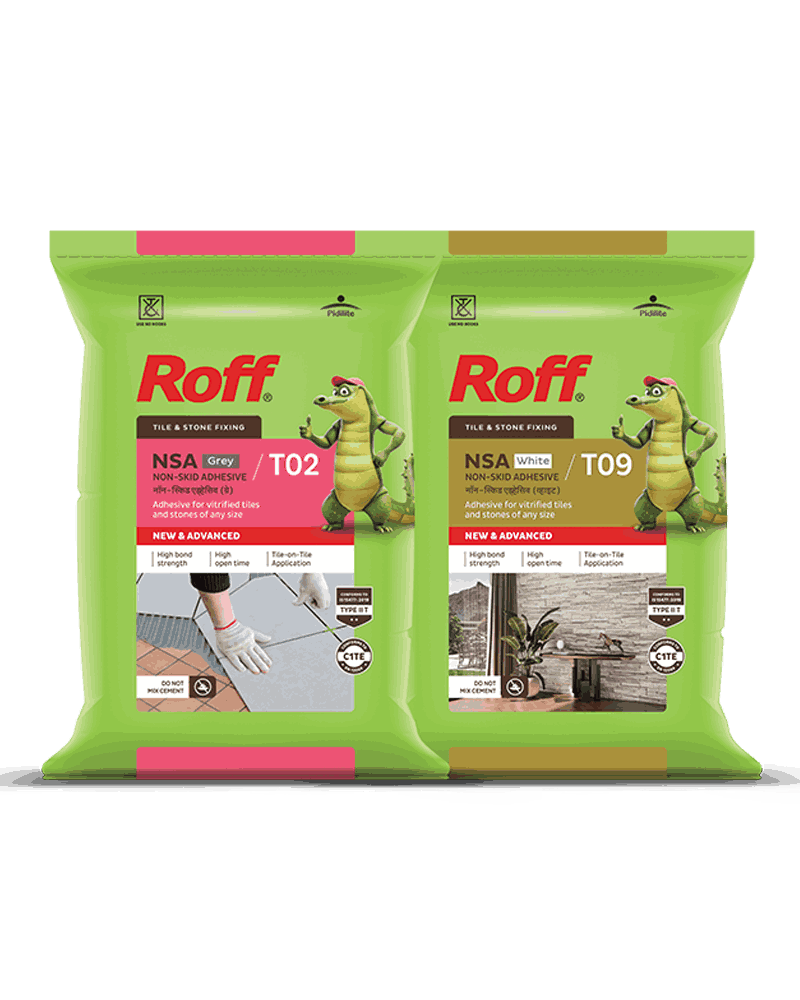
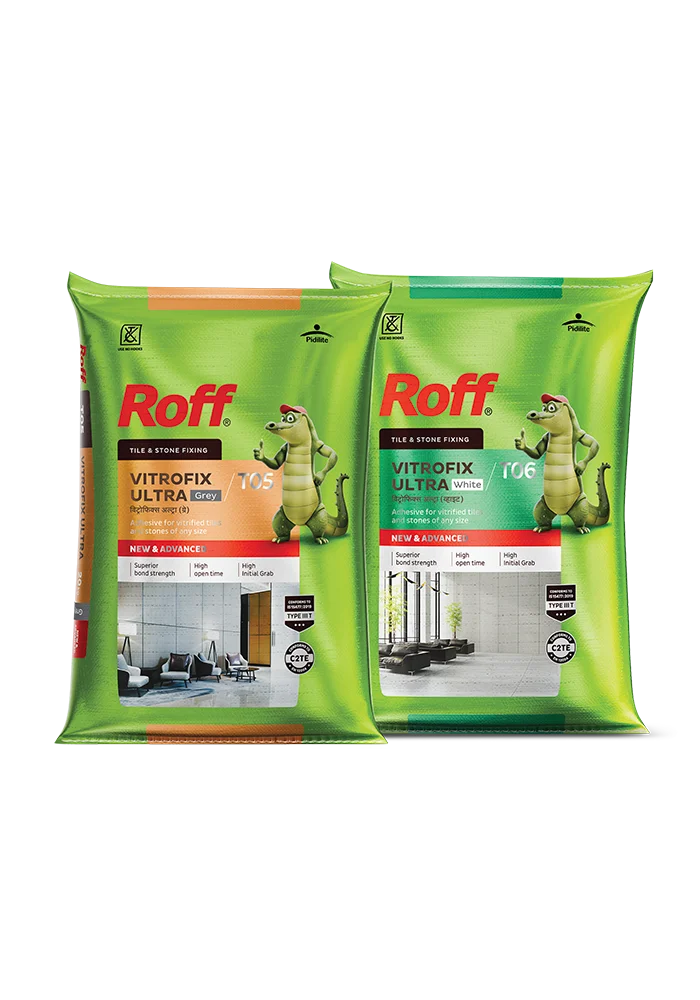
Coverage differs by Roff product, trowel and adhesive-bed thickness. Refer to the Roff Adhesive Coverage Calculator if you want to quickly calculate the required adhesive quantity.
Add wastage buffer
Add 5–10% extra to your calculated requirement to account for application losses, surface variation, and site conditions. For example, if your calculation gives 5 bags, purchasing a little extra can help prevent a shortage during installation.
Frequently asked questions (FAQs)
1) How much tile adhesive do I need per square metre?
It depends on the adhesive, bed thickness, trowel and substrate. Roff products can have different coverage rates, so check the relevant product data or use the Roff Adhesive Coverage Calculator.
2) How many tiles does a 20 kg bag cover?
At average 3 mm thickness, a 20 kg of standard tile adhesive covers an area of 4.8 to 5.0 m². It varies depending on tile size, trowel, surface, and adhesive thickness.
3) Does tile size affect adhesive quantity?
Yes, tile size and installation method can affect adhesive consumption and the required coverage.
4) How much extra should I buy for wastage?
Allow approximately 5–10% extra over the calculated quantity.
5) What trowel size should I use?
Depending upon the required thickness, the notch trowel size is decided. A bigger tile/undulated surface requires a larger notch trowel.