Check out the biggest trends of the season and our expert take on them.
Tile Adhesive Open Time: What It Is and Why It Matters
Key Takeaways
Open time is different from pot life. Pot life refers to mixed adhesive in the container, while open time applies to adhesive already spread on the substrate.
Open time is the working period after tile adhesive has been spread during which tiles should be placed for proper contact and bonding.
Pot life is the time during which the adhesive remains workable after mixing, before it starts losing its application properties.
Heat, wind, low humidity, surface porosity, and direct sunlight can shorten open time by causing the adhesive surface to lose moisture and skin over more quickly.
Spread adhesive only over manageable areas and check for skinning before fixing tiles. Working in smaller sections helps reduce the risk of weak bonds, hollow spots, and loose tiles.
Tile adhesive open time is an important installation parameter because it affects how well tiles bond to the prepared surface. If adhesive is spread too far ahead of the tiling work, its exposed surface can begin to skin over, reducing contact and potentially leading to weak bonds. Understanding open time helps installers plan the work, especially when temperature, wind, surface porosity, and humidity change site conditions.
What Is Open Time?
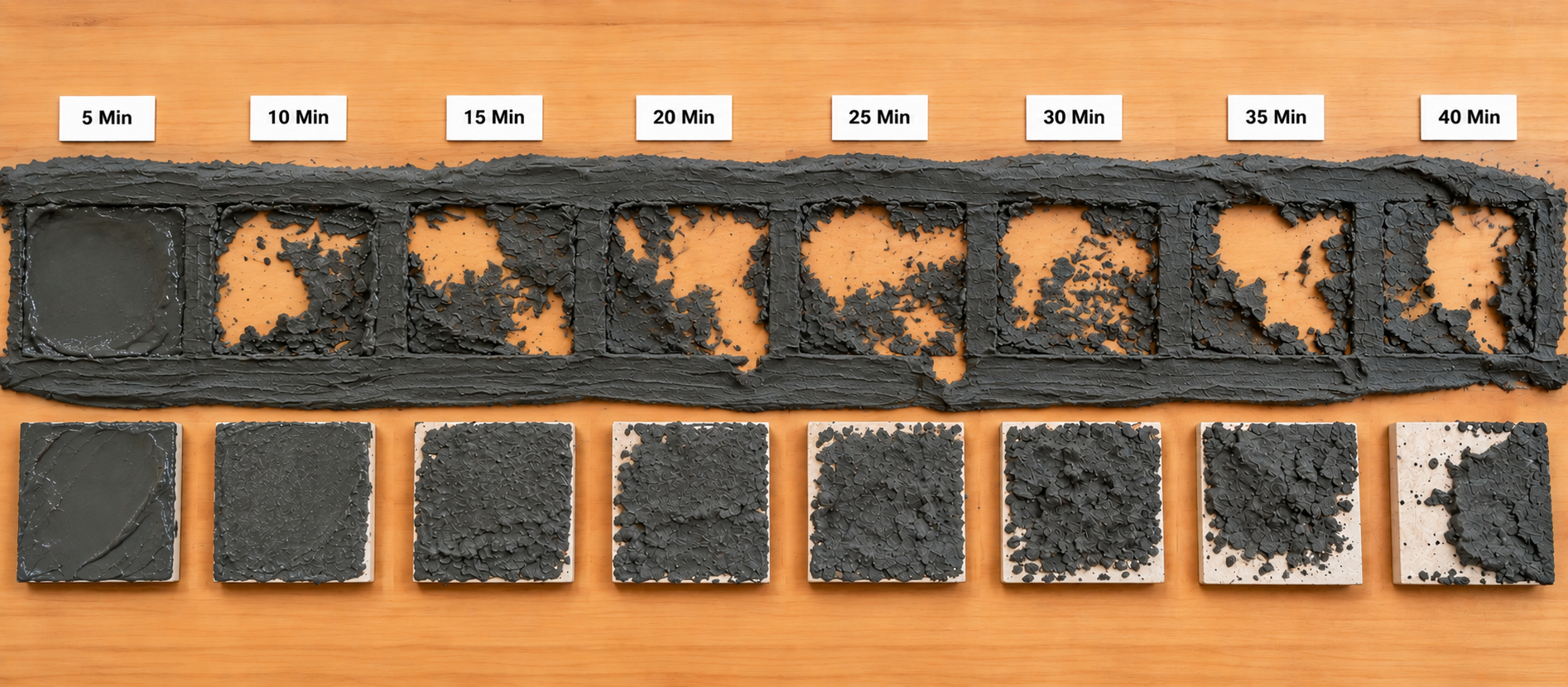
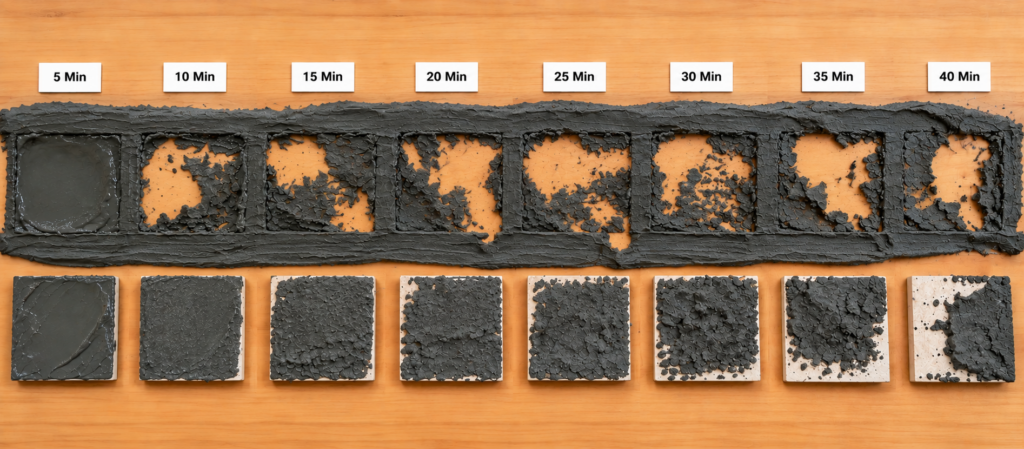
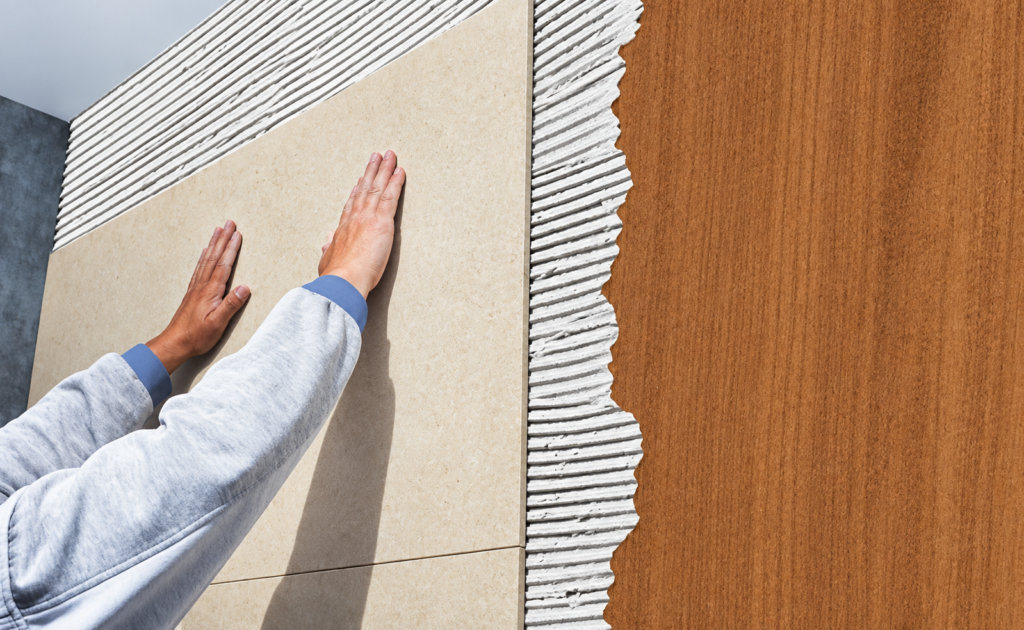
Open time is a key performance parameter of tile adhesive that determines how long the adhesive remains suitable for tile placement after it has been spread on the surface. During this period, the adhesive should retain enough moisture and tack to allow the tile to make proper contact and develop the intended bond.
During this period, position the tile and press it into the adhesive to achieve sufficient contact. Actual open time can vary with the adhesive, substrate, tile, and site conditions, so follow the product’s technical instructions.
Open time vs pot life
Open time and pot life describe different stages of adhesive use. Open time relates to the adhesive after it has been spread on the substrate and exposed to the surrounding conditions. Pot life refers to how long a mixed adhesive remains usable in its container after mixing.
An adhesive can still be within its pot life while the material already spread on the surface has begun to skin over. Knowing the difference helps installers avoid confusing the adhesive’s pot life with the workable period of adhesive already applied to the substrate.
Why It Matters: Skinning & Weak Bonds
When you place a tile after the open time, it may not make the intended contact with the adhesive. This can create areas with inadequate bonding. Over time, insufficient contact can contribute to hollow-sounding loose tiles and other bond failures.
What skinning does
Skinning occurs when the exposed surface of the spread adhesive forms a film. The film can interfere with the tile pressing into fresh adhesive underneath, reducing contact between the tile and substrate.
The longer the adhesive remains exposed, the greater the risk of the surface changing, particularly when site conditions accelerate moisture loss. For this reason, place tiles within the adhesive’s usable open time rather than spreading them over a large area and leaving them unattended.
How Climate Changes Open Time
Open time is not fixed under every condition. Temperature, airflow, and humidity can change how quickly the exposed adhesive surface develops a skin. Hot, dry, or windy conditions can accelerate moisture loss from the exposed adhesive and shorten the practical working window. Higher humidity may slow moisture loss, but installers should still follow the adhesive manufacturer’s instructions rather than assuming a fixed extension of open time.
Summer vs monsoon
Summer and monsoon conditions can affect installation differently. During hot summer weather, high temperatures, direct sunlight, and strong airflow can make the exposed adhesive lose moisture faster.
In humid monsoon conditions, moisture may leave the adhesive more slowly, but damp substrates, rain, or poor ventilation can introduce other installation concerns. Adjust the work area and timing to the actual site conditions.
How to Work Within Open Time
Working within open time is mainly about controlling how much adhesive is exposed at once and checking its condition before placing tiles. A planned installation sequence reduces the amount of adhesive left waiting on the substrate and helps maintain good tile-to-adhesive contact.
Better surface preparation
Highly porous substrates absorb water from the adhesive, reducing the open time. Hence, it is important to make the surface damp/SSD (Saturated Surface Dry), which eliminates the chances of absorbing more water from the adhesive and allows more time to fix the tiles.
Small batches & finger test
Spread adhesive in manageable sections rather than covering a large area you can’t tile promptly. Keep the trowel work consistent, place tiles within the adhesive’s usable window, and avoid leaving combed adhesive exposed unnecessarily.
If conditions are hot, dry, or windy, reduce the area being spread at one time and work in smaller sections. A simple surface check can also help identify whether the adhesive has started to skin. Before placing a tile, touch the exposed adhesive. If the adhesive comes onto your finger, then it means that it is still in its open time, but if the adhesive does not come onto your finger, it means that a film has formed and the adhesive no longer behaves like fresh material. Do not assume that pressing the tile harder will restore the intended bond. Follow the product instructions for handling adhesive that has exceeded its open time.
The exact amount of adhesive to spread at once depends on the adhesive, tile size, substrate, weather, and the installer’s working speed. A practical rule is to spread only as much as you can tile while the adhesive remains within its open time. Smaller sections are especially useful in hot, dry, or windy conditions.
Frequently asked questions (FAQs)
1) What is open time in tile adhesive?
Open time is the period after tile adhesive is spread and combed during which a tile can still be placed and achieve proper contact and bonding. It can change with the product and site conditions.
2) What is the difference between open time and pot life?
Open time applies to adhesive that has already been spread on the substrate. Pot life is the period for which mixed adhesive remains usable in its container.
3) How do I know if adhesive has skinned over?
A skinned adhesive surface may develop a film and lose the fresh, workable surface needed for good tile contact. When you touch the adhesive with your finger, check if it comes onto your hand. If the adhesive is still in its open time, some of it will transfer to your fingers. If that doesn’t happen, it means that the open time is over and the adhesive is no longer usable. Always check the adhesive before placing the tile and follow the product’s instructions.
4) Does heat reduce open time?
Yes, heat can accelerate moisture loss from exposed adhesive and reduce its practical open time. Direct sunlight, low humidity, and wind can make this effect more pronounced.
5) How much adhesive should I spread at once?
Spread only an area that you can tile within the adhesive’s open time. In hot, dry, or windy conditions, work in smaller sections to reduce the chance of skinning.