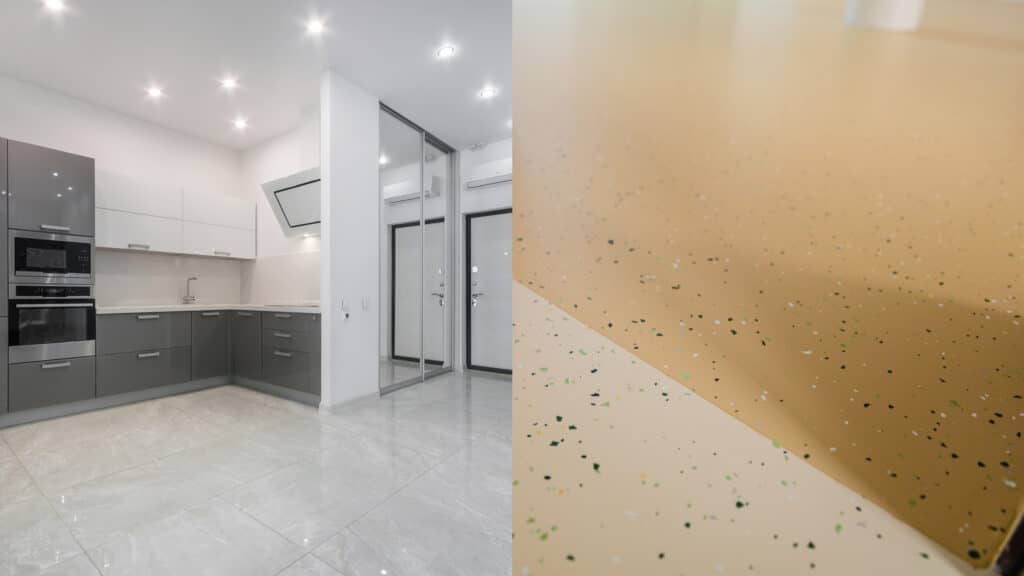
Check out the biggest trends of the season and our expert take on them.
Epoxy Flooring vs Tiles: Which Is Better for Your Space?
Key Takeaways
Epoxy flooring and tiles suit different needs. Epoxy offers a seamless finish, while tiles provide greater variety in colours, patterns, textures and formats.
Installation quality affects long-term performance. Proper surface preparation, adhesive selection and grouting are important.
Tiles can be easier to repair locally. Individual damaged tiles can usually be replaced, whereas damaged epoxy areas may require specialised repair.
Choose flooring based on the space. Consider foot traffic, moisture exposure, maintenance, design preferences and total installed cost.
When choosing between epoxy flooring and tiles, look beyond appearance. Your flooring needs to suit foot traffic, moisture, maintenance, and installation conditions. Epoxy flooring creates a seamless finish with fewer visible joints. Tiles offer a wider choice of colours, patterns, sizes and textures. Your decision should depend on where you’ll install the floor and how you plan to use it.
Epoxy Flooring vs Tiles at a Glance
The right flooring depends on your priorities. Consider these key differences before deciding:
Factor
Epoxy flooring
Tiles
Finish
Seamless and uniform
Joints are visible
Maintenance
Generally simple to clean
Eaiser to clean when compared to epoxy flooring
Design
Colour and finish options
Wide range of designs and formats
Repairs
Damaged areas may need treatment
Individual damaged tiles can be replaced
Best suited for
Garages, utility and commercial spaces
Homes, kitchens, bathrooms and commercial spaces
Both epoxy floor tiles and conventional tiles can suit different requirements. Your choice should account for traffic, moisture, appearance and installation conditions.
Durability & Maintenance
Epoxy: seamless but scratch-prone
Epoxy flooring creates a continuous surface without regular tile joints. This can make routine cleaning straightforward. When the system is correctly selected and installed, it can also resist many common stains and spills.
However, epoxy surfaces can be affected by sharp impacts or abrasive movement. Surface preparation and professional application also influence performance. A damagedarea may require assessment and repair rather than simple replacement.
Tiles: replaceable & varied
Tiles offer a practical advantage when you need local repairs. If an individual tile is damaged, you can generally replace it without removing the entire floor.
Vitrified tiles also offer low porosity and can provide a durable surface for many residential and commercial applications. Their appearance can range from natural stone-inspired finishes to contemporary designs.
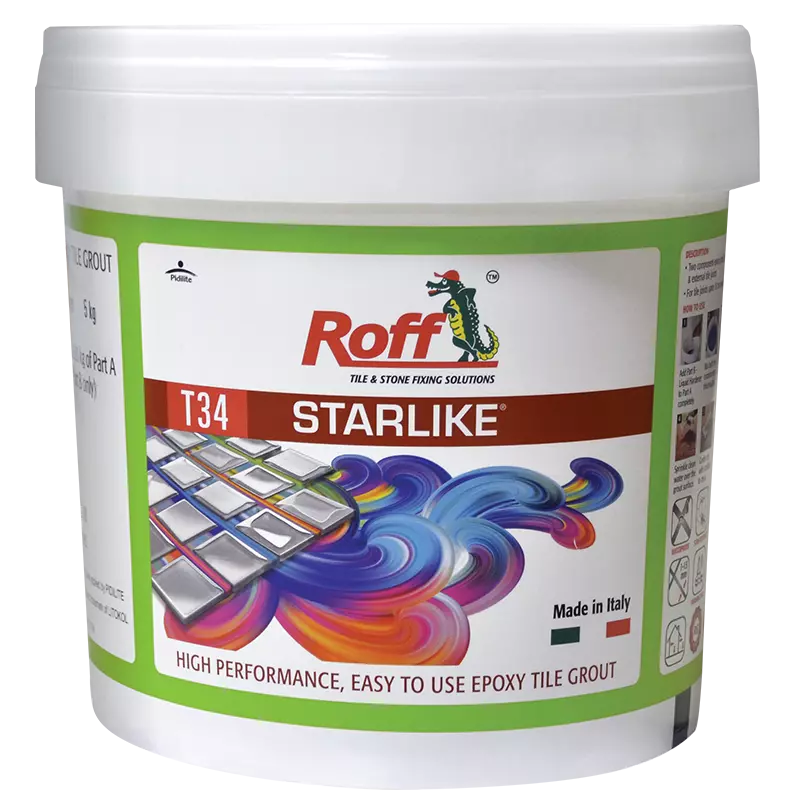
For maintenance, the tile surface and grout both matter. Choosing an appropriate grout can help manage staining and moisture exposure. For example, Roff Starlike Epoxy Grout is a two-component epoxy-based tile joint filler designed for internal and external applications.
Cost & Installation
Installation costs vary by floor area, substrate condition, preparation and system specification. Epoxy may involve multiple preparation and application stages. The existing floor may also need cleaning, repairs or treatment before application. However, epoxy flooring is more difficult to install, and hence requires highly trained professionals. This can increase the final cost in comparison to tiles.
Tile installation costs include tiles, adhesive, grout, and labour. Large-format tiles can require additional handling and installation expertise. Therefore, compare the complete installed cost rather than only the material price. Also factor in expected maintenance and repair needs.
Install effort & downtime
Both options require proper preparation and curing or setting time. Epoxy installation can involve surface preparation followed by coating stages and curing periods. Tile installation involves preparing the substrate, applying adhesive, positioning tiles and completing the grout joints. Actual downtime depends on project size, product specifications, and site conditions.
Best Choice by Room
Your space should guide your choice of epoxy flooring tiles. No single solution fits every room.
Where each wins
Living rooms: Tiles offer broad design flexibility and can complement different interiors.
Kitchens: Tiles provide a practical surface with many format and finish choices.
Bathrooms: Tiles work well when the complete system addresses moisture and appropriate joint treatment.
Garages: Epoxy can provide a seamless surface that is easier to clean after everyday spills.
Utility areas: Either option can work, depending on traffic, moisture and maintenance requirements.
Commercial spaces: Consider traffic levels, cleaning routines, downtime and long-term maintenance before selecting epoxy vs tiles.
For areas exposed to moisture, consider flooring alongside the overall protection system. Proper waterproofing and suitable installation materials can help protect the underlying structure from moisture-related problems.
Fixing Tiles the Right Way (If You Choose Tiles)
If tiles are your preferred option, installation quality matters as much as tile selection. This is particularly important for vitrified tiles because their low-porosity surface needs an adhesive designed for the application.
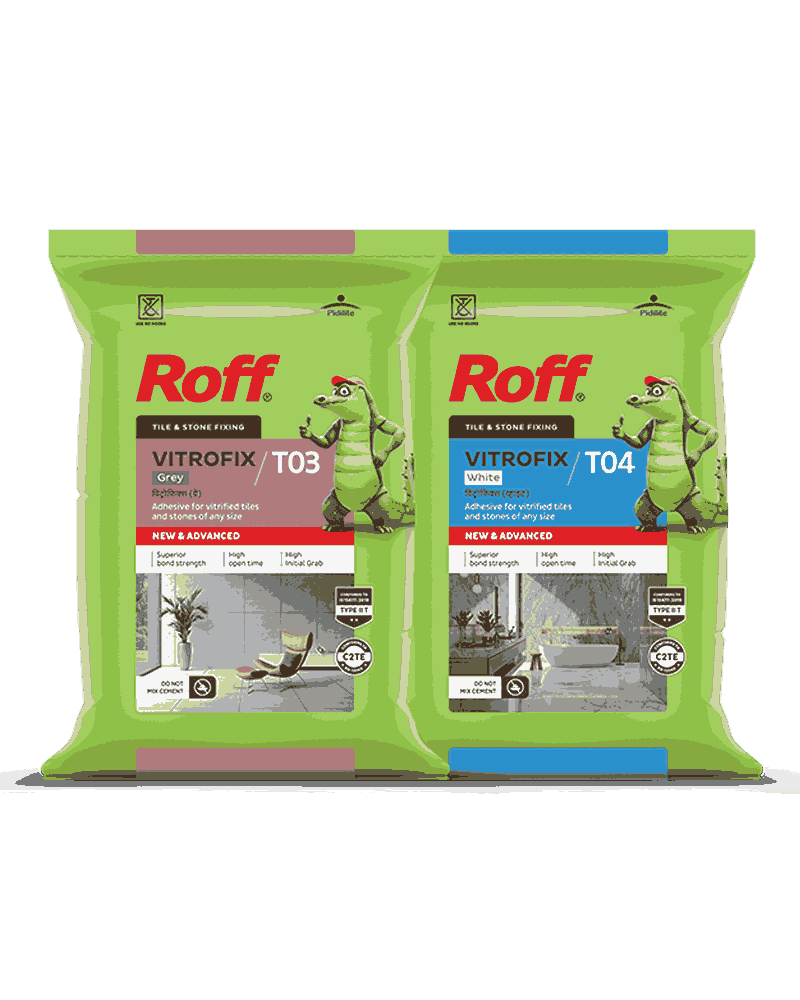
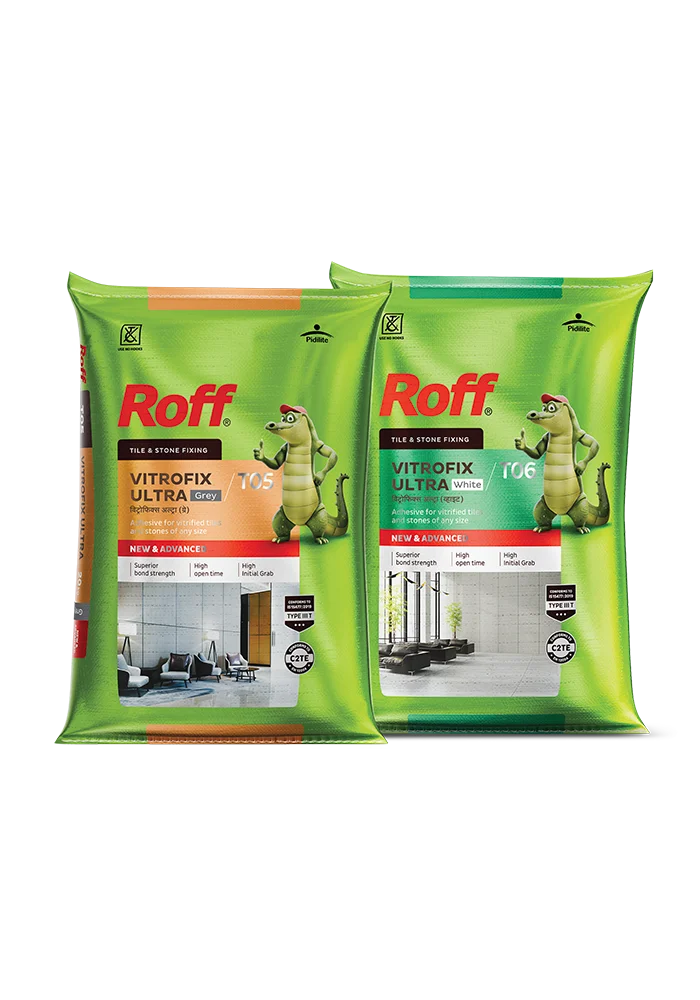
Roff Vitrofix Adhesive is formulated for ceramic, vitrified and other tile applications. It can also be used for indoor floors throughout the house. For large or demanding applications, assess the substrate, tile format, location, and environmental conditions before selecting an adhesive.
Frequently asked questions (FAQs)
1) Is epoxy flooring better than tiles?
It depends on the space and its requirements. Epoxy offers a seamless finish, while tiles provide design flexibility and easier individual replacement. Compare traffic, moisture, appearance, maintenance and installation needs before deciding.
2) Which lasts longer, epoxy or tiles?
The service life of either option depends on product selection, installation quality, usage and maintenance. Heavy traffic, impacts and poor surface preparation can affect performance.
3) Is epoxy flooring cheaper than tiling?
Not necessarily. Total cost depends on floor preparation, materials, labour, area, and installation requirements. Compare the complete project cost instead of material prices alone.
4) Can epoxy be applied over tiles?
Some epoxy systems may suit existing surfaces, but compatibility depends on the substrate, tile condition, and the specified system. A professional should assess the surface before application.
5) Which is better for kitchens and bathrooms?
Tiles are commonly considered for kitchens and bathrooms because of their design range and suitability for moisture-prone areas. However, the complete installation system matters. Consider proper waterproofing, adhesive, and grout selection together.
6) Do vitrified tiles need special adhesive?
Vitrified tiles have low porosity, so the adhesive should match the tile and substrate. Roff provides specialised adhesive options for vitrified tile applications.