Check out the biggest trends of the season and our expert take on them.
Epoxy Grout Price in India: Cost Range & Coverage Guide
Key Takeaways
Epoxy grout costs more than cement grout, with indicative prices in India often ranging from about ₹400 to ₹1,500+ per kg.
Total grout cost depends on coverage, including tile size, thickness, joint width, installation area and pattern.
Epoxy grout offers strong resistance to water, stains and frequent cleaning, making it suitable for bathrooms, kitchens and other high-use areas.
Don’t consider price per kg alone; calculate the total quantity required and compare long-term performance before choosing a grout.
If you are planning a tile installation, epoxy grout cost is an important factor. Epoxy grout generally costs more than cement grout. However, its resistance to stains, water and frequent cleaning can make it suitable for demanding spaces.
The final epoxy grout price depends on the brand, pack size, colour and product specifications. Your actual requirement also depends on tile size, joint width and installation area.
Typical Epoxy Grout Price Range
Epoxy grout prices in India can vary considerably by brand, pack size, and colour. As a practical guide, you may find epoxy grout priced from approximately ₹400 to ₹1,500 or more per kg.
This is a broad indicative range, not a fixed market price. Premium formulations and specialised colours can cost more. Always check the current product price and pack details before purchasing.
When comparing prices across epoxy grout brands, consider how much area one pack covers. A lower price per kg does not always mean a lower overall installation cost.
Why Epoxy Costs More Than Cement Grout
Epoxy grout generally costs more than cement grout due to its superior formulation and performance. Epoxy grout installations usually last longer and are far more resistant to moisture and blackening than cement grout.
What you pay for
The higher cost of epoxy grout reflects its formulation and performance characteristics. Epoxy grout is designed to resist water, stains, and regular cleaning. This makes it useful in areas where tile joints face frequent moisture or heavy use. Bathrooms, kitchens and other high-use spaces may benefit from this added performance.
Additionally, epoxy grout lines tend to maintain their colour for years, avoiding the blackening common with cement grout installations.
How Coverage Affects Real Cost
Joint width & tile size
The amount of grout you need depends on several factors. These include:
Tile length and width
Tile thickness
Joint width
Total tiled area
Installation pattern
Application conditions
Wider joints generally require more grout. Smaller tiles can also increase grout consumption because they create more joints across the same area. So, when calculating your epoxy grout price, look beyond the cost of one kilogram. First, estimate the quantity required for the complete installation.
Use the coverage tool
Start with the total tiled area. Then consider your tile dimensions and joint width to estimate grout consumption. A coverage tool can make this calculation easier. Roff’s joint filler coverage calculator can help you assess how much grout you need based on your project.
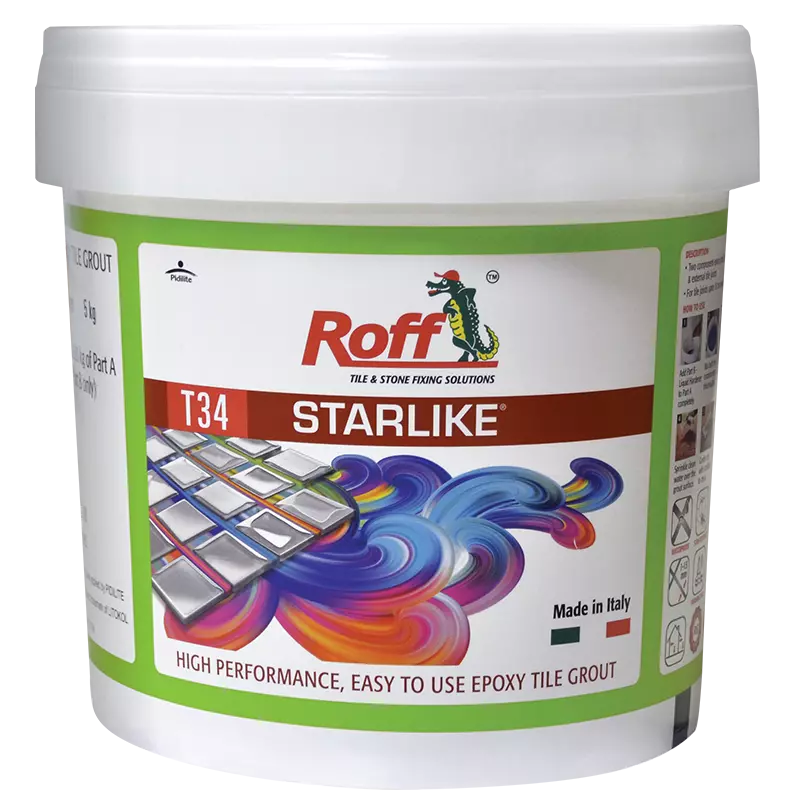
Epoxy grouts, such as Roff Starlike, are worth considering when your tile joints face regular moisture, staining or cleaning. For example, bathrooms and kitchens often need grout that can handle demanding conditions. Commercial or high-use areas may also require greater resistance and easier maintenance.
The right choice ultimately depends on your application, tile layout and performance requirements. Consider the total material requirement, not only the epoxy grout price per kg.
Frequently asked questions (FAQs)
1) How much does epoxy grout cost in India?
Epoxy grout prices can range from about ₹400 to ₹1,500 or more per kg. Actual prices vary by brand, pack size and colour.
2) Why is epoxy grout more expensive?
Epoxy grout uses a resin-based formulation. It can offer better resistance to water, stains and frequent cleaning than conventional cement grout.
3) How much epoxy grout do I need?
Your requirement depends on tile size, thickness, joint width and total area. Use a coverage calculator for a more practical estimate.
4) Is epoxy grout worth the price?
It can be a good choice for wet, high-use areas where resistance to water, stains, and cleaning is important.
5) Which is cheaper, epoxy or cement grout?
Cement grout generally has a lower upfront material cost. However, your choice should also consider the performance requirements of the tiled area.
6) Does the price of 1kg of epoxy grout determine the total cost?
Not by itself. Your total cost also depends on the quantity required for the installation and the product selected.